
Optical & Photonics Fixtures & Jigs Manufacturer
Precision tooling engineered for repeatable alignment, angular stability, and surface-safe handling. Built for lenses, prisms, fiber assemblies, and laser modules.
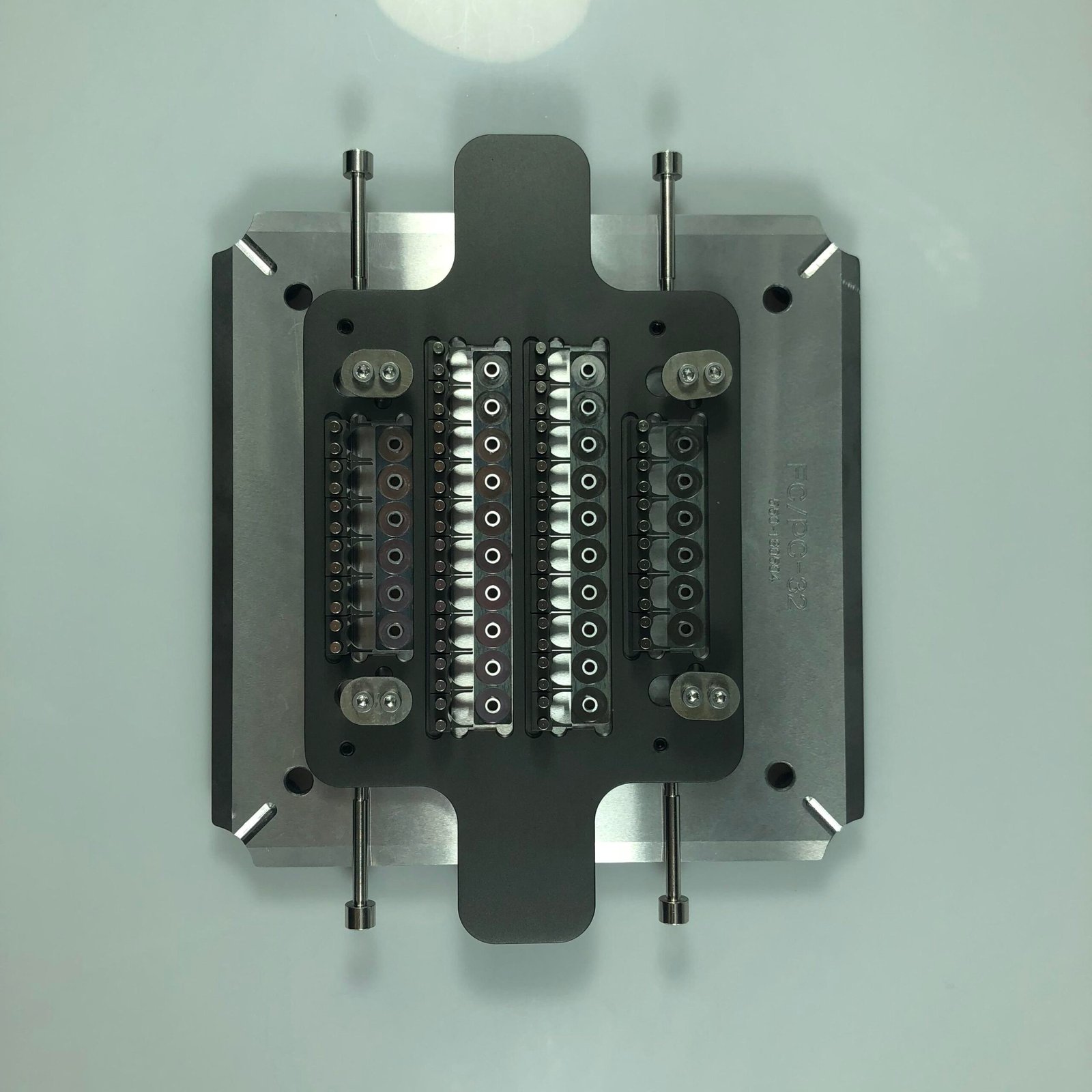
Built for Real Optical Failure Modes
Optical tooling rarely fails because it can’t “hold the part.” It fails because it causes repeatability loss, angular drift after locking, or surface contamination. We design to control the error path.
Repeatability Loss
First build aligns, second build drifts.
Tilt/Angle Drift
Lock changes the optical axis.
Surface Damage
Scratches, marks, or dust.
Measurement Bias
Inconsistent holding methods.
The Rapidaccu Solution
Our fixtures focus on “Seat first, constrain second” logic. We ensure forces go exactly where they should, minimizing induced stress and maintaining micron-level posture even under tightening loads.
What Breaks Performance—and How We Prevent It
Consistent Alignment
Strategy: Datum-driven locating that forces errors to converge on references.
- Stable seating before constraint
- Controlled contact points
Angle/Coaxial Stability
Strategy: Locking strategies that minimize tilt shift during fastening.
- Anti-vibration structures
- Thermal-drift-aware materials
Surface Integrity
Strategy: Controlled contact geometry and surface-safe protected interfaces.
- Replaceable wear elements
- Dust-trap-free geometry
Optical & Photonics Tooling We Build
Optical Assembly Jigs
Stabilizing lenses, mirrors, and fiber components during bonding and curing.
- Poka-Yoke Orientation
- Surface-Safe Pads
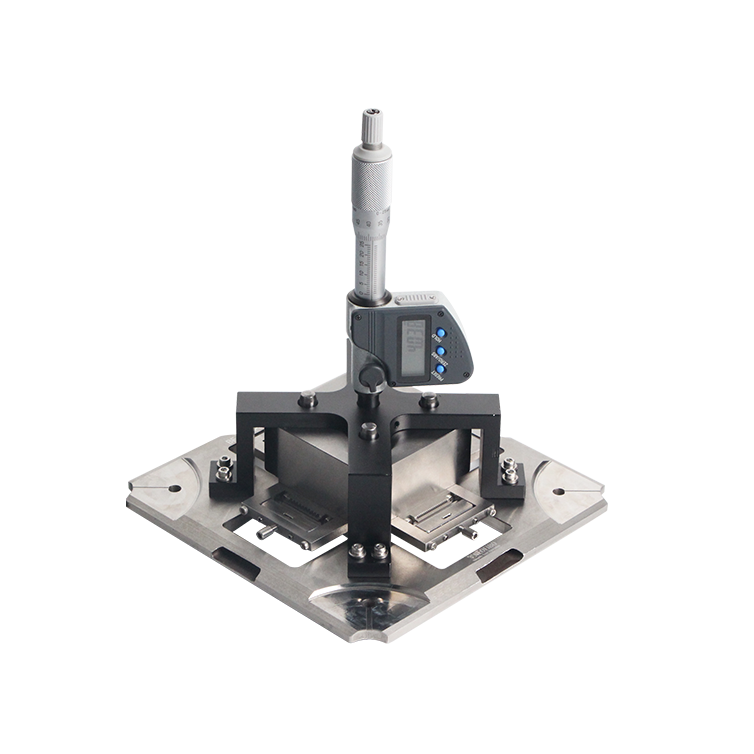
Optical Polishing Fixtures
Built to control pressure distribution and posture repeatability during cycles.
- Support Mapping
- Residue-Aware Design
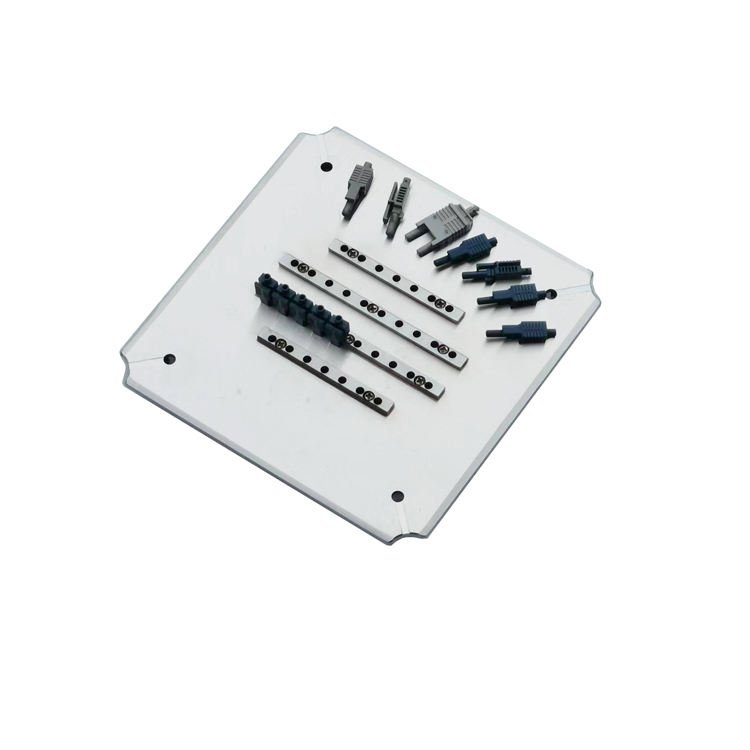
Fiber Polishing Fixtures
Micron-level consistency for fiber end-face processing and chip protection.
- Repeatable Seating
- Ergonomic Handling
Advanced Custom Tooling
Alignment & Calibration
Micro-adjust and lock strategy (adjust precisely, lock without shift).
Optical Vacuum Fixtures
Safe holding for thin, delicate, or warp-prone components.
Metrology & Inspection
Fixtures for repeatable CMM, vision, and interferometry postures.
Capabilities (So You’re Not Buying “Just a Fixture”)
Locating Strategy
Error-path control, load path analysis, and deformation risks.
Detail Design
Replaceable wear surfaces and modular swappable interfaces.
Precision Mfg
Manufacturing for critical references and locating features.
Metrology Support
Measurement repeatability approach to align inspection workflows.
Our Optical Tooling Process
Review & Proposal
Risk review (repeatability, tilt drift, surface damage) + locating strategy proposal.
Precision Detail Design
Tolerance stack-up analysis, wear part selection, and Poka-Yoke integration.
Build & Validation
Precision build followed by try-out validation for repeatability and lock-stability.
Why Buyers Choose Rapidaccu
Stability First
We design for “hold accurately and stay stable,” not just clamping power.
Yield Mindset
Optical faces are treated as yield-critical zones throughout the design phase.
Modular Architecture
Fast iteration and ECO-friendly workflow without rebuilding the entire base.
What We Need to Quote & Start
If you’re missing information, send what you have—we’ll propose a safe concept first.
Upload Drawing / Request ReviewOptical Tooling FAQ
What repeatability can you achieve for optical fixtures?
How do you prevent angle drift after tightening?
When should we use vacuum fixtures for optical components?
How do you avoid scratches and contamination?
Stabilize Your Optical Axis
Send your drawings and tell us the step that must stay stable (alignment / polishing / assembly / metrology). We’ll respond with an Alignment Risk Review.
Email Us
info@rapidaccu.comService
Global precision manufacturing & support.
Request Alignment Concept
Secure document handling & rapid technical review guaranteed.