
Custom Calender Roller for High-Pressure Forming
Rapidaccu manufactures precision custom calender rollers in high-hardness forged steel or aluminum alloy for rubber, PVC sheet, and metal foil lines — with G2.5 dynamic balancing, Ra ≤ 0.1 μm mirror finish capability, and full OEM/ODM support.
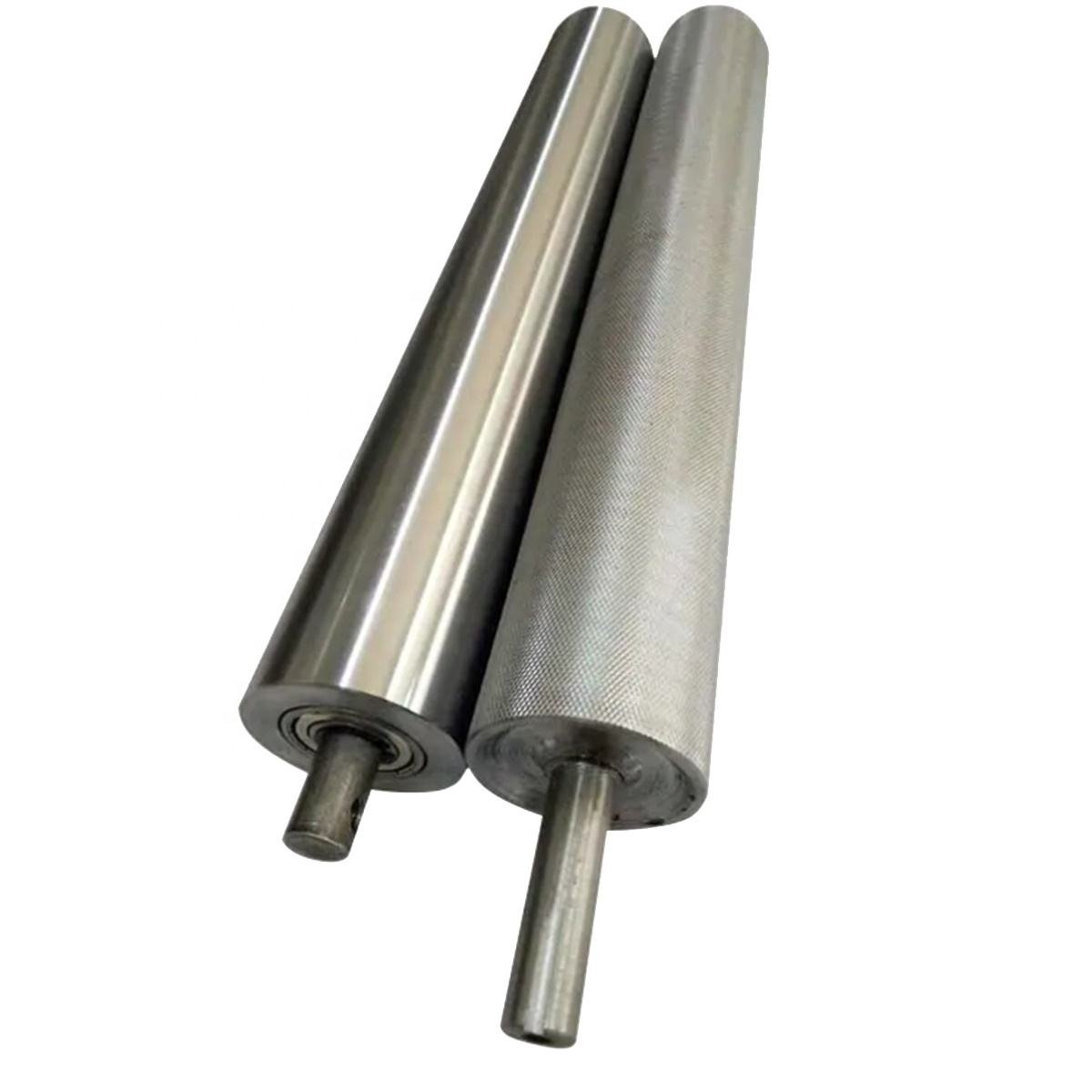
Precision Custom Calender Rollers for Stable Thickness Control
A high-performance custom calender roller does more than rotate smoothly. It directly affects sheet thickness uniformity, nip stability, web surface quality, and machine reliability. In compact precision-oriented calendering systems, even small roller errors create uneven pressure, vibration, runout marks, and inconsistent product finish.
Rapidaccu focuses on producing rollers for demanding forming and thickness-control duties under high radial loads. Through controlled machining and deep-process hardening routes, we help customers reduce roller deflection, premature surface wear, unstable balancing, and poor release behavior.
Discuss Your RequirementsApplication-Matched Build
Each roller is built around real application needs: material type, pressure and speed range, required surface roughness, weight and inertia constraints, coating requirements, and shaft/journal interface details.
OEM and ODM Ready
We support both OEM manufacturing to drawing and ODM development support for customers who need help defining practical roller structures based on process goals and machine envelope.
Full Process Control
From material selection and heat treatment through hard turning, precision grinding, G2.5 balancing, and optional surface treatment — each step is managed to support dimensional integrity and running performance.
What Rapidaccu Can Manufacture
Our capability is designed for customers who need dependable geometry control and surface finish rather than generic rollers with limited specification options. We support custom shaft ends, journals, bearing fits, and interface details per customer drawings.
| Parameter | Capability | Practical Benefit |
|---|---|---|
| Maximum Diameter Key | 600 mm | Supports compact to medium-sized calendering and precision rolling equipment |
| Maximum Length | 6000 mm | Suitable for long-face roller designs and wider material processing widths |
| Base Materials | Forged steel, 6061T651, 6063T5 | Balances rigidity, weight, machinability, and corrosion resistance |
| Standard Dynamic Balancing Standard | G2.5 | Reduces vibration and improves rotational stability at operating speed |
| Standard Surface Finish | Ra ≤ 0.8 μm | Stable material contact and better thickness control |
| Mirror-Level Option Premium | Up to Ra ≤ 0.1 μm | Ideal for high-finish or sensitive web/material contact applications |
| Optional Surface Treatments | Hard anodizing, chrome plating, PTFE | Improves wear resistance, corrosion behavior, or release performance |
The real difference is not just whether a roller can be machined to size, but whether it can maintain geometry, finish, and balance after hard processing and final finishing. That is where our process focus adds value for OEM machine builders and precision line operators.
Material Options for Different Calendering Conditions
Material selection is one of the most important decisions in any custom calender roller project. The wrong choice leads to excessive deflection, premature wear, poor thermal behavior, or unnecessary weight that limits line dynamics.
High-Hardness Forged Steel High Pressure
High rigidity, strong load resistance, suitable for heat treatment and hard finishing. Preferred for rubber processing, precision metal foil rolling, and high-pressure calendering where stiffness and deformation resistance are critical.
Aluminum 6061T651 Lightweight
Good strength-to-weight ratio, stable machinability, suitable for precision structures. Ideal for pilot lines, compact equipment, and applications where reduced inertia improves system response dynamics.
Aluminum 6063T5 Light Duty
Good surface quality potential, lightweight and corrosion-resistant. Suited to light-duty sheet handling, auxiliary calender roller assemblies, and low-load components where weight minimization matters.
Steel with Functional Coating
Structural strength of forged steel combined with surface-specific performance from anti-wear, anti-stick, or corrosion-managed coatings for demanding processing environments.
Surface Finish and Coating Options
Roller surface quality directly affects product appearance, thickness stability, material transfer behavior, and cleaning frequency. We manufacture each calender roller with controlled finishing steps so customers can specify the right surface level for the process.
Precision Ground Surface
Stable geometry and general smoothness for standard calendering and thickness control applications. Ra ≤ 0.8 μm standard.
StandardMirror Finish Ra ≤ 0.1 μm
Ultra-smooth contact and reduced marking risk for sensitive films, foils, and high-finish sheet processing applications.
PremiumHard Anodizing
Surface hardness and corrosion resistance on aluminum rollers. Ideal for lightweight rollers in wear-sensitive environments.
AluminumChrome Plating
Enhanced wear resistance and surface durability for repeated contact, abrasive media, and long-cycle operations.
WearPTFE Coating
Lower adhesion and easier release for sticky compounds, easier cleaning, and reduced material buildup on the roller surface.
ReleaseChoosing the correct finish is not only about appearance. It affects release force, friction consistency, cleaning intervals, and material behavior at the nip. For rubber or tacky compounds, anti-stick surface options reduce buildup. For foil or high-finish sheet production, finer surface finishing helps minimize transfer marks.
Dynamic Balance and Dimensional Accuracy That Support Machine Stability
Even an accurately machined roller can underperform if balancing is overlooked. Rotational instability leads to vibration, bearing stress, uneven pressure distribution, and visible defects in the processed material.
Standard G2.5 Dynamic Balancing
G2.5 dynamic balancing calibration is included as a standard factory specification on every Rapidaccu calender roller — supporting smoother running and reduced vibration at operating speed.
Hard Turning Before Final Grinding
Hard turning is applied as required by design to improve geometry retention and surface preparation before the final precision grinding step — supporting better roundness and consistent finish.
Ra ≤ 0.8 μm Standard / Ra ≤ 0.1 μm Mirror
Standard finished surfaces reach Ra ≤ 0.8 μm for general calendering duty. Mirror-grade finishing up to Ra ≤ 0.1 μm is available for high-finish and sensitive web-contact applications.
| Control Factor | Rapidaccu Standard | Result for the User |
|---|---|---|
| Dynamic Balancing | G2.5 | Lower vibration and improved rotational smoothness |
| Hard Turning | Included per design | Better geometry retention before final finishing |
| Precision Grinding | Included | Improved roundness, surface consistency, and contact reliability |
| Surface Roughness | Ra ≤ 0.8 μm standard | Stable material contact and better thickness control |
| Mirror Processing | Up to Ra ≤ 0.1 μm | Supports premium surface-sensitive applications |
If your current roller supplier only discusses diameter and length, you may be missing the factors that most affect real-world performance on the line — including balance grade, hard turning approach, and finish progression.
Review Your Roller SpecTypical Applications for Custom Calender Rollers
Our capability aligns particularly well with applications where pressure loading is high and thickness control must remain stable across the roller face in small to medium-sized equipment.
Rubber Tire Manufacturing Equipment
Compact calendering and compound sheet control in small rubber processing units. Roller stiffness and wear resistance are critical because pressure loads can be high relative to machine size. High-rigidity forged steel options support stable nip behavior and long service cycles.
PVC / Plastic Sheet Pilot Lines
Experimental or low-volume thickness-controlled sheet processing where precise finish and smooth running support process development and repeatable test conditions. Flexible customization and OEM/ODM support make Rapidaccu a practical partner for pilot-scale equipment.
Precision Metal Foil Rolling Equipment
Smooth surface contact and dimensional consistency for fine finish and stable rotation that reduce marking risk and maintain surface quality. Strong forged steel options with mirror-finish capability and G2.5 dynamic balancing support sensitive foil production.
R&D and Laboratory Process Lines
Frequent parameter changes and custom machine geometry in development-stage equipment. OEM/ODM flexibility and tailored dimensional design allow Rapidaccu to support lab-scale systems where standard catalog rollers rarely fit the mechanical requirements.
| Industry | Application Need | Roller Value |
|---|---|---|
| Rubber Tire Equipment | Compact calendering and compound sheet control | High rigidity under pressure, stable nip behavior |
| PVC / Plastic Sheet Pilot | Experimental or low-volume sheet processing | Precision finish, flexible customization, good repeatability |
| Metal Foil Rolling | Smooth contact and dimensional consistency | Forged steel options, high finish potential, dynamic balance |
| R&D / Lab Lines | Frequent changes and custom machine geometry | OEM/ODM flexibility and tailored dimensional design |
Why Buyers Choose Rapidaccu for Custom Calender Roller Production
The real buying decision comes down to whether the supplier can control the details that affect output quality and long-term usability — not just whether a roller can be machined to nominal dimensions.
High Radial Pressure Process Focus
Our process is aligned with high radial pressure forming applications, not generic turning work — so material selection and downstream processing are considered from the start of each project.
Hard Turning + Grinding + G2.5 Balancing
These three steps are combined so the roller is prepared for actual rotational duty, not just dimensional inspection. This matters when the roller must run stably at speed in production conditions.
600 mm Diameter / 6000 mm Length Range
A broad size envelope makes it practical to source multiple roller types and sizes from one qualified supplier rather than splitting demand across different machining partners.
Mirror-Grade Finish Capability
Finishing up to Ra ≤ 0.1 μm for premium surface-sensitive applications, including high-finish sheet, precision foil rolling, and sensitive web contact processes requiring minimal surface marks.
Aluminum or Forged Steel Options
Lightweight aluminum builds for low-inertia, compact equipment or rigid forged steel for high-pressure duty — matched to load, speed, and machine design requirements rather than a single material default.
Coating Flexibility
Hard anodizing, chrome plating, and PTFE coating options allow the roller surface to be tuned for wear resistance, corrosion performance, or anti-stick release behavior in specific process environments.
Designed for OEM and ODM Requirements
Many buyers searching for a custom calender roller manufacturer are not looking for an off-the-shelf part. They need a production partner that can build to exact drawings, adapt to changing machine layouts, or support development-stage requirements where specifications are still being refined.
For OEM manufacturing, we build rollers according to customer-provided technical data. For ODM support, we assist in defining practical roller structures based on process goals, machine envelope, and material characteristics.
Have only a sample, sketch, or partial drawing? Send it to us for technical review. Photos or key measurements can also serve as a practical starting point for the engineering evaluation.
Roller diameter and face length tailored to machine envelope
Journal and bearing seat dimensions per drawing
Base material selection — forged steel or aluminum alloy
Surface roughness target matched to process requirement
Coating or treatment — chrome, PTFE, hard anodizing
Balance grade and operating speed consideration
Weight optimization for compact or inertia-sensitive systems
Drawing refinement for manufacturability support
Custom Calender Roller Specification Guide
The more complete the technical input, the faster the evaluation and the more accurate the manufacturing proposal. If some items are unknown, Rapidaccu can still help — but the following data points are most useful for engineering review.
| Specification Item | Why It Matters | Example Input |
|---|---|---|
| Roller Diameter & Face Length | Defines machining range and stiffness behavior | Ø320 mm × 1800 mm face |
| Base Material | Impacts rigidity, weight, wear, and cost | Forged steel / 6061T651 |
| Surface Finish Requirement | Affects grinding route and application suitability | Ra 0.8 μm or Ra 0.1 μm |
| Surface Treatment | Determines wear, release, or corrosion performance | Chrome / PTFE / hard anodizing |
| Journal / Shaft End Details | Critical for machine integration and bearing fit | Drawing or tolerance callout |
| Operating Speed | Influences balancing and structural review | 450 rpm |
| Process Material | Helps select surface and substrate material | PVC sheet / rubber compound / foil |
| Quantity | Affects scheduling and production planning | 2 pcs prototype / 20 pcs batch |
2D / 3D Drawings
Full technical drawings in any format accepted for direct manufacturing to print.
Sample Rollers
Physical samples from existing equipment accepted for reverse-engineering and dimension capture.
Performance Targets
Process goals, finish targets, and operating conditions accepted as a starting point for ODM design.
Frequently Asked Questions
Technical and sourcing answers for engineers and buyers evaluating custom calender roller solutions from Rapidaccu.
What is a custom calender roller used for?
What sizes can Rapidaccu manufacture for custom calender rollers?
Which base materials are available for calender rollers?
What surface finish can Rapidaccu provide?
Is dynamic balancing included as standard?
What surface coating options are available?
Do you support OEM and ODM orders for calender rollers?
How can I get pricing for a custom calender roller?
Request a Quote for Your Custom Calender Roller
If you are sourcing a custom calender roller for compact calendering equipment, pilot sheet lines, or precision foil processing systems, Rapidaccu can help you move from concept or drawing to a manufacturable roller specification.
Contact Rapidaccu
Send your drawing, target dimensions, or application details. Our team will review manufacturability and provide a technical quotation aligned to your process requirements.
Longhua District, Shenzhen, China
- Roller drawing or target dimensions
- Material preference (forged steel / aluminum)
- Surface finish requirement (Ra target)
- Coating requirement, if any
- Operating speed and application details
- Order quantity and delivery schedule
Send Your Enquiry
Complete the form with your project details and our engineering team will respond with a technical review and quotation for your calender roller project.