
Custom Coating Roller for High-Precision Lines
From optical film and FPC substrates to battery separator and label printing lines — Rapidaccu manufactures custom coating rollers with micron-level precision, broad size capability, and flexible covering options to match your exact process requirements.
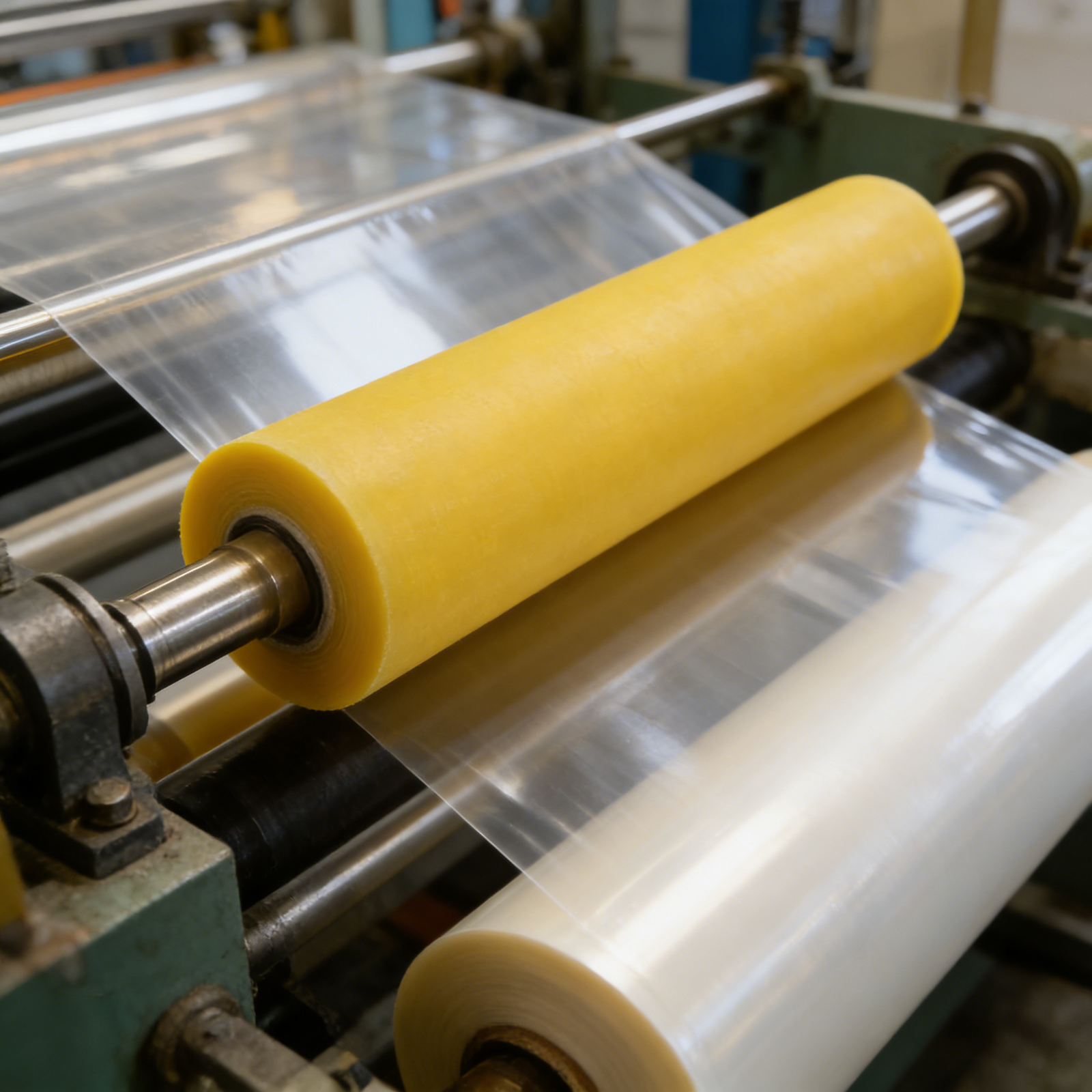
Why Choose a Custom Coating Roller Instead of a Standard Roller
In high-value coating lines, standard rollers are rarely designed around the actual process window. They may fit mechanically, but they fall short where it matters most: surface finish, concentricity, hardness consistency, chemical compatibility, and long-length dimensional stability.
A custom coating roller lets you match the roller structure to the application. A precision steel or aluminum core can be optimized for stiffness and balance, while the outer covering is selected for grip, release, wear resistance, solvent compatibility, or surface energy.
Get a Custom RecommendationTight Core Tolerances
Up to ±0.05 mm dimensional control for better assembly accuracy, rotational consistency, and stable operation across production speeds.
Broad Size Capability
10–1500 mm diameter and up to 8200 mm length — supporting compact precision modules and large-format industrial coating lines from one supplier.
Multiple Covering Options
Rubber, silicone, and polyurethane coverings in 18A–100 hardness for application-specific grip, release, wear, and chemical performance.
Precision Grinding
A clean, uniform, defect-free roller surface that forms the right foundation for micron-level coating, anilox engraving, or ceramic spraying.
Custom Coating Roller Capabilities
Our production capability covers both precision base rollers and composite rollers for high-specification processing lines. The wide processing envelope makes it practical to source multiple roller types from a single supplier.
| Parameter | Capability | Application Benefit |
|---|---|---|
| Roller diameter | 10–1500 mm | Compact modules to heavy-duty industrial lines |
| Roller length | Up to 8200 mm | Wide-web coating and converting equipment |
| Core tolerance | Up to ±0.05 mm | Improves assembly accuracy and rotational consistency |
| Covering hardness | 18A–100 | Tuning for grip, compliance, transfer, and durability |
| Core materials | SS / 45# steel / Al tube | Corrosion resistance, rigidity, and weight targets |
| Outer layer options | Rubber / Silicone / PU | Chemical, thermal, and mechanical compatibility |
Core & Surface Construction Options
Stainless Steel Core Corrosion Resistant
For humid, corrosive, or cleanliness-sensitive environments. Dimensionally stable with strong long-term reliability.
45# Steel Core High Strength
Robust mechanical strength and cost-effective durability for general industrial coating and converting lines.
Seamless Aluminum Tube Core Lightweight
Lower weight and reduced rotating mass for lines needing lower inertia or easier handling.
Rubber Coverings
Good grip, compliance, and adaptable contact pressure for web handling, traction, and pressure-sensitive contact applications.
Silicone Coverings
Heat resistant and release-friendly for sensitive films, thermal environments, and release-critical coating processes.
Polyurethane Coverings
Wear resistant with strong load performance for high-cycle lines, abrasive conditions, and demanding mechanical applications.
Built for High-Precision Coating Applications
Our rollers are engineered for manufacturers working with sensitive webs and high-value materials where surface integrity and coating uniformity must be tightly controlled.
Optical Film Manufacturers
Smooth, stable roller performance for precision-coated film layers. Even small surface deviations cause coating defects that are difficult to correct downstream in optical quality production.
FPC Substrate Manufacturers
Controlled contact and defect reduction in flexible electronics production. Dimensional consistency and precise hardness selection help reduce substrate marking and maintain product integrity.
Label Printing Equipment
Dependable roller performance across different ink and coating systems. Rubber, silicone, and polyurethane covering options with tuned hardness for consistent ink transfer and print uniformity.
Battery Separator Production Lines
Uniformity, cleanliness, and process consistency for new energy applications. Tight core tolerances and carefully selected surface materials help support high-value electrode and separator manufacturing.
Also: Anilox Engraving & Ceramic Spraying
Our precision-ground roller cores provide an ideal substrate preparation for advanced surface treatments. The accuracy of the base roller directly determines the quality and consistency of engraved cell geometry and ceramic layer adhesion.
Material and Covering Selection Guide
Choosing the right custom coating roller configuration is a balance between mechanical strength, chemical compatibility, surface behavior, hardness, and service life. There is no universal best option — the right choice depends on what the roller must do in your process.
Precision Standards That Support Process Stability
When buyers compare roller suppliers, the visible product is only part of the story. The real difference lies in machining discipline, tolerance management, and finishing consistency. In coating applications, small geometric errors create large process problems.
Our metal roller cores are machined with dimensional tolerances up to ±0.05 mm, helping improve fit, balance, and repeatability. Better dimensional control supports stable installation, improved rotational behavior, reduced vibration, and a stronger foundation for downstream surface treatments.
Send Your DrawingTight Diameter Control
Precision turning keeps diameter within ±0.05 mm for reliable installation, bearing fit, and rotational balance in high-speed coating equipment.
Straightness & Runout
Geometry control across the full roller length reduces runout and ensures even web contact — critical for uniform coat weight and web tension.
Precision Grinding
Covering surfaces are ground to a uniform, defect-free working profile that supports consistent coating transfer, nip pressure distribution, and product surface quality.
Surface Preparation
Precisely finished base surfaces for anilox engraving or ceramic spraying. Core accuracy determines cell depth consistency and layer adhesion uniformity.
Repeatability Across Batches
Controlled machining processes lock in geometry across production runs — ensuring replacement rollers match originals and OEM equipment maintains consistent performance across multiple builds.
Common Applications for Custom Coating Rollers
Different industries use a custom coating roller in different ways, but the objective is the same: control contact, transfer, pressure, and surface interaction as precisely as possible.
| Application | Roller Requirement | Common Roller Features | Process Goal |
|---|---|---|---|
| Optical film coating | High surface integrity, stable rotation, low defect risk | Precision core, fine grinding, application-specific covering | Uniform thin coating and low surface defect rate |
| FPC substrate processing | Controlled pressure, gentle web contact, dimensional consistency | Precision-machined core, compliant or engineered covering | Reduce marking and maintain substrate quality |
| Label printing equipment | Ink/coating compatibility, wear resistance, stable transfer | Rubber/silicone/PU cover, tuned hardness, uniform finish | Consistent print or coating performance |
| Battery separator production | Clean handling, high uniformity, long roller stability | Tight core tolerance, selected surface material, fine finish | Improve process consistency in sensitive materials |
| Anilox / engraved roller base | Flawless substrate preparation for surface treatment | High-accuracy core and smooth, stable base surface | Support reliable engraving or ceramic layer performance |
In many of these applications, the cost of a poor roller is much higher than the cost of the roller itself. Scrap, line stoppages, quality claims, and repeated maintenance quickly outweigh any short-term savings from using a generic component.
Get Roller GuidanceCustom Manufacturing Process
Rapidaccu follows a practical manufacturing workflow designed to reduce ambiguity and make sure the delivered roller matches the real process need — for OEM engineers, technical buyers, and maintenance teams working on tight schedules.
Technical Review
We review your drawing, sample, or operating requirements. Key inputs include roller dimensions, shaft or journal details, line speed, substrate type, covering material preference, hardness target, and environmental conditions.
Core Material & Structure Confirmation
Based on the application, we confirm the suitable core material — stainless steel, 45# steel, or seamless aluminum tube — considering rigidity, weight, corrosion resistance, and downstream finishing compatibility.
Precision Machining
The roller core is turned under strict dimensional control, with attention to geometry and tolerance consistency for smooth installation and stable rotation at production speed.
Covering and Surface Finishing
If required, the core is covered with rubber, silicone, or polyurethane in the specified hardness range. The surface is then precision ground to achieve the required finish and working profile for the coating process.
Inspection and Delivery
Final inspection verifies key dimensions and overall quality before shipment. This process applies to non-standard rollers, replacement rollers for legacy machines, and engineered components for new coating lines.
Have a drawing or worn sample roller? Send it to us for evaluation. Photos or key measurements can also serve as a starting point for the technical review.
Submit for EvaluationHow Rapidaccu Helps Reduce Operational Risk
The issue is not simply finding a roller manufacturer. It is finding a supplier capable of producing a custom coating roller that performs reliably in a sensitive production environment. Delays, dimensional mismatch, unstable surface quality, and poorly selected covering materials can create costly setbacks.
Broad dimensional capability — sourcing both small and very large rollers from one supplier, reducing vendor complexity and specification risk.
Strict tolerance control — ±0.05 mm dimensional discipline supports better machine fit, reduced vibration, and consistent process repeatability.
Multiple core and cover options — enable a closer match to actual operating environment, chemistry, temperature, and contact requirements.
Precision grinding and substrate preparation — provide a strong base for advanced surface requirements such as anilox engraving and ceramic spraying.
Application alignment — roller is built for coating performance, not just dimensional compliance, reducing startup troubleshooting and process adjustment time.
OEM and MRO support — both new equipment rollers and replacement parts for existing lines, with drawing-based or sample-based manufacturing.
For OEMs
Dependable roller specifications to support equipment performance and brand reputation — from initial build through repeat orders.
For End Users
Replacement or new rollers that install correctly, run stably, and help maintain product quality — reducing unplanned maintenance and line variation.
Frequently Asked Questions
Technical and sourcing answers for engineers and buyers evaluating custom coating roller solutions from Rapidaccu.
What information do you need to quote a custom coating roller?
What sizes can Rapidaccu manufacture for custom coating rollers?
Which core materials are available for custom coating rollers?
What covering materials and hardness ranges are available?
Can you produce rollers for micron-level coating applications?
Can you make replacement rollers for existing production equipment?
What surface treatments are available beyond standard grinding?
Why does covering hardness matter for a custom coating roller?
Request a Quote for a Custom Coating Roller
If your process depends on precise web handling, stable rotation, and high-quality surface finishing, the right custom coating roller can make a measurable difference in coating consistency and line reliability.
Contact Rapidaccu
Send your drawing, dimensions, or application details. Our team will review and provide a technical quotation tailored to your coating roller requirements.
Longhua District, Shenzhen, China
- Roller drawing or sample
- Required diameter and length
- Core material preference
- Covering material and hardness
- Application and operating conditions
- Quantity and delivery expectations
Send Your Enquiry
Complete the form with your project details and our engineering team will respond with a technical review and quotation.