
Custom Conveyor Rollers Built for Your System
Rapidaccu manufactures gravity and driven conveyor rollers for automation, warehousing, packaging, and production lines — with precision CNC turning and full customization from prototype to volume production.
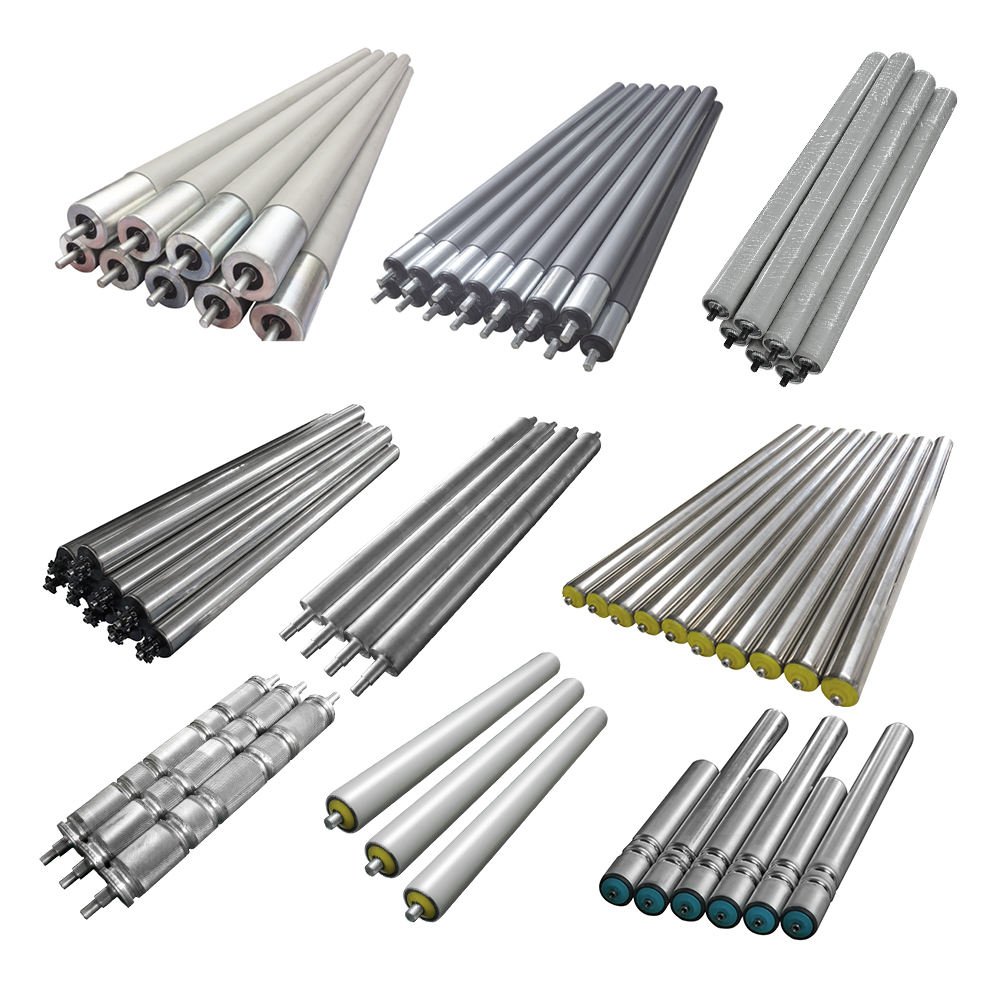
Rollers Engineered Around Your Real Operating Conditions
In conveyor systems, small dimensional errors lead to noise, tracking problems, premature bearing wear, and installation delays. Rapidaccu builds rollers around your actual design, not a catalog default.
Precision CNC Turning
Critical dimensions at shaft ends, bearing seats, and grooves are machined with CNC precision — eliminating the fitment risk that comes from tolerance drift in standard parts.
Full Customization Range
Roller type, tube size, shaft-end geometry, material, and surface finish can all be specified to your exact requirements — no forcing your design into a catalog mold.
Prototype to Production
We support the full project path — from rapid prototype validation through pilot builds and into mass production — with consistent quality and supply chain coordination.
OEM & Integrator Focus
Purpose-built for automation integrators, intralogistics builders, and packaging OEMs who need repeatable mechanical components across multiple projects and orders.
Application-Driven Design
Load profile, speed, environment, and installation method all inform how a roller should be specified. We review your requirements and recommend the right configuration before production.
Integrated Supply Chain
From sourcing through machining and finishing, coordinated supply chain management reduces lead times and helps procurement teams manage transitions from trials to volume orders.
Roller Types for Every Conveyor Configuration
Our custom conveyor rollers include gravity and driven formats used across modern material handling systems — from simple flow racks to high-throughput automated lines.
Request Custom SpecGravity Conveyor Rollers
Unpowered rollers for flow racking, accumulation, and low-energy product movement on inclined or level tracks.
Belt-Driven Rollers
Driven by flat or round belts for synchronized transport and zone control in automated conveyor lines.
Chain-Driven Rollers
Heavy-duty drive option for high-torque, high-load applications with single or double sprocket configurations.
Single / Double O-Belt
Groove machined into the roller tube to seat O-belt drives cleanly — available in single and double groove profiles.
Single / Double Sprocket
Sprocket rollers for positive chain engagement, available in both single and double sprocket formats for various chain pitches.
Tapered Conveyor Rollers
Conical profile rollers designed for curved conveyor sections, ensuring smooth product tracking through bends and transitions.
8 Shaft-End Machining Options
Shaft-end geometry determines installation fit, drive performance, and mechanical retention. Rapidaccu supports 8 complex machining options to match any mounting or transmission requirement.
| Shaft End Type | Typical Application | Key Benefit |
|---|---|---|
| Round Shaft Standard | General conveyor frames and bearing-supported installations | Simple, versatile, widely compatible |
| Milled Flat Shaft | Positive positioning with brackets or drive components | Better anti-rotation performance |
| Half-Moon Groove | Specific locating and coupling requirements | Secure fit for mating hardware |
| Internal Thread | End fastening with bolts or special assemblies | Clean external profile and easier integration |
| External Thread | Nut-fastened mounting and adjustable assemblies | Strong mechanical retention |
| Cotter Pin Shaft | Quick-assembly conveyor structures | Convenient installation and replacement |
| Hollow Tube Shaft | Weight-sensitive equipment and special routing needs | Reduced mass and flexible design |
| Hex Shaft Drive | Torque transmission and anti-slip drive interfaces | Strong drive engagement |
Recommendation: Share your existing drawing or mating-part dimensions early in the quoting stage. Shaft-end details often determine whether a roller installs smoothly or causes assembly delays on site.
Choose the Right Material for Your Environment
Material directly affects strength, corrosion resistance, weight, wear life, and cost. We offer four categories so you can specify rollers for any operating environment without overengineering.
Stainless Steel
Higher material cost than carbon steel; ideal where hygiene or washdown is required.
Carbon Steel
May require protective finishing for corrosion control in humid environments.
Aluminum Alloy
Lower load capacity than steel; best suited for moderate-load automation equipment.
Engineering Plastics
Application limits depend on load and temperature; specify operating conditions clearly.
Surface Treatments for Performance and Durability
The right surface finish extends service life, controls corrosion, improves grip, and reduces noise. Specify by application and environment — not just appearance.
Zinc Plating
Cost-effective corrosion protection for carbon steel rollers used in general indoor industrial and warehouse environments. Most common finishing choice for standard duty applications.
Indoor IndustrialElectroplating
Enhanced surface durability and improved finish quality for applications where both appearance and protection matter. Finish type can be selected to meet specific requirements.
Enhanced DurabilityRubber Coating
Adds grip, cushioning, and noise reduction for packaging lines, accumulation zones, and applications handling delicate or surface-sensitive products. Coating hardness and thickness customizable.
Grip & CushionNo Added Coating
Preserves base material properties — appropriate for stainless steel rollers or specialized material applications where coatings are unnecessary or could interfere with function.
Base MaterialPrecision CNC Turning — Where Dimensional Control Matters Most
Many roller supply problems originate from poor control of critical dimensions. CNC turning allows us to machine shaft ends, bearing seats, and grooves with the consistency required for modern automation and logistics systems.
Tight Dimensional Tolerances
Shaft-end mismatch, inconsistent concentricity, and inaccurate grooves are eliminated — ensuring smooth installation with bearings, frames, and sprockets.
Consistent Concentricity
Controlled runout across the roller body prevents vibration and uneven wear that shortens bearing life and creates noise in production environments.
Complex Interface Geometry
Non-standard shaft ends, integrated drive interfaces, and special mounting relationships can all be machined to specification without requiring post-delivery rework.
Repeatable Across Batches
CNC programs lock in geometry across production runs, ensuring the 500th roller matches the first — critical for OEMs and integrators with multi-line deployments.
Why This Matters for Your Project
Better dimensional control translates directly into operational benefits across your conveyor system:
Send the full assembly drawing so we can review the dimensions that matter most before production begins — shaft fit, bearing seat tolerances, and groove profiles.
Submit Your DrawingSeamless Support from Rapid Prototyping to Batch Production
Conveyor development moves through distinct stages. Rapidaccu is set up to support the full path without forcing a quality change or supplier switch between phases.
Prototype Stage
Fast validation of dimensions, shaft interfaces, and drive compatibility before committing to tooling or frame modifications.
Responsive review & small-batch manufacturingPilot Build
Repeatable quality across a limited set of assemblies for system testing, line trials, and performance sign-off.
Stable machining & supply coordinationPre-Production
Refinement of material selection, surface finish, or shaft details based on real-world testing before committing to volume.
Engineering communication & controlled updatesMass Production
Reliable delivery schedules and consistent part quality across repeat orders without re-qualifying suppliers or re-checking dimensions.
Batch manufacturing with supply chain integrationReady to start your roller project?
Tell us your stage, quantities, and technical requirements — we’ll match the right manufacturing approach for where you are in the project cycle.
Applications Across Material Handling and Automation
Custom rollers are deployed wherever standard catalog dimensions do not match the real mechanical demands of the conveyor — across industries and project scales.
Warehouse & Logistics
Carton movement, sortation lines, transfer modules, and accumulation zones where roller dimensions, drive type, and surface finish must match frame and load specifications precisely.
Automation Equipment
Precise product movement between stations where spacing, speed consistency, and compact roller profiles matter for system integration and throughput targets.
Packaging Machinery
Custom driven rollers integrated into synchronized process equipment, with specific shaft-end geometry and surface coatings for product contact and cycle reliability.
How to Specify Your Custom Conveyor Rollers
A faster quote and better technical match start with complete input data. When customers provide only diameter and length, critical details are often still missing — especially for replacements or driven assemblies.
Speed Up Your Quote
If you have an existing drawing, sample, or marked-up photos of a worn replacement part, that can significantly accelerate the quoting process. Our team reviews information and identifies any missing parameters before production begins.
Why Buyers Choose Rapidaccu for Custom Conveyor Rollers
OEMs, integrators, and procurement teams face three recurring concerns: correct fit, consistent quality, and supply continuity. Rapidaccu is built to address all three.
CNC-Controlled Dimensions
Better control over shaft ends, bearing seats, and grooves reduces fitment risk and eliminates the need for post-delivery rework before installation.
Broad Customization Range
Gravity rollers, driven rollers, tapered rollers, and 8 shaft-end machining options from one supplier — reducing the complexity of managing multiple vendors.
Supply Chain Integration
Coordinated supply chain management supports smooth transitions from prototype through pilot build to repeat volume orders without sourcing disruptions.
OEM Design Support
Technical review of drawings and tolerance-sensitive interfaces before production — reducing design risk and improving the accuracy of the first delivery.
Shenzhen Manufacturing Base
Located in Shenzhen’s industrial ecosystem, with access to material, finishing, and component supply that supports both short-run and volume production.
Single-Source Convenience
From drawing review and material selection through machining, surface treatment, and delivery — managed as one coordinated supply relationship.
Frequently Asked Questions
Answers to the most common technical and commercial questions about custom conveyor roller sourcing from Rapidaccu.
What information do I need to provide to get a quote for custom conveyor rollers?
Can Rapidaccu produce both prototype quantities and volume production orders?
Which shaft-end options are available for custom conveyor rollers?
Which material is best for conveyor rollers in wet or corrosive environments?
What are tapered conveyor rollers used for?
What surface treatment should I choose for carbon steel conveyor rollers?
Can Rapidaccu match rollers to an existing conveyor frame or drive system?
Why is CNC turning important for custom conveyor rollers?
Request a Quote for Custom Conveyor Rollers
Whether you need a small prototype batch or ongoing production supply, send us your requirements and we’ll recommend a practical manufacturing solution for your conveyor project.
Contact Rapidaccu
Reach out with your drawing, load details, and roller specifications for a fast technical review and quotation.
Longhua District, Shenzhen, China
What to include in your quote request:
- Roller drawing or sample photos
- Diameter, length, and shaft dimensions
- Roller type and drive method
- Material and surface treatment requirements
- Load, speed, and operating environment
- Required quantity and delivery schedule
Send Your Enquiry
Fill in your project details and we’ll respond with a technical review and quotation.