
Custom Corona
Treatment Rollers
Precision-machined insulated rollers for film converting, printing, coating, and laminating — engineered for stable dielectric performance, tight runout, and heavy-duty OEM service.
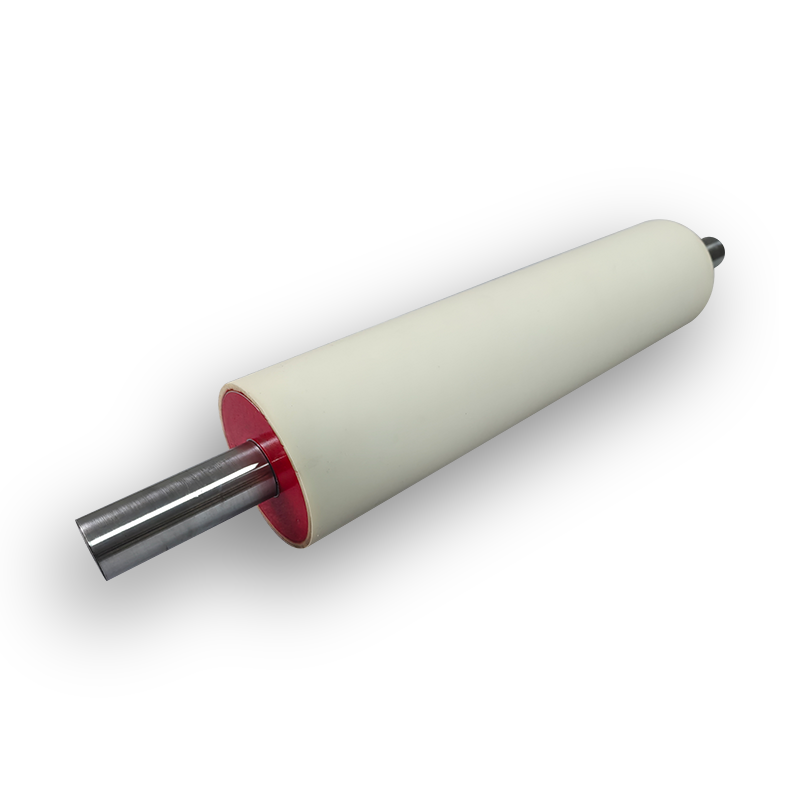
What Is a Custom Corona Roller?
A custom corona roller is a precision-engineered roller used in corona treatment systems to increase the surface energy of polymer films and other substrates before printing, coating, laminating, or bonding. In a corona treater, the roller works with the electrode system to create a controlled electrical discharge that modifies the material surface.
For machine builders, customization matters because corona treatment performance depends on more than electrical design alone. Roller diameter, face length, shaft structure, insulation material, coating thickness, hardness, balance grade, and surface finish all affect treatment consistency and long-term reliability.
Discuss Your Requirements →Stable Discharge
Low runout maintains consistent electrode gap for uniform treatment across the web width.
Insulation Safety
Precision dielectric surfaces prevent breakdown and support safe high-voltage operation.
Tight Precision
CNC-machined core with ≤0.01 mm runout and G2.5 dynamic balancing for smooth, stable rotation.
OEM-Ready Design
Shaft, journal, and bearing seat details machined to drawing for direct machine integration.
Key Technical Capabilities
A full-range corona roller supplier — from load capacity and geometry to insulation options and surface finish
| Parameter | Capability | OEM Benefit |
|---|---|---|
| Maximum load capacity | 50 tons | Supports heavy-duty machine structures and wide-web systems |
| Maximum roller diameter | 2000 mm | Suitable for large-format and special industrial equipment |
| Maximum roller length | 12000 mm | Fits wide-width film, coating, and laminating applications |
| Radial runout | ≤0.01 mm | Improves electrode gap consistency and treatment uniformity |
| Dynamic balance | Standard G2.5 | Reduces vibration at operating speed |
| Insulation options | Polymer 20–95A / Ceramic dielectric | Matches different voltage, wear, and substrate requirements |
| Ground surface roughness | ≤Ra 0.8 μm | Supports stable insulation and controlled web contact |
Why Equipment Manufacturers Choose Rapidaccu
OEMs need a partner that understands both precision shaft manufacturing and insulating surface engineering. Rapidaccu combines both.
High-Precision CNC Core
The base roller is machined for excellent concentricity and strict runout control, maintaining a stable electrode gap and uniform electrical treatment across the web.
Dual Insulation Systems
High-performance polymer coverings and ceramic dielectric coatings selected by voltage, substrate type, line speed, wear conditions, and operating temperature.
Extra-Large Roller Capacity
We manufacture large-diameter and long-face corona rollers for wide-web processing — including designs where rigidity, balancing, and insulation stability cannot be compromised.
G2.5 Dynamic Balancing
Standard G2.5 balance grade reduces vibration in wide or high-speed converting lines where dynamic instability affects print quality and web handling.
≤Ra 0.8 μm Surface Finish
Surface grinding to specification supports smooth web handling, stable dielectric behaviour, and repeatable processing performance throughout service life.
Drawing-Based Custom Build
Non-standard journal designs, large bearing arrangements, special shaft end geometry, and integration requirements all handled to your production drawings.
Polymer Insulation or
Ceramic Dielectric Coating?
Choosing the right outer layer is one of the most important decisions in a custom corona roller project. The best option depends on your machine architecture, substrate type, treatment level target, operating speed, temperature, and wear environment.
Surface Options at a Glance
| Surface Type | Key Characteristics | Best Fit |
|---|---|---|
| Polymer insulation | Wide hardness range, customisable | General film treatment |
| Ceramic dielectric | High wear resistance, durable | High-demand lines |
| Precision ground | Surface Ra ≤0.8 μm | Smooth web contact |
| CNC-machined core | High concentricity, low runout | All corona roller designs |
Unsure which option suits your application? Rapidaccu can review your process conditions and recommend a suitable roller construction based on operating voltage, web speed, substrate range, and mechanical load.
Applications in Packaging & Film Processing Equipment
Rapidaccu custom corona rollers are developed for OEM use where surface treatment quality directly affects downstream adhesion.
Blown Film Lines
Prepares film surfaces for later printing or lamination. Mechanical precision and dielectric consistency are essential for treatment stability over broad web widths and variable production speeds.
Flexible Packaging Printing
Ensures the substrate reaches the press with adequate surface energy for ink anchorage. Uneven treatment creates print defects, adhesion variation, and repeatability issues at high speed.
Coating Machines
Prepares film for functional or protective coatings. Surface treatment affects coating wet-out and bond quality; the roller must resist electrical stress while maintaining precision geometry.
Laminating Equipment
Promotes adhesive anchorage between substrate layers. Reliable dielectric performance helps maintain process stability and bonding consistency throughout continuous operation.
Custom Options for Different Machine Designs
Rapidaccu builds custom corona rollers around your machine design — not the other way around.
Common Customisation Parameters
Manufacturing Process Overview
RFQ Checklist for OEM Buyers
Providing complete inputs shortens the quotation cycle and improves the accuracy of technical recommendations.
Roller Dimensions
Why it matters: Determines fit and structural suitability
Typical input needed: Diameter, face length, total length
Shaft / Journal Details
Why it matters: Ensures compatibility with bearings and housings
Typical input needed: Drawings, tolerances, keyway/thread details
Surface Construction
Why it matters: Affects insulation and service life
Typical input needed: Polymer hardness or ceramic coating preference
Operating Conditions
Why it matters: Guides material and balancing decisions
Typical input needed: Voltage, speed, substrate, temperature, load
Frequently Asked Questions
Common questions about custom corona rollers from OEM buyers and engineers
What does a corona roller do?
Why is low runout important for a corona treatment roller?
What is the difference between a polymer-covered roller and a ceramic dielectric roller?
Can Rapidaccu produce large-size custom corona rollers?
Which industries use custom corona rollers?
What information is needed for a quotation?
Request a Quote for Your Custom Corona Roller
Our engineering team will review your requirements and provide a practical recommendation — typically within 24 hours of receiving your drawings or parameters.
Contact Rapidaccu
Dalang, Longhua District,
Shenzhen, China
- ✓High-load corona treatment rollers
- ✓Large-diameter or extra-long roller formats
- ✓Tight runout ≤0.01 mm and G2.5 balancing
- ✓Polymer or ceramic dielectric surface options
- ✓Drawing-based customisation for machine integration