
Custom Heat Transfer & Chill Rollers
Advanced internal fluid-channel rollers engineered for demanding thermal control in battery coating, film extrusion, composite pressing, and pharmaceutical packaging lines — built around your process, not a catalog standard.
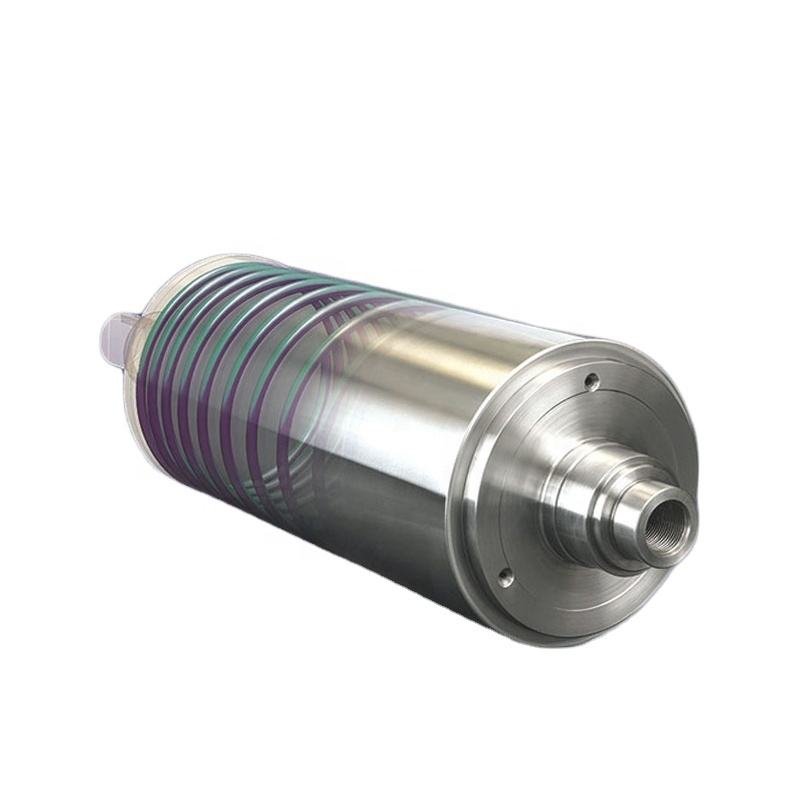
The Roller Is Often the Hidden Source of Process Instability
In thermal processing equipment, uneven internal flow, inconsistent wall thickness, poor finishing, or pressure-drop imbalance can create hot spots, cold bands, product defects, and unpredictable startup behavior.
A properly engineered roller improves coating consistency, web handling stability, material distortion control, surface texture, and batch-to-batch repeatability. When downtime, scrap, and product variation are expensive, a standard roller can cost more in operation than it saves at purchase.
Discuss Your ApplicationAdvanced Fluid Channels
Purpose-built internal paths with single-flow or three-in/three-out configurations for precise flow distribution and thermal balance.
Multi-Start Spiral Baffles
Variable-pitch or equal-pitch spiral guide structures control flow velocity, residence time, and heat exchange across the full roller face.
Uniform Wall Thickness
Precision inner/outer wall turning controls wall consistency for even thermal response and elimination of cross-face temperature banding.
Near-Zero ΔP Deviation
Flow paths built to achieve near-zero pressure-drop deviation between circuits, improving thermal balance and reducing system compensation load.
Hot Water, Cold Water & Thermal Oil
Channel design, sealing strategy, and material selection are aligned to the thermal medium — cold water, hot water, or thermal oil — ensuring reliable performance across your specific process temperature range.
Engineered for Precise Thermal Control
Our roller designs support cooling or heating with cold water, hot water, or thermal oil — with internal structures purpose-built for the media, temperature range, flow rate, and thermal load of each application.
Single-Flow Circulation
Straightforward internal circulation for applications where balanced coverage and controlled residence time can be achieved with a single fluid path. Efficient and reliable for standard thermal duty.
Three-In/Three-Out Configuration
Multi-circuit channel arrangement for complex thermal balancing across wider rollers or processes sensitive to cross-web variation. Reduces compensation load on the broader cooling or heating system.
Variable & Equal-Pitch Spiral
Multi-start spiral baffles with variable or equal pitch control flow velocity, residence time, and heat exchange behavior across every zone of the roller face — eliminating dead zones and hot spots.
Extremely Low Cooling Temperature Differential
Our capability in complex internal flow-path machining gives OEMs more freedom to optimize the roller around the process objective — whether that means fast chill-down, controlled heat-up, stable surface temperature, or balanced thermal performance across wide web widths.
Applications Across High-Value Thermal Processing
The common thread across these industries is clear: temperature variation creates defects, and defects create cost. Our custom thermal rollers are built for equipment manufacturers where thermal stability directly affects output quality.
Lithium Battery Coating Equipment
In battery electrode production, coating consistency and thermal stability are fundamental. Uneven roller temperature can affect slurry behavior, coating uniformity, drying interaction, and finished electrode quality. Our thermally balanced rollers help support precise process control in high-value battery manufacturing systems.
Plastic Film Extrusion Machines
Film lines depend on rapid, even cooling to maintain gauge, surface quality, and dimensional stability. A poorly designed chill roller leads to curl, haze, uneven gloss, or web handling problems. Our custom rollers are manufactured for efficient heat removal and stable surface temperature across the working width.
Composite Material Pressing Equipment
Composite processes require controlled heating or cooling during pressing and consolidation. Thermal inconsistency affects curing, bonding, thickness stability, and final mechanical properties. We provide rollers designed for repeatable heat transfer under demanding process conditions.
Pharmaceutical Packaging Machinery
Pharma packaging systems require reliability, cleanliness, and highly repeatable forming and sealing conditions. Temperature-sensitive packaging materials respond quickly to small thermal deviations. Our custom thermal rollers support accurate and stable processing in regulated manufacturing environments.
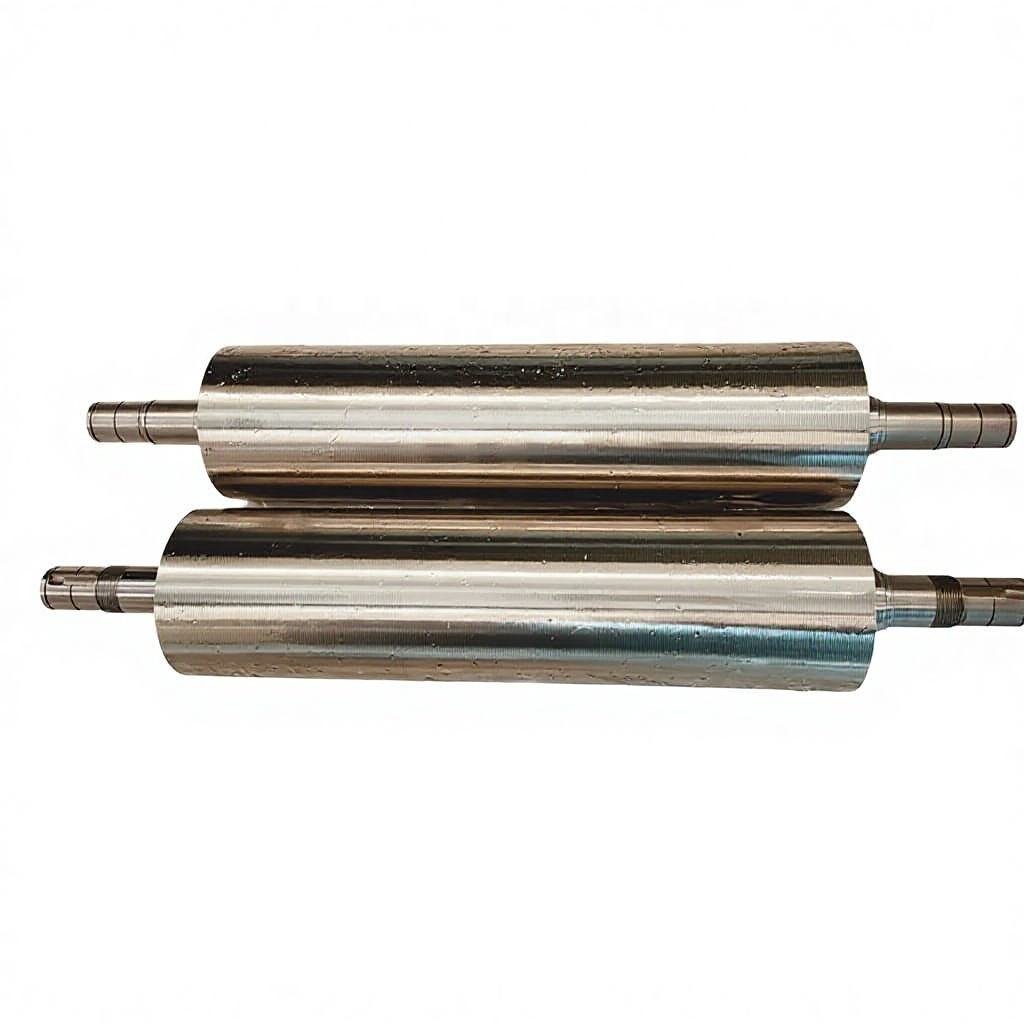
Also Suitable For
Coating and Converting Lines
Stable surface temperature for precise coating weight and consistent material properties across full web width.
Lamination Equipment
Controlled bonding temperature for adhesive or thermal lamination processes requiring even thermal pressure.
Specialty Packaging Systems
Films, foils, and webs that require clean, repeatable thermal contact conditions in high-cycle production.
Common Problems a Better Roller Design Can Solve
Many OEMs only revisit roller design after recurring field complaints or persistent process instability. The roller is often one of the most influential thermal components in the machine.
Cross-Web Temperature Variation
Uneven flow distribution causes hot and cold zones that create coating weight variation, film property differences, or sealing inconsistencies.
Hot Spots and Cold Bands
Dead zones in the internal channel leave areas of the roller underserved by fluid flow, creating localized surface temperature deviation.
Inconsistent Startup Behavior
Poor internal circulation creates uneven warm-up or chill-down that forces slow starts, extended conditioning times, and early-production scrap.
Pressure Imbalance Between Paths
Unequal pressure drop between flow circuits causes preferential flow and reduces overall heat exchange effectiveness across the roller face.
High System Energy Use
Poor internal circulation forces higher flow rates, more chiller or heater energy, and slower line speeds to compensate for weak roller thermal performance.
Dimensional Instability
Residual stress or uneven wall thickness creates dimensional drift under thermal cycling, affecting runout, web handling stability, and product contact quality.
Surface Defects from Poor Finishing
Inadequate grinding or polishing leads to product marks, surface transfer defects, and inconsistent contact that cannot be compensated by temperature alone.
Coating and Film Surface Variation
Thermal non-uniformity produces gloss variation, coating weight bands, gauge inconsistency, or surface defects that reduce yield and complicate downstream processing.
Rapidaccu addresses these pain points through advanced internal channel machining, stable joining methods, stress-relief annealing, and precise finish processing — building rollers that behave consistently under fluid pressure, thermal cycling, and line-speed conditions.
Standard Rollers vs Rapidaccu Custom Thermal Rollers
A custom-built thermal roller offers measurable advantages in thermal uniformity, flow balancing, finishing quality, and long-term process consistency where standard products reach their limits.
Custom Design Options for OEM Requirements
No two production lines manage heat in exactly the same way. Roller face width, shell thickness, fluid type, temperature range, line speed, material sensitivity, and machine layout all influence the ideal configuration. We manufacture to OEM-level requirements rather than forcing customers into a standard geometry.
We work from customer drawings, performance targets, or reverse-engineering references, then translate those into a manufacturable roller with attention to dimensional precision and practical production requirements.
Send Your DrawingFrom Inquiry to Finished Roller — Step by Step
Buying a custom thermal roller should be technically thorough but operationally straightforward. We work with equipment builders, engineering teams, and sourcing departments to move efficiently from requirement review to final production.
Requirement Review
Evaluate roller dimensions, process media, temperature range, speed, integration method, and performance objectives — including current failure points.
Internal Structure Recommendation
Propose single-flow or three-in/three-out configuration with appropriate spiral guidance for thermal balance and fluid behavior.
Manufacturing Planning
Define machining route, welding approach, stress-relief cycle, finish process, and inspection points needed for the required characteristics.
Precision Production
Turning, internal channel machining, thermal interference welding, annealing, grinding/polishing, and optional plating are applied per specification.
Inspection and Delivery
Finished rollers checked against dimensional and finishing requirements before shipment, supporting reliable installation and integration into your equipment.
What to Specify When Requesting Custom Rollers
A faster and more accurate quotation starts with the right technical information. Providing complete data upfront ensures the design is suitable for both performance and manufacturability.
Partial Information Is Still Useful
In many projects, the process objective is known before every final drawing detail is locked. We can work with partial data and support a practical path toward the final roller design — starting with photos, sketches, or performance targets.
| Specification Item | Why It Matters | Typical Examples |
|---|---|---|
| Roller dimensions | Determines shell design and machining route | Ø300 mm, face 1800 mm |
| Thermal medium | Affects channel design and sealing | Chilled water, thermal oil |
| Inlet/outlet config | Influences flow balance and piping | Single-flow, 3-in/3-out |
| Operating temperature | Guides material and process planning | 10–25°C / 80–180°C |
| Surface finish | Impacts product contact and quality | Ground, polished, plated |
| Application type | Aligns structure with thermal load | Battery coating, film chill |
| Mounting / journal | Ensures installation compatibility | Shaft journals, bearing fits |
| Performance issue | Helps prioritize design features | Hot spots, pressure imbalance |
Manufacturing Capability Backed by Real Production Discipline
Rapidaccu is positioned to support the growing demand for advanced thermal management components. That momentum is backed by real manufacturing capability: precision liquid-cooling component production, complex internal flow-path machining, and process control that translates into better-performing rollers.
Temperature Uniformity Control
Better control of temperature uniformity across the full roller face through advanced internal channel geometry and wall thickness precision.
Lower Hot Spot Risk
Spiral guide structures and near-zero ΔP design reduce the risk of hot spots and cooling imbalance that cause product defects and process variability.
Reliable Post-Fabrication Stability
Stress-relief annealing and precision turning ensure structural and dimensional stability after fabrication, under thermal cycling, and across the roller service life.
Premium Surface Quality
Grinding, polishing, and optional plating deliver surface quality suitable for demanding web or material contact in coatings, film, pharma, and composite applications.
Complex Internal Geometry Expertise
Multi-start spiral guidance, variable or equal pitch internal paths, and single-flow or three-in/three-out configurations all manufactured with production discipline.
OEM Engineering Partnership
From drawing review and application analysis through production and delivery — one partner managing the full thermal roller manufacturing scope.
Frequently Asked Questions
Technical and sourcing answers for engineers and OEM teams evaluating custom heat transfer and chill rollers from Rapidaccu.
What types of thermal media can these rollers work with?
What is a three-in/three-out channel configuration?
What industries use custom heat transfer/chill rollers?
Why is stress-relief annealing important for thermal rollers?
What surface finish options are available for thermal rollers?
What is the advantage of multi-start spiral baffles in a chill roller?
Can Rapidaccu manufacture rollers from a customer drawing?
What information should I provide to get a quote for a custom thermal roller?
Request a Quote for Custom Heat Transfer / Chill Rollers
If you are developing new equipment, upgrading an existing roller design, or looking for a manufacturing partner capable of producing complex internal thermal channels — Rapidaccu can help. Contact us to discuss your project and request a quotation.
Contact Rapidaccu
Send your drawing, thermal requirements, or application details for a fast technical review and quotation from our engineering team.
Longhua District, Shenzhen, China
- Roller drawing or reference dimensions
- Required thermal medium (water/oil)
- Operating temperature range
- Inlet/outlet configuration preference
- Surface finish or plating requirement
- Application and machine type
- Quantity and delivery expectations
Send Your Enquiry
Complete the form with your project details and our team will respond with a technical review and quotation.