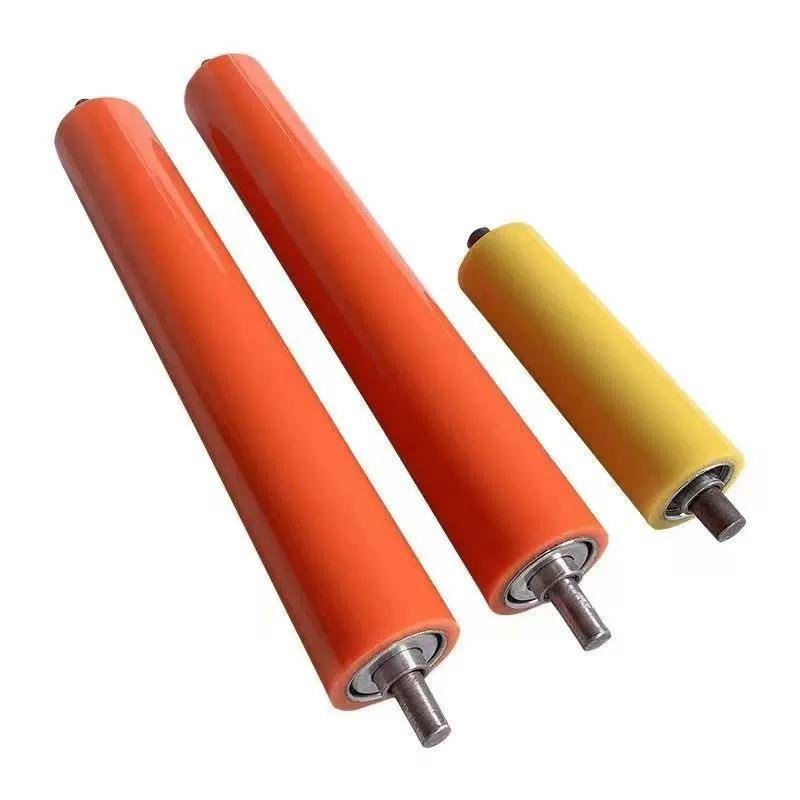
One-Stop Custom Manufacturing

Custom Rubber
Rollers

Precision metal core machining combined with professional rubber covering and surface finishing — single-source manufacturing for OEM printing, film, woodworking, and textile equipment.

20–90A
Shore A Hardness
NR·NBR
EPDM·Si
Elastomers
5 Types
Surface Patterns
1 Source
Core to Finish
Custom Rubber Rollers by Rapidaccu

One-Stop Custom Rubber Roller Manufacturing

Rapidaccu delivers custom rubber rollers as a fully managed service — from precision CNC metal core to finished covered roller ready for assembly. One point of contact, tighter dimensional control, and no handoff problems between vendors.

Metal Core CNC Machining

High-accuracy CNC machining of cores, shafts, journals, and roller bodies — accepts DWG, STP, and PDF files. Every core is the structural foundation for a precise final roller.

Rubber Covering & Vulcanization

NR, NBR, EPDM, and silicone compounds with hardness 20–90 Shore A. Core surface is prepared and rubber is vulcanized for strong, durable bonding that holds up under continuous load.

Surface Finishing & Patterning

Smooth grinding, diamond pattern, precision knurling, perforation, and herringbone textures — customised to your traction, wear, and media handling requirements.

What We Provide

CNC machining of metal cores, shafts, journals, and roller bodies
Support for DWG, STP, PDF, and other common drawing formats
Rubber covering in NR, NBR, EPDM, silicone compounds
Customized hardness from 20–90 Shore A
Strong rubber-to-metal vulcanized bonding
Smooth, diamond, knurling, perforation & herringbone finishes
Single-source project management from core to finished roller
Material Guide

Rubber Options by Material & Hardness

Selecting the right compound is essential for roller life, machine stability, and product quality. Rapidaccu helps customers match elastomer properties to application demands.

NR
Natural Rubber — 30–80 Shore A
High elasticity, strong grip, good abrasion resistance. Used in feed rollers, traction rollers, general transport rollers.
NBR
Nitrile Rubber — 40–90 Shore A
Good oil resistance, durable under industrial contact. Suitable for printing rollers and process rollers exposed to oils.
EPDM
EPDM — 40–85 Shore A
Strong weather, ozone, and aging resistance. Ideal for outdoor equipment, wet-process rollers, and general industrial lines.
Si
Silicone — 20–80 Shore A
Temperature resistance, softer contact, good release properties. Suited for film handling, delicate surfaces, and heat-related applications.
Material Table

Compound Selector at a Glance

Material Hardness Key Benefit
NR 30–80A High elasticity & grip
NBR 40–90A Oil resistance
EPDM 40–85A Weather & ozone resistance
Silicone 20–80A Heat resistance & gentle contact
Hardness Guidance
Softer (20–40A) — more grip, higher conformity
Harder (70–90A) — shape retention, load resistance

Surface Patterns & Finishing

The outer geometry of a rubber roller matters as much as the base material. Rapidaccu supports custom machining and finishing to create application-specific patterns that improve traction, reduce slip, and minimise marking.

Smooth Ground

Uniform contact, low marking risk. Ideal for printing, film transport, and sensitive surface contact.

Stable pressure · Clean finish

Diamond Pattern

Enhanced multidirectional grip for feed systems, traction handling, and conveyor contact.

Reduced slip · Better control

Precision Knurling

Controlled friction and repeatable feeding for web transport and woodworking feed rollers.

Consistent grip · Reliable feed

Perforated Surface

Air release, drainage, and debris accommodation for converting or wet-contact processes.

Stable handling · Difficult conditions

Herringbone Pattern

Directional traction and media guidance for film, textile, and process transport systems.

Better tracking · Less wandering
Surface Finish Functional Benefit Suitable Applications Typical Result
Smooth GroundUniform contact, low marking riskPrinting, film transport, sensitive contactStable pressure, cleaner finish
Diamond PatternEnhanced multidirectional gripFeed systems, traction handlingReduced slip, better material control
Precision KnurlingControlled friction, repeatable feedWeb transport, woodworkingImproved grip consistency
Perforated SurfaceAir release, drainageConverting, wet-contact processesStable handling in difficult conditions
HerringboneDirectional traction, media guidanceFilm, textile, process transportBetter tracking, reduced wandering

Why Equipment Manufacturers Choose Rapidaccu

OEM buyers often run into the same problem: multiple vendors, separate quotes, and nobody owning the full scope. Rapidaccu removes that friction.

Total Project Ownership

One supplier manages the complete rubber roller build — from metal core to final surface finish — so no one is pointing fingers when dimensions miss.

Better Dimensional Consistency

Core machining and outer diameter finishing are coordinated together, so the final covered roller matches drawing tolerance with fewer surprises at assembly.

Faster Engineering Communication

Design changes, tolerance updates, and revision queries go to one team instead of three — significantly reducing delay during prototyping and development.

Multi-Format Drawing Support

We accept DWG, STP, PDF, and other common formats. Engineering teams can transfer designs directly without file conversion delays.

Efficient Repeat Ordering

Once a specification is established, repeat production orders can be placed with minimal re-engineering, saving time on production programs and service parts.

Flexible Customisation

Custom shaft ends, stepped diameters, keyways, compound types, hardness ranges, and surface patterns — all from a single supplier relationship.

Manufacturing Process

A reliable rubber roller starts with a controlled process. Each stage is designed to reduce uncertainty and deliver a finished part that integrates cleanly into your machine.

01

Drawing Review & Application Analysis

Analysis of dimensions, tolerances, material requirements, and operating conditions. Prevents design mismatch and quoting errors before production begins.

02

Metal Core CNC Machining

Core, shaft, journals, and mounting interfaces are machined to specified geometry. Establishes structural accuracy and concentricity as the foundation of the finished roller.

03

Surface Preparation & Vulcanization

Core surface is roughened and prepared, then the selected rubber compound is vulcanized to the metal. Ensures durable rubber-to-metal bonding for continuous operational load.

04

Final Grinding, Patterning & Inspection

Outer diameter is finished and surface texture is applied as required. Critical features are checked against drawing to confirm the roller is ready for machine integration.

Industries & Applications

Rapidaccu supplies custom rubber rollers for equipment manufacturers that need repeatable performance in demanding industrial environments.

Printing Equipment

Roller consistency affects feed stability, ink transfer support, and production accuracy. Precise core geometry and correct hardness are critical for print quality.

  • Feed and transport rollers
  • Ink transfer support rollers

Film Converting & Processing

Web guiding, tension handling, lamination support, and anti-slip conveying require rollers that drive webs without slip, wrinkling, or surface damage.

  • Film guiding rollers
  • Laminating support rollers

Woodworking Machinery

Durable rollers that combine grip with non-marring contact to protect finished panels and boards during feeding and transport.

  • Wood panel feed rollers
  • Protective contact rollers

Textile & Light Industry

Balance of traction, compliance, and wear resistance to prevent damage to delicate fabrics while maintaining reliable transport through processing machinery.

  • Textile transport rollers
  • Scratch-sensitive contact rollers
Customisation

Custom Parameters We Support

Custom rubber rollers are often defined by details that generic suppliers struggle to manage. Rapidaccu supports the full set of parameters OEM buyers need.

Roller Length & OD
Custom to your machine geometry
Core Material & Shaft
Keyways, threads, steps, journals
Rubber Compound
NR, NBR, EPDM, Silicone
Hardness Range
20–90 Shore A
Coating Thickness
Specified per application need
Surface Pattern
Smooth, diamond, knurl, perf, herringbone
Tolerance Requirements
Drawing-based critical dimensions
Quantity
Prototype through production
How to Specify

Recommended RFQ Information

A clear RFQ speeds up pricing and prevents avoidable production issues. Provide not only the drawing but also operating conditions — two rollers with identical dimensions may need very different rubber.

2D or 3D drawing: DWG, STP, PDF, or similar
Core material and dimensions; shaft and journal details
Required rubber compound or operating environment description
Hardness target (Shore A) or performance goal if uncertain
Surface finish or pattern: smooth, diamond, knurling, perforation, herringbone
End-use application and machine type; quantity (prototype or production)

Frequently Asked Questions

Common questions from OEM buyers about custom rubber rollers

What is a rubber roller?

A rubber roller is a cylindrical component made from a metal core with an elastomer outer layer. It is used in industrial machines to provide grip, controlled pressure, conveying, coating support, or surface protection. The rubber surface enables traction and compliance that a bare metal roller cannot provide.

What rubber materials are available for custom rubber rollers?

Common options include NR, NBR, EPDM, and silicone. NR offers elasticity and grip, NBR is suitable for oil-related environments, EPDM performs well against weathering and ozone, and silicone is useful where heat resistance or gentle contact is needed.

What hardness can you provide?

We support custom hardness from 20 to 90 Shore A. Softer rollers generally increase grip and conformity, while harder rollers offer better shape retention and resistance under load. The best range depends on your machine function and contact material.

Can you manufacture both the metal core and the rubber covering?

Yes. Rapidaccu provides one-stop service from CNC machining the metal core to rubber vulcanization and final surface finishing. This reduces the sourcing complexity and dimensional mismatch risks associated with using multiple vendors.

What file formats do you accept?

We can work with DWG, STP, and other common 2D and 3D drawing formats. If you only have a PDF drawing or a sample with key dimensions, we can review that as a starting point as well.

Can the roller surface be customised?

Yes. We support smooth finishes as well as customised textures including diamond grid, precision knurling, perforation, and herringbone surfaces. These options can improve traction, wear behaviour, debris handling, or media control depending on your application.

Which industries do you serve?

Our custom rubber rollers are commonly supplied for printing equipment, film converting machinery, woodworking machines, and light-industry textile equipment. We support OEM applications where roller performance must match a specific machine design and operating environment.

How do I get a quotation?

Send your drawing, quantity, application details, and any known material or hardness requirements. If the exact rubber specification is still undecided, share the working environment and performance goal so we can review suitable options and provide a practical recommendation.

Request a Quote for Custom Rubber Rollers

Send your DWG, STP, or PDF drawing, quantity, and application details to get a clear quotation path — prototype builds or full production.

Contact Rapidaccu

Address
Rongli Industrial Park,
Dalang, Longhua District,
Shenzhen, China
Include in Your Enquiry:
  • Drawing file (DWG, STP, or PDF)
  • Roller OD, length, core material
  • Rubber compound or application environment
  • Hardness target or Shore A range
  • Surface pattern preference
  • Quantity and delivery requirement