
Custom Silicone Rollers for Heat, Pressure & Lamination Lines
Precision CNC-machined metal cores, seamless silicone covers, and ultra-precision external finishing — engineered for hot lamination, FPC bonding, shrink packaging, and medical converting lines that cannot tolerate sticking, deformation, or inconsistent pressure.
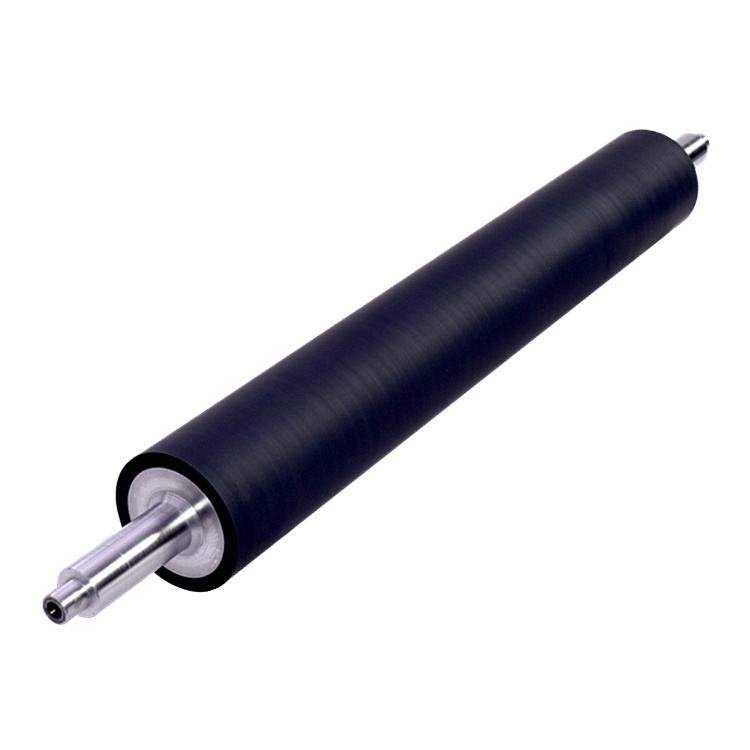
The Standard Roller Is Often the Weak Point in Your Line
In high-temperature and high-precision production environments, uneven diameter, poor silicone bonding, inconsistent hardness, or thermal distortion can all lead to wrinkling, poor lamination, unstable traction, sticking, and scrap. Custom silicone rollers solve these issues by matching the structure, cover material, hardness, surface finish, and thermal behavior to the exact process.
A custom-built silicone roller is not just a replacement part. It is a process component that helps stabilize throughput, improve bonding consistency, reduce maintenance frequency, and protect downstream quality.
Discuss Your ApplicationHigh Temperature Resistance
Silicone cover withstands elevated process temperatures in hot lamination, thermal bonding, and shrink packaging without losing functional stability.
Non-Stick Performance
Proper silicone specification reduces sticking, material pickup, and cleaning downtime in processes involving adhesives, heated films, and tacky webs.
Ultra-Precision Geometry
Ultra-precision CNC external finishing achieves uniform OD and surface consistency, preventing uneven pressure bands, thickness variation, and web tracking issues.
Thermal Channel Capability
Informed by our liquid cooling experience, we can evaluate internal channel concepts for more controlled heating or cooling response in thermally critical processes.
How We Manufacture Precision Silicone Rollers
A high-performance silicone roller depends on manufacturing discipline at every stage — starting with the core and continuing through covering and finishing.
CNC Core Machining
Metal base roller is CNC machined to required geometry, mounting details, and concentricity targets. Core material is selected for load, corrosion exposure, thermal conductivity, and machine interface.
Seamless Silicone Cover
Silicone cover applied using seamless, high-standard materials selected for heat resistance, anti-sticking, and process compatibility. Controlled to prevent contamination and geometric distortion.
Ultra-Precision Finishing
Covered roller brought to specified OD and surface condition with tight consistency across the full working width. This step enables uniform contact, stable web handling, and repeatable results.
Thermal Review (If Required)
For thermally critical applications, enhanced structures with internal heat-transfer pathways can be evaluated, informed by our liquid-cooling component design experience.
Ready to review your roller specification? Send your drawing, operating temperature, pressure range, media type, and target hardness.
Start Technical ReviewSilicone Roller Options & Specifications
Every production line has different demands. Selection typically depends on operating temperature, contact pressure, line speed, substrate type, chemical exposure, required hardness, and thermal-management features.
| Specification Area | Typical Custom Range | Why It Matters |
|---|---|---|
| Roller Outer Diameter | 20 mm to 400+ mm | Affects pressure footprint, machine fit, speed behaviour, and thermal response |
| Face Length | 50 mm to 3000+ mm | Determines usable processing width and load distribution |
| Silicone Hardness | 20 to 90 Shore A | Influences compression, grip, release, and substrate protection |
| Temperature Capability | Often 180°C to 250°C+ | Critical for hot lamination, thermal bonding, and heated web processing |
| Surface Finish | Ground, matte, smooth, textured | Impacts traction, release, marking risk, and coating interaction |
| Core Material | Carbon steel, stainless, aluminium, custom alloys | Affects rigidity, corrosion resistance, weight, and thermal conductivity |
| Internal Design Options | Solid core, shafted, bearing-mounted, thermal-channel capable | Supports machine integration and process control requirements |
Where Silicone Rollers Are Used
Silicone rollers are widely used in equipment where heat, pressure, release behaviour, and dimensional precision are all essential to process reliability and product quality.
Is Your Application Not Listed?
If your production environment involves elevated heat, sensitive substrates, adhesive contact, or exacting dimensional tolerances, custom silicone rollers can significantly improve process reliability.
Silicone Rollers vs. Other Cover Materials
Choosing the right cover material determines whether your line runs cleanly. The best choice depends on actual operating environment rather than material cost alone.
Silicone
High temperature resistance, excellent non-stick behaviour, good flexibility, clean surface performance
May not be ideal for every abrasive or solvent-heavy environment
Polyurethane
Strong wear resistance, high load capability, good cut resistance
Lower heat tolerance than silicone, can stick in some thermal processes
NBR / EPDM Rubber
Cost-effective, broad industrial use, good basic elasticity
More limited release performance and temperature resistance
PTFE / Fluoropolymer
Excellent chemical resistance, strong release behaviour
More specialised construction, different compression behaviour, often higher complexity
OEM & Production Sectors Relying on Our Silicone Rollers
Rapidaccu manufactures silicone rollers for OEMs, system integrators, and industrial producers in high-demand sectors where roller performance affects final product quality.
Laminating Machine Builders
Accurate silicone-covered rollers for smooth heat transfer, pressure uniformity, and clean release in film and sheet processing.
Hot Press & Thermal Bonding OEMs
Stable contact conditions during continuous or indexed operation for reliable bond results throughout production runs.
Flexible Electronics & FPC Equipment
Precision-machined cores and seamless covers for thin, heat-sensitive, dimensionally unforgiving materials in electronics manufacturing.
Shrink Packaging Machinery Mfrs
Reliable roller performance in elevated-temperature environments without material pickup or rapid surface degradation.
Medical & Hygiene Lines
Clean processing, non-stick behaviour, and dimensional stability for contamination-sensitive converting applications.
Quality Considerations That Protect Your Production Line
Long-term line performance depends on quality factors that are often overlooked when buyers focus only on size, hardness, and price.
Diameter Consistency
Even small deviations in the roller surface can create pressure variation, web instability, or visible defects in laminated and converted products. Our finishing process minimises these risks.
Bond Integrity
In thermal cycling applications, poor adhesion can lead to delamination, local deformation, or reduced process control. Material compatibility and manufacturing discipline are essential.
Contamination Control
Strict contamination control throughout production is especially important for customers in medical, hygiene, electronics, and high-cleanliness processing environments.
Thermal Behaviour Under Load
A roller acceptable at room temperature may behave very differently under continuous heat and load. Our temperature-control experience supports more informed engineering decisions.
Concentricity & Balance
Any core inaccuracy carries through to the final covered roller. CNC core machining to tight concentricity targets is the foundation of stable rotation and predictable performance.
Better-Engineered Roller = Root Cause Fix
If your current roller setup leads to sticking, uneven bonding, cleaning downtime, or temperature-related instability, a better-engineered silicone roller can address the root cause rather than just the symptom.
Frequently Asked Questions — Silicone Rollers
Common questions from OEMs, equipment builders, and production engineers sourcing custom silicone-covered rollers.
What are silicone rollers used for in industrial equipment?
Why choose silicone-covered rollers instead of standard rubber rollers?
Can you manufacture custom sizes and hardness levels?
Do you offer rollers with special internal cooling or thermal features?
What information do you need to quote a silicone roller?
What surface finishes are available for silicone rollers?
What core materials can be used in your silicone rollers?
Can Rapidaccu help if I am still defining my roller specification?
Request a Quote for Custom Silicone Rollers
Whether you are developing a new machine or replacing rollers that limit line performance, send your drawing, dimensions, operating conditions, and application details to start the review.
Contact & Location
Longhua District, Shenzhen, China