
Custom Stainless
Steel Rollers
Precision-machined 304 and 316L stainless steel rollers for food processing, pharmaceutical, chemical, and marine equipment — engineered for long service life, hygienic surfaces, and demanding washdown environments.
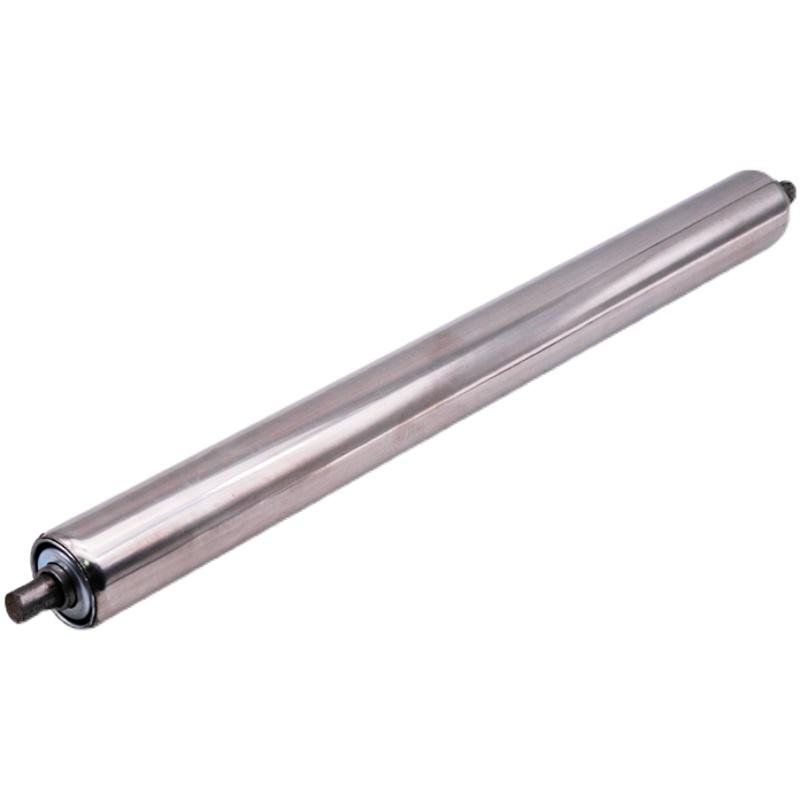
Why Choose Custom Stainless Steel Rollers?
In wet, corrosive, washdown, or hygiene-sensitive environments, standard carbon steel rollers fail too early. Stainless steel provides inherent corrosion resistance throughout the material — not just on the surface — extending service life and reducing replacement frequency.
Through-Material Corrosion Resistance
Corrosion resistance is inherent to the steel itself, not a coating. Scratches and wear do not expose vulnerable substrate the way plated rollers do.
Hygienic, Easy-Clean Surfaces
Smooth surfaces, polished finishes, and passivation support sanitation and residue control in food and pharmaceutical environments.
Precision Shaft Integration
Custom threads, stepped ends, milled flats, and journals machined to drawing for direct, no-modification integration into your assembly.
Lower Total Cost of Ownership
Reduced maintenance cycles, fewer replacements, and less downtime in aggressive environments offset the higher initial material cost over time.
DFM-Driven Engineering
Design for manufacturability review identifies over-tight tolerances, unnecessary finishing steps, and geometry issues before they reach production.
Full Custom Dimension Range
Custom lengths, diameters, wall thicknesses, bore configurations, and surface finishes designed around your load, line speed, and installation constraints.
Manufacturing
Capabilities
Stainless steel work-hardens during machining. Our high-rigidity equipment and process planning overcome this challenge to deliver repeatable precision on complex roller designs.
Materials, Finishes &
Custom Options
| Feature | Options | Benefit |
|---|---|---|
| Material Grade | 304, 316L | Balances cost, corrosion resistance, hygiene |
| Shaft End | Plain, ext/int thread, flat, stepped | Direct machine compatibility |
| Surface Finish | Turned, ground, polished, mirror | Hygiene, precision, or aesthetic needs |
| Post-Treatment | Passivation, hygienic polishing | Corrosion resistance, sanitation |
Industry Applications
Different industries demand different roller performance characteristics. Rapidaccu supports these varied requirements by combining material selection, precision machining, and finishing into a custom manufacturing solution.
| Industry | Common Requirements | Recommended Considerations |
|---|---|---|
| Food Processing | Washdown resistance, hygienic finish, easy cleaning | 304 or 316L, passivation, polished or mirror-polished surfaces |
| Pharmaceutical Packaging | Cleanability, dimensional precision, corrosion resistance | 316L preferred in harsh cleaning environments, precision grinding |
| Chemical Equipment | Resistance to corrosive agents, structural reliability | 316L, passivation, application-specific shaft geometry |
| Marine & Ship Equipment | Salt spray resistance, moisture exposure, long service life | 316L, corrosion-focused finishing, robust machined journals |
Stainless Steel vs Other Roller Materials
Price alone rarely tells the full story. In wet, chemical, or hygiene-sensitive environments, stainless steel rollers frequently deliver lower total cost of ownership than alternatives.
DFM Support for Stainless Steel Rollers
Many roller designs are technically possible but unnecessarily expensive or difficult to machine. Rapidaccu applies DFM principles early in the review process so customers avoid issues before production starts.
Tolerance Optimisation
Overly tight tolerances on non-critical features add cost without improving function. DFM review identifies where tighter specs are justified and where standard precision is sufficient.
Shaft-End Simplification
Complex shaft features can often be simplified for easier machining while fully preserving assembly performance and interface compatibility.
Surface Finish Alignment
Surface finish requirements are aligned to real sanitary or functional needs rather than being over-specified across the entire roller body, reducing cycle time and finishing cost.
Hygienic Geometry Refinement
In food and pharma applications, geometry is often refined to reduce dead corners and improve cleanability without compromising structural or functional requirements.
Material & Treatment Upgrade
Where environment demands it, passivation and grade upgrades (304 to 316L) are recommended based on actual corrosion exposure analysis rather than blanket over-specification.
Replacement Improvement Path
For replacing poorly performing rollers, we assess ways to improve service life through material upgrade, geometry refinement, or surface treatment without a full redesign.
Instead of simply building to print without feedback, Rapidaccu works with you to improve the final stainless steel roller design where appropriate — helping purchasing and engineering teams reach a better balance between performance, manufacturability, and cost.
Request DFM ReviewQuotation Checklist
A clear technical input package speeds up quotation, prevents back-and-forth, and helps Rapidaccu deliver the most accurate recommendation for your stainless steel roller project.
Dimensions
Why it matters: Defines machining scope and material usage
Example: Ø60 mm × 800 mm overall length
Material Grade
Why it matters: Determines corrosion resistance and cost
Example: 304 for food line, 316L for marine exposure
Shaft-End Features
Why it matters: Ensures assembly compatibility
Example: M12 external thread, milled flat, stepped journal
Finish Requirements
Why it matters: Affects process route and cleanliness
Example: Ground OD, passivated, mirror polished
Frequently Asked Questions
Common questions about custom stainless steel rollers from OEM and equipment manufacturers
Why choose stainless steel rollers over plated carbon steel?
What is the difference between 304 and 316L stainless steel rollers?
What shaft-end features can Rapidaccu machine on stainless steel rollers?
What finishing options are available for hygiene-sensitive applications?
What is DFM review and how does it benefit my roller project?
Can Rapidaccu help replace existing rollers that are failing too quickly?
What industries does Rapidaccu serve with stainless steel rollers?
What information should I include in my quotation request?
Request a Quote for Custom Stainless Steel Rollers
Send your drawing, specifications, or sample requirements. We will evaluate material grade, shaft-end design, finish options, and manufacturing feasibility for your application.
Contact Rapidaccu
Dalang, Longhua District,
Shenzhen, China
- ✓Roller OD, length, and bore/shaft details
- ✓Material grade preference: 304 or 316L
- ✓Shaft-end features (threads, flats, steps)
- ✓Surface finish and post-treatment needs
- ✓Operating environment and cleaning chemistry
- ✓Quantity and target delivery schedule