
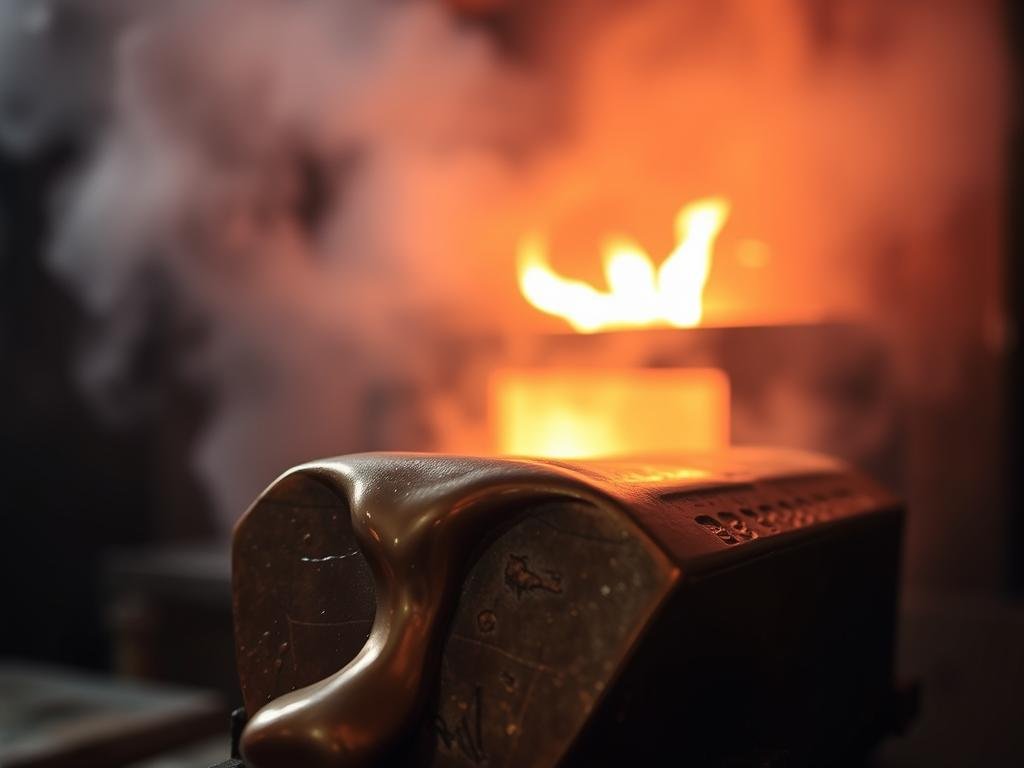
What is the Melting Point of Bronze?
Unlike pure metals with fixed melting points, bronze—an alloy of copper and tin—melts across a temperature range that varies significantly based on composition, from as low as 850°C (1562°F) to as high as 1050°C (1922°F).
At Rapidaccu, we work with bronze daily, and one of the first questions clients ask is: “What’s the melting point?” The answer isn’t a single number—it’s a range. Bronze typically melts between 850°C and 1050°C (1562°F to 1922°F), depending on the specific copper-tin ratio and any additional alloying elements like aluminum, silicon, or phosphorus.
Why This Melting Range Matters to Your Project
Understanding bronze’s variable melting point isn’t just academic—it directly impacts every manufacturing decision we make at Rapidaccu. Whether you’re designing bronze components for marine hardware, architectural elements, or precision bearings, this thermal characteristic influences:
Keep reading to discover how we leverage bronze’s melting characteristics to deliver superior manufacturing results across all our processes.
Understanding Bronze’s Variable Melting Range
At Rapidaccu, we’ve learned that bronze’s behavior differs fundamentally from pure metals. Pure copper melts at a precise 1,984°F (1,085°C), and pure tin at 449°F (232°C). But when you combine them into bronze, something interesting happens: the alloy doesn’t have a single melting point—it has a melting range with a solidus (where melting begins) and liquidus (where melting completes).
Solidus Point
Temperature where the alloy begins to melt
Mushy Zone
Partially solid, partially liquid state
Liquidus Point
Temperature where the alloy is completely liquid
Why This Range Matters in Manufacturing
Advantages:
- • Easier casting—bronze flows well in the mushy zone
- • More forgiving welding and brazing processes
- • Gradual solidification reduces shrinkage defects
- • Lower energy requirements than high-melting alloys
Challenges:
- • Must maintain precise temperature control during casting
- • Mushy zone can trap porosity if not managed properly
- • Different alloys require different processing parameters
- • 3D printing requires composition-specific calibration
How Copper-Tin Ratios Affect Melting Temperature
At Rapidaccu, we stock multiple bronze alloys, and each has different melting characteristics. The fundamental rule: more tin lowers the melting point, but the relationship isn’t linear. Here’s what we’ve observed across thousands of bronze parts:
The Copper-Tin Relationship
The Science Behind the Relationship
Tin has a much lower melting point (232°C) than copper (1,085°C). When tin atoms are introduced into the copper lattice, they disrupt the metallic bonding, making it easier for the crystal structure to break down at elevated temperatures. However, this isn’t a simple linear relationship—the eutectic point (lowest melting composition) occurs around 20% tin at approximately 798°C. At Rapidaccu, we use this knowledge to select the optimal bronze alloy for each application’s thermal requirements.
Melting Points of Common Bronze Alloys
At Rapidaccu, we work with a diverse range of bronze alloys, each optimized for specific applications. Here’s our comprehensive melting point reference guide for the bronzes we manufacture most frequently:
| Bronze Type | Composition | Solidus (°C) | Liquidus (°C) | Solidus (°F) | Liquidus (°F) | Primary Applications |
|---|---|---|---|---|---|---|
| Phosphor Bronze C51000 | 95% Cu, 5% Sn, 0.2% P | 950°C | 1050°C | 1742°F | 1922°F | Springs, electrical contacts |
| Aluminum Bronze C95400 | 85% Cu, 11% Al, 4% Fe | 1040°C | 1080°C | 1904°F | 1976°F | Marine hardware, pumps |
| Silicon Bronze C65500 | 97% Cu, 3% Si | 1030°C | 1070°C | 1886°F | 1958°F | Architectural, welding rod |
| Tin Bronze C90700 | 89% Cu, 11% Sn | 920°C | 1000°C | 1688°F | 1832°F | Bearings, bushings, gears |
| Leaded Tin Bronze C93200 | 83% Cu, 7% Sn, 7% Pb, 3% Zn | 860°C | 950°C | 1580°F | 1742°F | High-load bearings |
| Manganese Bronze C86500 | 58% Cu, 39% Zn, 1% Fe, 1% Al, 1% Mn | 900°C | 920°C | 1652°F | 1688°F | Marine propellers, valves |
| Gun Metal | 88% Cu, 10% Sn, 2% Zn | 900°C | 980°C | 1652°F | 1796°F | Steam fittings, gears |
| Commercial Bronze C22000 | 90% Cu, 10% Zn | 1025°C | 1045°C | 1877°F | 1913°F | Fasteners, grillwork |
| Nickel Aluminum Bronze C63000 | 82% Cu, 10% Al, 5% Ni, 3% Fe | 1045°C | 1070°C | 1913°F | 1958°F | Aerospace, marine |
| Beryllium Bronze C17200 | 98% Cu, 2% Be | 980°C | 1030°C | 1796°F | 1886°F | Precision instruments, springs |
Key Observations from Our Manufacturing Experience
- Aluminum bronzes have the highest melting points (1040-1080°C) due to copper-aluminum bonding
- Lead additions lower melting points and improve machinability
- Phosphor bronzes maintain moderate melting points with excellent spring properties
- Silicon bronzes offer high melting points with superior corrosion resistance
- Narrow melting ranges (20-40°C) indicate better casting characteristics
- Beryllium bronze combines high strength with moderate melting temperature
Why Bronze’s Melting Point Shaped Human History
At Rapidaccu, we appreciate that bronze isn’t just another engineering material—it’s the alloy that launched civilization’s technological revolution. The reason? Its accessible melting point range of 850-1050°C made it the first metal alloy humans could reliably cast at scale, roughly 5,000 years ago.
The Temperature Advantage
Bronze’s melting point sits in the “sweet spot” of ancient metallurgy:
- Below copper’s 1,085°C — easier to reach with charcoal furnaces
- Above lead and tin — hot enough for structural applications
- Wide mushy zone — forgiving for primitive casting techniques
- Much lower than iron (1,538°C) — accessible centuries earlier
Bronze Age Temperature Timeline
Modern Perspective
At Rapidaccu, we still exploit the same thermal advantages ancient metalworkers discovered. Bronze’s moderate melting point means lower energy costs, less equipment wear, and easier process control compared to steels and high-temperature alloys. The “Bronze Age” ended 3,000 years ago, but bronze’s thermal properties remain relevant in modern manufacturing.
Temperature Management in Bronze CNC Machining
At Rapidaccu’s CNC facilities, we never approach bronze’s 850-1050°C melting range during machining—but understanding these temperatures helps us contextualize the 200-400°C cutting zone heat we do generate. Bronze machines differently than steel or aluminum, with its own thermal management requirements.
Bronze Machining Temperature Zones
Bronze at ambient temperature, minimal thermal expansion
Heat generation at tool-workpiece interface; 24-47% of melting point
Reserved for casting operations only; CNC machining stays far below this
Rapidaccu’s Bronze Machining Strategy
- Moderate cutting speeds: 150-200 SFM (vs 400+ for aluminum)
- Flood coolant: Prevents work hardening from heat concentration
- Sharp tooling: Reduces heat generation at the shear zone
- Positive rake angles: Easier chip formation, less heat
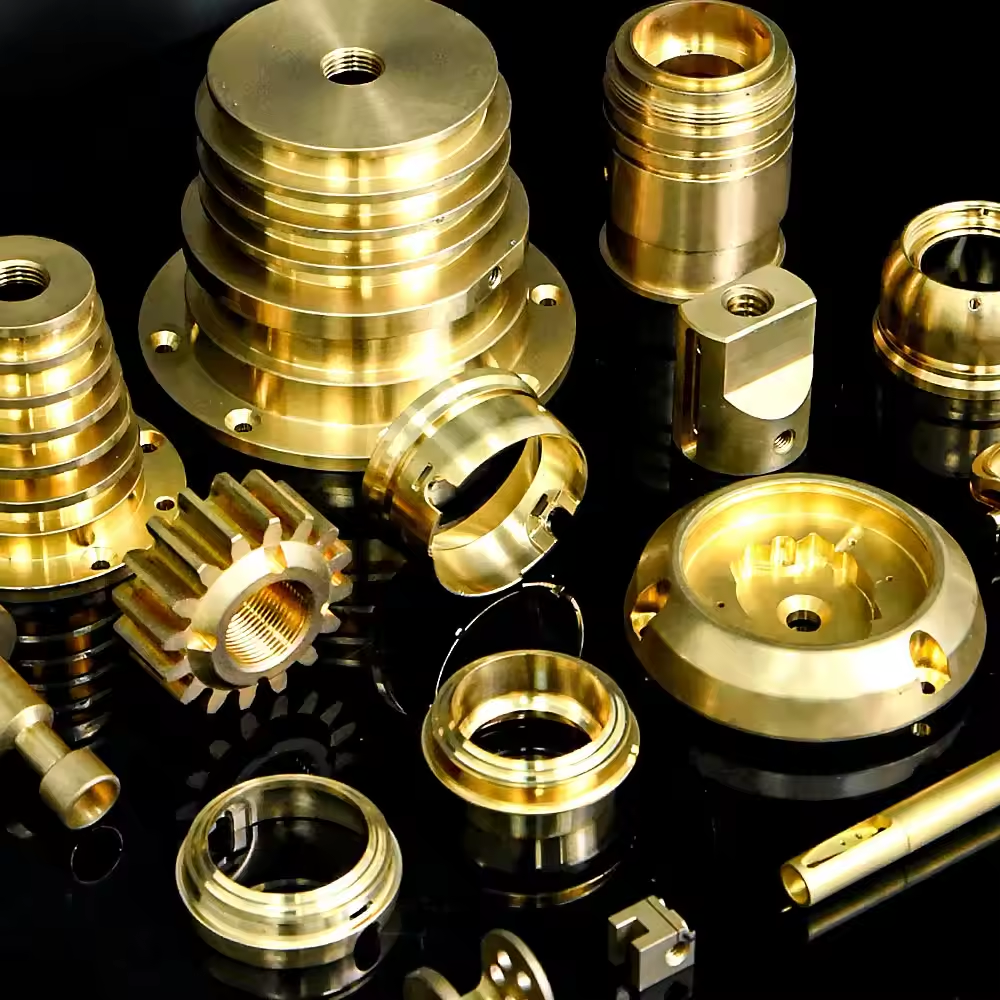
Precision Bronze CNC Machining
Our CNC operations leverage bronze’s excellent machinability while managing thermal considerations through optimized parameters and cooling strategies.
Explore Bronze CNC ServicesWhy Bronze’s Melting Point Still Matters
Even though CNC machining operates at just 24-47% of bronze’s melting point, knowing the full thermal range matters. It helps us understand bronze’s thermal conductivity (33 W/m·K for typical tin bronze), predict thermal expansion during extended cuts (17.8 × 10⁻⁶ /°C), and avoid localized softening that can occur if coolant fails and temperatures spike unexpectedly. At Rapidaccu, this knowledge translates to tighter tolerances and better surface finishes.
Bronze 3D Printing: Reaching the Melting Point
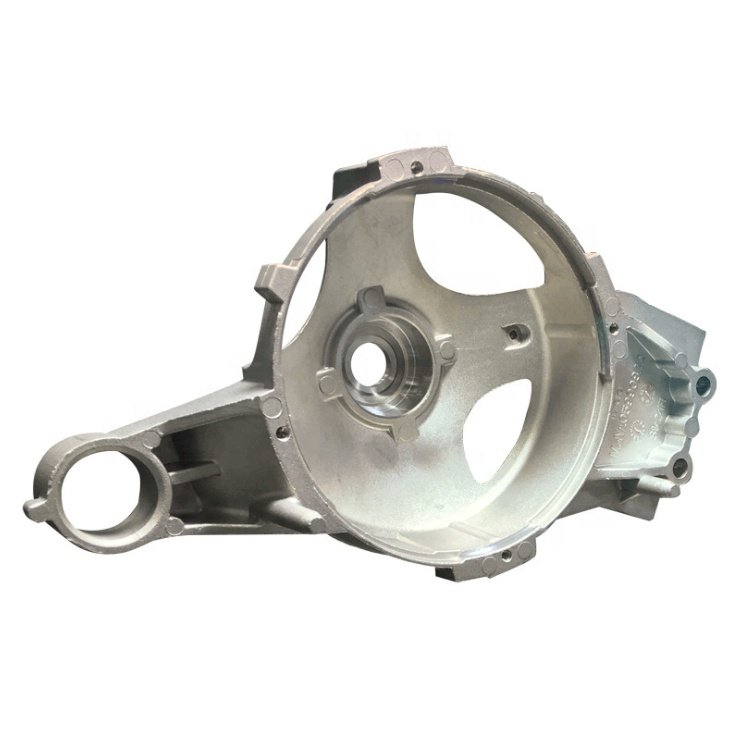
Advanced Metal 3D Printing
Our metal additive manufacturing systems precisely control temperature to fuse bronze powders, creating complex geometries impossible with traditional methods.
Discover Metal 3D PrintingAt Rapidaccu, bronze 3D printing presents unique challenges compared to other alloys. Unlike CNC machining where we avoid melting, additive manufacturing requires us to exceed bronze’s solidus point (850-950°C) and reach its liquidus (950-1050°C) with precise laser or electron beam control.
Laser Powder Bed Fusion (LPBF) for Bronze
Bronze-Specific Challenges
- Tin vaporization: Above 2,270°C, tin can boil, altering composition
- Wide melting range: Mushy zone makes full densification tricky
- Oxidation sensitivity: Bronze forms surface oxides quickly at high temp
- Powder flowability: Bronze powders can be less free-flowing than steels
Thermal Control Strategy for Bronze LPBF
Insufficient Heat
Below solidus—no melting, powder remains loose, no part formation
Optimal Window
1,100-1,200°C—fully molten melt pool with controlled superheat (>95% density)
Excessive Heat
Above 1,300°C—tin vaporization, keyholing, spatter, compositional drift
At Rapidaccu, we calibrate laser parameters for each bronze alloy to maintain the melt pool at 50-150°C above the liquidus temperature, ensuring complete melting while avoiding excessive superheat.
Hot vs Cold Forming Below Melting Temperature
Bronze sheet metal work at Rapidaccu exploits the flexibility of working far below the 850-1050°C melting range. We have two primary approaches: cold forming at room temperature and hot forming at 400-600°C—both well below the solidus point but offering dramatically different formability characteristics.
Cold Forming (20-100°C)
Better dimensional accuracy, no oxidation, work hardening strengthens material, no specialized heating equipment needed
Higher forming forces required, limited bend radii, risk of cracking on sharp bends, springback issues
Best for: Shallow draws, large-radius bends, operations where precision and surface finish are critical
Hot Forming (400-600°C)
Dramatically reduced forming forces, complex shapes achievable, tight bend radii possible, no springback
Surface oxidation (requires pickling), dimensional control more difficult, heating equipment required, annealing may be needed
Best for: Deep draws, complex 3D shapes, tight-radius bends, thick-section forming
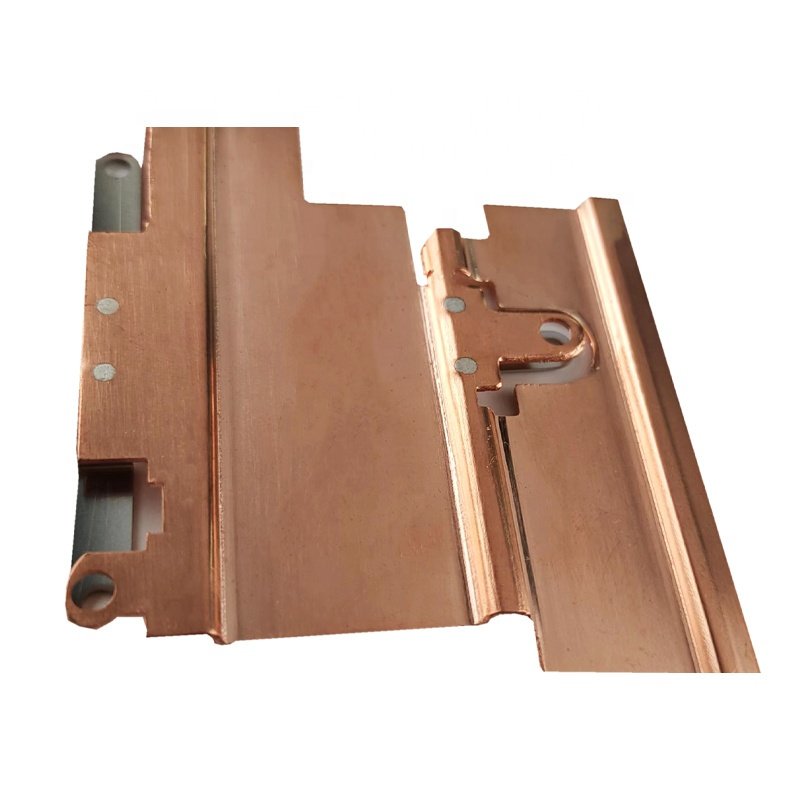
Expert Bronze Sheet Metal Fabrication
Our sheet metal capabilities include both cold and hot forming processes, optimized based on part geometry, material thickness, and production volume.
View Sheet Metal ServicesTemperature Selection Guide
High precision work, thin materials (<1mm), architectural bronze
Moderate forming, reduced springback, medium thickness (1-3mm)
Complex shapes, thick sections (>3mm), deep drawing operations
Approaching annealing temperature; grain growth risk, excessive oxidation
Still Far from Melting
Even our hottest forming operations at 600°C are only 71% of bronze’s solidus temperature (850°C) and just 57% of the liquidus (1,050°C). This substantial margin ensures the material remains fully solid and structurally sound throughout the forming process, with no risk of localized melting at stress concentration points.
Heat Generation in Bronze Stamping Operations
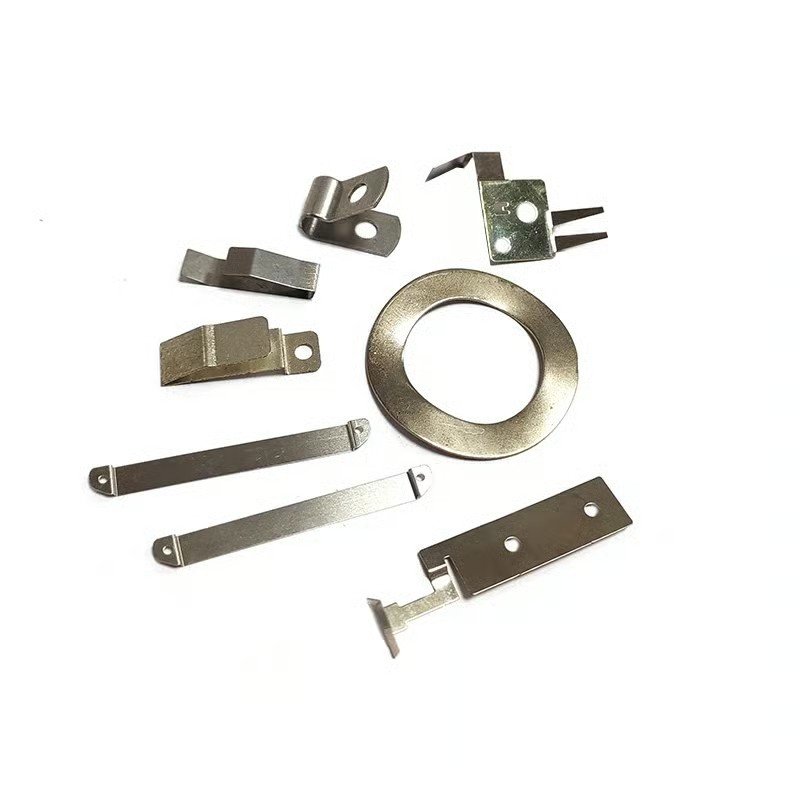
High-Volume Metal Stamping
Our progressive stamping dies handle bronze efficiently, with cooling systems designed to manage heat generation during high-speed operations.
Explore Stamping CapabilitiesBronze stamping at Rapidaccu is fundamentally a cold working process—we start at room temperature and never intentionally heat the material. However, the rapid plastic deformation during stamping converts mechanical energy to heat, and understanding bronze’s melting range helps us manage this thermal aspect.
Heat Generation Sources in Stamping
Bending, drawing, and forming convert work energy to heat in the material
Metal sliding against punch and die surfaces generates localized heat
Cutting operations create intense heat at the shear zone
Typical Temperature Rise in Bronze Stamping
Why Bronze’s Melting Point Isn’t a Stamping Concern
At Rapidaccu, even our most aggressive stamping operations reach only 20% of bronze’s solidus temperature. The real concern isn’t melting—it’s die wear, work hardening, and maintaining dimensional accuracy as parts heat up through repeated cycles.
Rapidaccu’s Thermal Management for Bronze Stamping
- Die cooling channels: Maintain consistent die temperature (25-35°C)
- Lubrication: Reduces friction heat, improves surface finish
- Cycle time optimization: Allows heat dissipation between strokes
- Progressive dies: Distribute work across multiple stations
- Tonnage control: Minimize unnecessary deformation energy
- Annealing schedule: Soften work-hardened material between ops
Casting Bronze: Superheat and Fluidity
Casting is the only manufacturing process at Rapidaccu where we intentionally exceed bronze’s melting range. Understanding the relationship between pouring temperature and bronze’s 850-1050°C liquidus is critical for producing sound castings with minimal defects.
Superheat Defined
Superheat is the temperature above the liquidus point at which molten bronze is poured into molds. Too little superheat = poor fluidity and cold shuts. Too much superheat = excessive shrinkage and gas absorption.
Why Fluidity Matters
Bronze’s castability—its ability to fill thin sections and intricate details—depends heavily on superheat. Higher pouring temperatures improve fluidity but also increase:
- Shrinkage porosity (more volume change during solidification)
- Gas pickup (hydrogen, oxygen dissolution in molten metal)
- Mold erosion (high-velocity molten metal attacks sand molds)
- Grain coarsening (slower cooling = larger crystal structures)
Rapidaccu’s Bronze Casting Temperature Guide
Bronze Alloy-Specific Considerations
Liquidus ~1,080°C; pour at 1,130-1,180°C. Higher superheat needed due to higher liquidus.
Liquidus ~1,000°C; pour at 1,050-1,100°C. Excellent fluidity even with moderate superheat.
Liquidus ~950°C; pour at 1,000-1,050°C. Lead improves fluidity; lower temps acceptable.
Narrow melting range (~20°C); pour 40-60°C above liquidus for best results.