
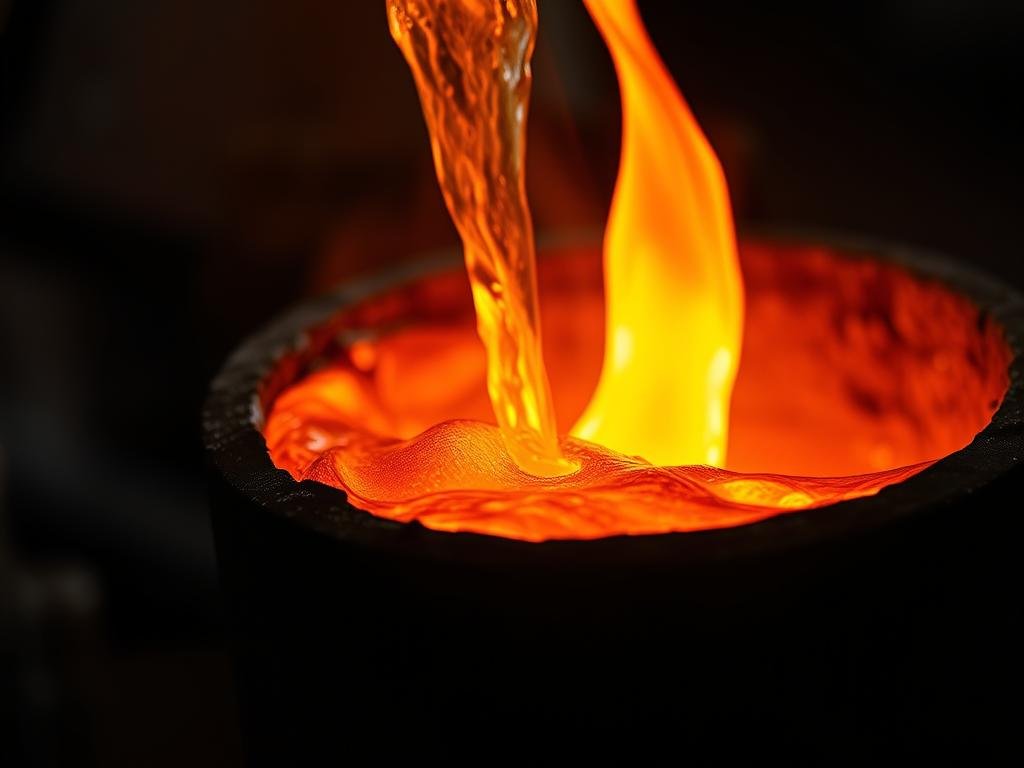
What is the Melting Point of Copper?
1,984°F (1,085°C)
A Comprehensive Guide from Rapidaccu’s Manufacturing Experts
The melting point of pure copper is precisely 1,984°F (1,085°C) at standard atmospheric pressure. This fundamental physical property is crucial for anyone working with copper in manufacturing, metallurgy, or engineering applications. At Rapidaccu, we understand that knowing this exact temperature is essential for achieving optimal results in various fabrication processes.
But why does this specific temperature matter so much for your manufacturing projects? Understanding copper’s melting point is just the beginning. The way this metal behaves at different temperatures directly impacts everything from CNC machining precision to 3D printing success rates, sheet metal fabrication quality, and stamping efficiency. Whether you’re a seasoned engineer or exploring copper applications for the first time, this comprehensive guide will reveal how copper’s thermal properties influence modern manufacturing techniques and how Rapidaccu leverages this knowledge to deliver superior results for our clients.
1. Understanding Copper’s Physical Properties
Copper is one of humanity’s oldest and most versatile metals, prized for its exceptional electrical conductivity, thermal conductivity, and malleability. At Rapidaccu, we work with copper daily, and we know that understanding its fundamental properties is key to manufacturing excellence.
The melting point of 1,984°F (1,085°C) represents the temperature at which solid copper transitions to liquid state. This phase change is critical because it marks the boundary between processes that work with solid copper (like machining and forming) and those that involve molten metal (like casting and welding).
Key Physical Properties of Copper:
- Density: 8.96 g/cm³ at room temperature
- Thermal Conductivity: 401 W/(m·K)
- Electrical Conductivity: 59.6 × 10⁶ S/m
- Boiling Point: 4,644°F (2,562°C)
- Coefficient of Thermal Expansion: 16.5 µm/(m·K)
2. Temperature Variations by Copper Grade
While pure copper melts at 1,984°F, different copper alloys and grades exhibit varying melting points. At Rapidaccu, we carefully select the appropriate copper grade based on your project’s specific requirements, considering factors like strength, corrosion resistance, and thermal properties.
Copper alloys are created by adding elements like zinc (brass), tin (bronze), nickel, or aluminum. Each alloying element affects the melting point differently. For instance, brass alloys typically have lower melting points than pure copper, ranging from 1,650°F to 1,900°F depending on the zinc content.
Understanding these variations is crucial for our manufacturing processes. When we work with copper alloys in our CNC machining centers, 3D printing facilities, sheet metal workshops, or stamping operations, we adjust our parameters accordingly to ensure optimal results and prevent material degradation.
3. Factors Affecting Melting Point
At Rapidaccu, we’ve identified several critical factors that influence copper’s melting behavior in real-world manufacturing environments:
Atmospheric Pressure
The standard melting point assumes atmospheric pressure at sea level. Higher altitudes or vacuum conditions can alter this temperature significantly.
Impurities and Alloying
Even small amounts of impurities or intentional alloying elements can lower or raise the melting point by tens or hundreds of degrees.
Heating Rate
Rapid heating can sometimes create apparent variations in melting behavior due to thermal gradients within the material.
Crystal Structure
Work-hardened copper or copper with specific grain structures may exhibit slightly different thermal behavior than annealed material.
4. Copper Grades Melting Point Comparison
This comprehensive table shows the melting points of various copper grades and alloys that we commonly work with at Rapidaccu. Understanding these differences helps us optimize our manufacturing processes for your specific material requirements.
| Copper Grade/Alloy | Composition | Melting Point (°F) | Melting Point (°C) | Applications |
|---|---|---|---|---|
| Pure Copper (C11000) | 99.95% Cu | 1,984 | 1,085 | Electrical, plumbing |
| Oxygen-Free Copper (C10100) | 99.99% Cu | 1,981 | 1,083 | High conductivity |
| Brass (C26000, 70/30) | 70% Cu, 30% Zn | 1,750 | 954 | Hardware, fittings |
| Bronze (C51000) | 95% Cu, 5% Sn | 1,920 | 1,049 | Bearings, gears |
| Beryllium Copper (C17200) | 98% Cu, 2% Be | 1,587 | 864 | Springs, tools |
| Copper-Nickel (C71500) | 70% Cu, 30% Ni | 2,140 | 1,171 | Marine applications |
| Phosphor Bronze (C52100) | 95% Cu, 5% Sn, P | 1,841 | 1,005 | Springs, contacts |
| Naval Brass (C46400) | 60% Cu, 39% Zn, 1% Sn | 1,650 | 899 | Marine hardware |
| Aluminum Bronze (C95400) | 85% Cu, 11% Al, 4% Fe | 1,900 | 1,038 | Pumps, valves |
| Silicon Bronze (C65500) | 97% Cu, 3% Si | 1,880 | 1,027 | Sculptures, artwork |
Note from Rapidaccu: These values represent typical melting ranges. Actual melting behavior may vary slightly based on specific composition variations, impurities, and manufacturing conditions. We always verify material specifications for critical applications.
5. Copper Melting Point Impact on CNC Machining
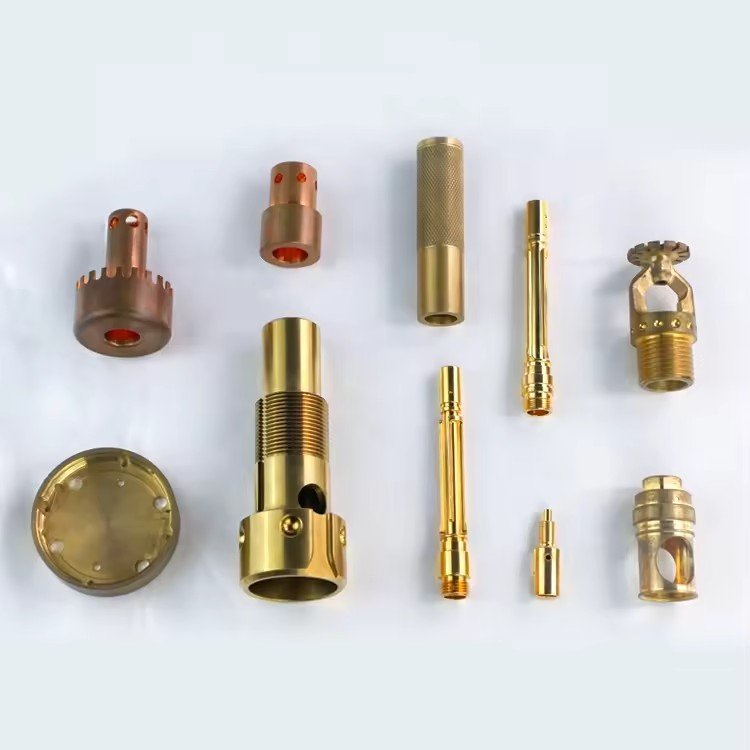
At Rapidaccu’s CNC machining facilities, we leverage our understanding of copper’s melting point to optimize every cut, drill, and mill operation. While CNC machining operates far below copper’s melting temperature, the thermal properties related to its melting point significantly affect our machining strategies.
Heat Generation During Machining
Although we’re machining at room temperature, the friction between cutting tools and copper generates considerable heat. Copper’s high thermal conductivity (directly related to its melting point characteristics) means that heat dissipates quickly through the workpiece. This is both an advantage and a challenge:
Our CNC Machining Strategies at Rapidaccu:
- Optimized Cutting Speeds: We use higher cutting speeds with copper compared to steel because copper’s thermal properties prevent excessive tool heating.
- Coolant Management: Strategic coolant application prevents work hardening and ensures dimensional accuracy.
- Tool Material Selection: We use carbide or diamond-coated tools that can withstand the specific thermal conditions of copper machining.
- Feed Rate Optimization: Proper feed rates prevent material smearing and ensure clean cuts without approaching temperatures that affect material properties.
Understanding copper’s melting point helps us predict how the material will behave under machining stresses. At Rapidaccu, we’ve developed proprietary machining parameters that account for these thermal characteristics, resulting in superior surface finishes and tighter tolerances for your copper components.
Why Choose Rapidaccu for Copper CNC Machining?
Our expertise in copper’s thermal properties translates directly to better parts for you:
- Precision tolerances down to ±0.0005″
- Superior surface finishes (Ra 0.8 µm or better)
- Reduced production time through optimized parameters
- Extended tool life means cost savings for you
6. Copper Melting Point Impact on 3D Printing
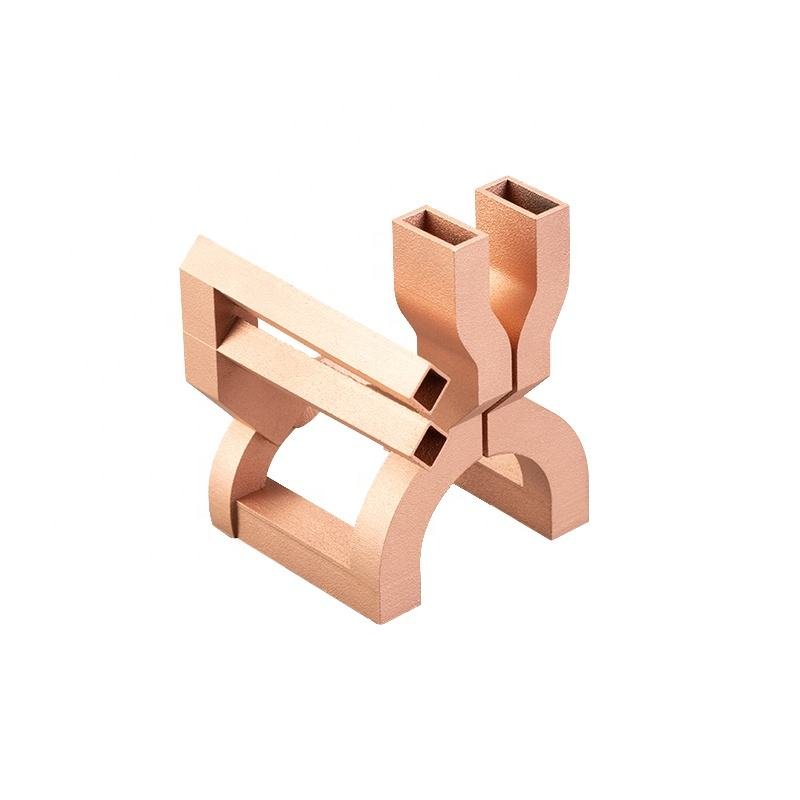
Copper 3D printing at Rapidaccu represents the cutting edge of additive manufacturing, and copper’s melting point is absolutely central to our process. Unlike CNC machining, 3D printing requires us to work directly with copper at or near its melting point of 1,984°F (1,085°C).
The Challenge of Printing Copper
Copper’s high melting point, combined with its exceptional thermal conductivity and reflectivity, makes it one of the most challenging metals to 3D print. At Rapidaccu, we’ve invested in advanced laser powder bed fusion (LPBF) and binder jetting technologies specifically designed to handle these challenges.
High Power Requirements
Our LPBF systems use high-power lasers (500W-1000W) to achieve the energy density needed to melt copper powder. The 1,085°C melting point requires precise energy input to create fully dense parts.
Thermal Management
Copper’s high thermal conductivity means heat dissipates rapidly from the melt pool. We use preheated build platforms (up to 200°C) to maintain proper thermal conditions throughout the build.
Oxidation Prevention
At temperatures near 1,085°C, copper oxidizes rapidly. Our controlled argon atmosphere (oxygen content <0.1%) prevents oxidation during the printing process.
Layer-by-Layer Control
Each 30-50µm layer must be precisely heated above the melting point and then rapidly cooled. This thermal cycling requires careful process control to prevent defects.
Rapidaccu’s Advanced Solutions
We’ve developed specialized expertise in managing copper’s thermal challenges during 3D printing:
- Optimized Powder Characteristics: We use copper powder with carefully controlled particle size distribution (15-45µm) that melts uniformly at the target temperature.
- Advanced Laser Parameters: Our systems use specialized scanning strategies that account for copper’s reflectivity and thermal properties near the melting point.
- Real-Time Monitoring: Thermal cameras and melt pool monitoring systems ensure consistent part quality by tracking temperature profiles during printing.
- Post-Processing Expertise: Controlled cooling and heat treatment protocols that leverage our understanding of copper’s solidification behavior.
Applications of Our Copper 3D Printing
Understanding copper’s melting point allows us to create parts impossible with traditional manufacturing:
7. Copper Melting Point Impact on Sheet Metal Fabrication
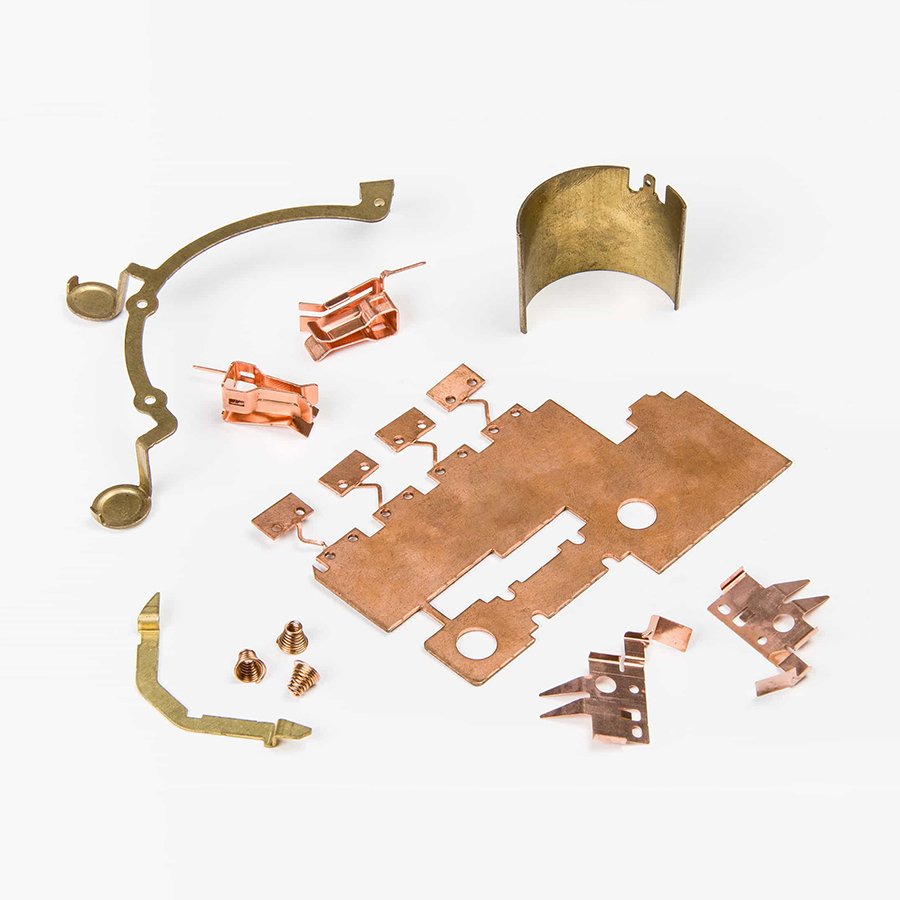
At Rapidaccu’s sheet metal fabrication division, copper’s melting point influences our forming, bending, welding, and finishing operations. While we rarely heat copper sheets to anywhere near 1,984°F during standard fabrication, understanding this thermal threshold is crucial for optimizing our processes.
Cold Working vs. Hot Working
Most of our copper sheet metal work is performed at room temperature (cold working). However, copper’s excellent ductility – related to its crystalline structure that remains stable up to the melting point – allows us to achieve complex forms without heating. When we do apply heat for annealing or stress relief, we carefully control temperatures to stay well below the melting point while achieving desired material properties.
Bending Operations
Room temperature bending leverages copper’s malleability without approaching thermal limits
Annealing Process
Heating to 750-1450°F (400-800°C) – safely below melting point – to restore ductility
Welding Control
Local temperatures exceed melting point in weld pool while base metal stays cooler
Welding Copper Sheet Metal
Welding is where copper’s melting point becomes most directly relevant in sheet metal fabrication. At Rapidaccu, we use several welding techniques, each requiring precise control of temperatures around the 1,985°F melting point:
Our Welding Expertise:
- TIG Welding (GTAW): Provides excellent control over heat input. We use specialized techniques to preheat the base metal (200-400°F) because copper’s high thermal conductivity pulls heat away from the weld zone rapidly.
- MIG Welding (GMAW): Higher deposition rates for thicker copper sheets. Requires understanding of how heat spreads through copper based on its thermal properties.
- Laser Welding: Concentrated heat source minimizes heat-affected zones. The laser must deliver sufficient energy to overcome copper’s reflectivity and reach the melting point locally.
- Brazing: Uses filler metals with melting points below copper’s 1,984°F, creating joints without melting the base copper sheet.
Heat Treatment and Stress Relief
After forming operations, copper sheet metal may develop internal stresses. Our stress relief processes heat the copper to specific temperatures (typically 300-600°F) that are carefully calculated as percentages of the melting point temperature. This releases stresses without affecting the material’s fundamental properties or approaching dangerous temperatures.
Rapidaccu’s Sheet Metal Fabrication Capabilities
From simple brackets to complex enclosures, our understanding of copper’s thermal properties ensures superior results.
Discover Our Copper Sheet Metal Services →8. Copper Melting Point Impact on Stamping
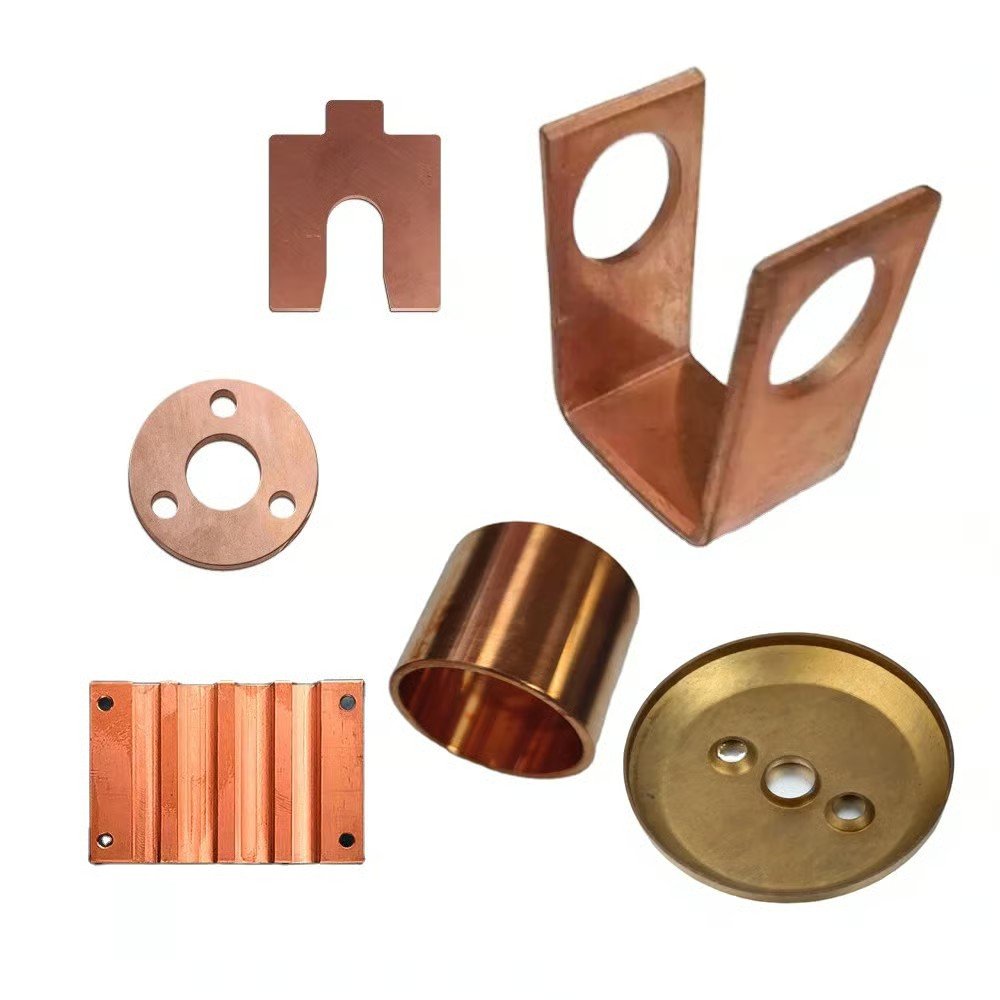
Copper stamping at Rapidaccu leverages copper’s excellent formability – a property intrinsically linked to its melting point and crystalline structure. While stamping is a cold-working process performed at room temperature, understanding copper’s thermal properties helps us optimize die design, predict material behavior, and achieve consistent high-quality results.
The Science of Cold Stamping
Stamping applies tremendous force to deform copper without heating it near the melting point. However, the plastic deformation process generates heat through internal friction as copper’s crystal structure rearranges. At Rapidaccu, we account for this temperature rise to ensure dimensional accuracy and prevent work hardening issues.
High-Speed Operations
Our progressive dies can run at 200-400 strokes per minute. The rapid deformation generates heat, but copper’s high thermal conductivity (related to its melting point properties) dissipates this heat quickly, allowing continuous operation without material property changes.
Work Hardening Control
Deep-draw operations cause work hardening. When copper hardens beyond acceptable limits, we perform inter-stage annealing at controlled temperatures (400-750°F) – well below the 1,984°F melting point – to restore ductility for subsequent forming operations.
Material Selection for Stamping
Different copper grades offer varying formability characteristics, all related to their purity and alloying elements that affect the melting point range:
- C11000 (Electrolytic Tough Pitch Copper): 99.9% pure, melts at 1,981°F. Excellent for deep drawing due to superior ductility.
- C14500 (Tellurium Copper): Improved machinability for stamped-and-machined parts. Slightly lower melting point aids in material flow during forming.
- Brass Alloys (C26000): Lower melting point (1,750°F) correlates with increased formability for complex shapes.
- Phosphor Bronze: Higher strength for spring applications. Requires more force but offers excellent fatigue resistance.
Die Design and Longevity
At Rapidaccu, we design stamping dies with copper’s properties in mind. While die materials have much higher melting points than copper (tool steels melt around 2,500-2,800°F), the friction and impact during stamping generate significant interface temperatures. Our die cooling systems and surface treatments ensure long tool life even during high-volume production runs.
Temperature Monitoring in Production
For critical stamping operations, we monitor strip temperature using infrared sensors. If material temperature approaches 200°F (from accumulated heat during rapid stamping), we implement cooling measures. This is still far below copper’s melting point, but elevated temperatures can affect dimensional accuracy and material properties.
Stamping Process Optimization
Our engineers at Rapidaccu use finite element analysis (FEA) that incorporates copper’s thermal and mechanical properties – including data derived from melting point behavior – to predict:
Predicting how copper deforms ensures uniform wall thickness
Identifying potential tearing or wrinkling before cutting steel
Accounting for elastic recovery after forming
Temperature rise during forming and its impact on tolerances
Rapidaccu’s Copper Stamping Advantages
Production Capabilities
- • Material thickness: 0.005″ to 0.125″
- • Part sizes up to 24″ x 36″
- • Tolerances to ±0.002″
- • Production volumes: 1,000 to 10,000,000+ pieces
Advanced Processes
- • Progressive die stamping
- • Deep drawing
- • Fine blanking
- • Four-slide forming
Our expertise in copper’s thermal and mechanical properties translates to lower cost per piece and faster time to market for your projects.
Get a Quote for Copper Stamping →9. Thermal Management in Manufacturing
At Rapidaccu, we recognize that copper’s melting point of 1,984°F is more than just a number – it’s a gateway to understanding the material’s complete thermal profile. Effective thermal management across all our manufacturing processes ensures consistent quality, dimensional accuracy, and optimal material properties in your finished parts.
Heat Dissipation Strategies
Copper’s exceptional thermal conductivity (401 W/m·K) means heat spreads rapidly throughout the workpiece. This property, directly related to the atomic bonding that defines the melting point, requires specific management strategies:
Coolant Systems
Strategic coolant application in CNC machining prevents localized heating while maintaining dimensional stability. We use water-soluble coolants optimized for copper’s thermal properties.
Cryogenic Treatment
For specialized applications, we use cryogenic treatment (down to -320°F) to stabilize copper’s microstructure, enhancing wear resistance and dimensional stability.
Controlled Atmospheres
When heating copper for annealing or 3D printing, we use inert atmospheres (argon or nitrogen) to prevent oxidation at elevated temperatures approaching the melting point.
Thermal Cycling and Fatigue
Repeated heating and cooling cycles affect copper’s properties over time. Understanding the relationship between operating temperatures and the melting point helps us predict component lifespan:
- Room Temperature to 200°F: Minimal effect on copper’s structure. Suitable for most mechanical applications.
- 200°F to 500°F: Gradual stress relief occurs. Beneficial for stabilizing machined parts.
- 500°F to 1,000°F: Significant annealing effects. Work hardening is reversed, ductility restored.
- 1,000°F to 1,984°F (melting): Grain growth accelerates. Requires controlled heating/cooling rates to maintain desired properties.
Thermal Simulation and Modeling
At Rapidaccu, we use advanced thermal simulation software to model temperature distributions during manufacturing. These simulations incorporate copper’s melting point data, specific heat capacity, thermal conductivity, and phase transformation characteristics to predict:
Welding Thermal Profiles
Heat-affected zone extent and cooling rates for various welding parameters
3D Printing Temperature Control
Layer-by-layer thermal history to optimize print parameters and prevent defects
Machining Heat Generation
Tool-workpiece interface temperatures and their effect on tool wear
Annealing Optimization
Optimal time-temperature profiles for achieving desired material properties
10. Quality Control and Best Practices
At Rapidaccu, our commitment to quality extends beyond understanding copper’s melting point – we’ve developed comprehensive quality control protocols that leverage this thermal knowledge to ensure every part meets or exceeds specifications.
Material Verification
Before manufacturing begins, we verify material composition using several methods:
XRF Analysis
X-ray fluorescence spectroscopy confirms copper purity and alloy composition. This ensures the material’s melting point matches specifications.
Chemical Analysis
For critical applications, we perform detailed chemical analysis to verify trace elements that might affect thermal properties.
Material Certification
We require mill test reports (MTRs) that document material properties including composition and thermal characteristics.
Thermal Testing
Differential scanning calorimetry (DSC) can verify melting point and detect impurities that alter thermal behavior.
In-Process Monitoring
During manufacturing, we continuously monitor thermal conditions to ensure optimal processing:
- Infrared Thermal Imaging: Real-time temperature monitoring during welding, 3D printing, and machining operations ensures we maintain appropriate thermal profiles.
- Statistical Process Control: We track parameters related to thermal management (coolant temperature, ambient conditions, cycle times) to detect trends before they affect quality.
- Dimensional Inspection: CMM and optical measurement systems verify that parts maintain tolerances despite thermal effects during processing.
- Visual Inspection: Trained inspectors check for discoloration or oxidation that indicates excessive heating approaching critical temperature ranges.
Post-Process Validation
After manufacturing, Rapidaccu performs comprehensive testing to verify part quality:
Mechanical Testing
Tensile strength, hardness, and elongation tests confirm that thermal processing maintained proper material properties
Metallographic Analysis
Microscopic examination reveals grain structure and confirms proper heat treatment without approaching melt conditions
Non-Destructive Testing
Ultrasonic, radiographic, or penetrant testing detects internal defects from improper thermal processing
Best Practices for Working with Copper
Based on our extensive experience at Rapidaccu, we recommend these best practices:
Rapidaccu’s Expert Recommendations
Choose copper grade based on application temperature. If operating above 400°F, consider oxygen-free grades to prevent embrittlement.
Limit exposure to temperatures above 50% of melting point (>992°F) unless necessary for processing. Repeated cycling degrades properties over time.
For applications sensitive to heat-affected zones, consider brazing (using filler below copper’s melting point) or solid-state welding techniques.
Store copper in controlled environments to prevent contamination that could affect melting behavior and material properties.
11. Industrial Applications of Copper
Understanding copper’s melting point enables Rapidaccu to serve diverse industries where thermal properties are critical. Here’s how we leverage this knowledge across different sectors:
Electrical and Electronics Industry
Copper’s excellent electrical conductivity combined with its high melting point makes it ideal for high-current applications:
- Bus Bars and Conductors: CNC machined copper bus bars carry hundreds of amperes without overheating. The high melting point provides safety margin even under fault conditions generating significant heat.
- Heat Sinks: Copper heat sinks dissipate thermal energy from electronics. We machine complex fin patterns that maximize surface area while maintaining structural integrity.
- Connectors and Terminals: Stamped copper contacts withstand repeated connection cycles and current-induced heating without degradation.
Automotive and Transportation
Modern vehicles require extensive copper components, especially with the transition to electric vehicles:
Electric Motors
Copper windings in EV motors operate at elevated temperatures. The 1,984°F melting point provides enormous safety margin even under worst-case conditions.
Battery Systems
We manufacture copper bus bars and interconnects for battery packs, where thermal management is critical for safety and performance.
Radiators and Heat Exchangers
Brazed copper-brass radiators leverage copper’s thermal conductivity. Our understanding of melting points ensures proper brazing temperatures.
Charging Infrastructure
High-power charging stations use copper components that must handle extreme current densities without thermal failure.
HVAC and Refrigeration
Copper tubing and heat exchangers dominate this industry due to superior thermal transfer:
At Rapidaccu, we fabricate copper tubing assemblies, fin-tube heat exchangers, and custom HVAC components. Brazing operations require precise temperature control – hot enough to melt the filler metal but well below copper’s 1,984°F melting point to prevent base metal damage.
Our expertise ensures leak-free joints and optimal thermal performance in everything from residential air conditioners to industrial cooling systems.
Medical and Scientific Equipment
Copper’s antimicrobial properties and thermal characteristics make it valuable in medical applications:
Imaging Equipment
X-ray and MRI components require precise copper parts with excellent thermal stability
Laboratory Instruments
Calorimeters and thermal analysis equipment leverage copper’s known thermal properties
Surgical Instruments
Copper alloy instruments offer antimicrobial benefits while withstanding sterilization temperatures
Renewable Energy
The renewable energy revolution relies heavily on copper components:
Copper in Green Technology
Copper bus bars connect solar panels and inverters. Must withstand outdoor temperature extremes from -40°F to 185°F.
Each turbine contains up to 1 ton of copper in generators and electrical systems. Reliability is critical for offshore installations.
Battery energy storage systems use copper interconnects rated for thousands of charge-discharge cycles.
Copper components in transformers, switchgear, and distribution equipment enable efficient power delivery.
12. Future Trends and Innovations
At Rapidaccu, we’re not just working with copper today – we’re pioneering tomorrow’s manufacturing techniques. Understanding copper’s fundamental properties, including its melting point, positions us at the forefront of emerging technologies.
Advanced Additive Manufacturing
The future of copper 3D printing is evolving rapidly:
Multi-Laser Systems
New 3D printers use multiple synchronized lasers delivering combined power exceeding 2000W, enabling faster copper printing by more efficiently reaching the 1,985°F melting point.
Nanoparticle Copper
Copper nanoparticles have lower effective melting points due to high surface area. This enables lower-temperature printing processes while maintaining final part properties.
Hybrid Manufacturing
Combining 3D printing with CNC machining in a single platform. Print complex internal geometries, then machine precision surfaces – optimal use of copper’s properties.
In-Situ Monitoring
Real-time thermal monitoring and AI-powered process control automatically adjusts parameters to maintain optimal melt pool temperatures for each layer.
Novel Copper Alloys
Metallurgists are developing new copper alloys with tailored melting points and enhanced properties:
- Grain-Refined Alloys: Addition of elements like chromium or zirconium creates finer grain structures that improve high-temperature strength without significantly affecting melting point.
- Oxide Dispersion Strengthened (ODS) Copper: Nano-scale oxide particles throughout the copper matrix maintain strength at temperatures approaching the melting point.
- High-Conductivity Alloys: New alloys maintain >90% of pure copper’s electrical conductivity while offering improved mechanical properties and slightly modified melting behaviors.
Sustainable Manufacturing
Environmental considerations are driving innovation in copper processing:
Recycling Innovations
Advanced melting processes recover copper from electronic waste more efficiently. Understanding melting point variations helps separate copper from other metals.
Energy Efficiency
New furnace designs and induction heating systems reduce energy consumption when melting copper for casting or welding applications.
Zero-Waste Processes
Near-net-shape manufacturing techniques (like precision 3D printing) minimize material waste by building parts close to final dimensions.
Digitalization and Industry 4.0
At Rapidaccu, we’re integrating smart manufacturing technologies:
- AI-Optimized Processing: Machine learning algorithms analyze thousands of manufacturing runs to optimize parameters related to copper’s thermal behavior, predicting optimal cutting speeds, coolant flow, and heat treatment cycles.
- Digital Twins: Virtual models of copper parts and manufacturing processes simulate thermal effects before physical production, reducing development time and material waste.
- Blockchain Traceability: Complete tracking of copper from mine to finished part, including thermal history and processing parameters, ensures quality and enables predictive maintenance.
Rapidaccu’s Vision for the Future
We’re investing in cutting-edge technologies and research partnerships to remain leaders in copper manufacturing. Our deep understanding of copper’s physical properties – from its 1,984°F melting point to its thermal conductivity and electrical characteristics – positions us to adapt to emerging industry needs.
Whether your project requires traditional precision machining, advanced 3D printing, complex sheet metal fabrication, or high-volume stamping, Rapidaccu combines decades of expertise with forward-looking innovation to deliver exceptional results.
Frequently Asked Questions
What is the exact melting point of pure copper?
Does copper’s melting point change with different alloys?
Why is copper’s high melting point important for CNC machining?
Can copper be 3D printed successfully?
How does copper’s melting point affect welding processes?
What temperature should copper be annealed at?
Why is copper difficult to solder compared to other metals?
How does Rapidaccu ensure quality in copper manufacturing?
Partner with Rapidaccu for Expert Copper Manufacturing
From understanding copper’s 1,984°F melting point to delivering precision-manufactured parts, we bring decades of expertise to every project. Whether you need CNC machining, 3D printing, sheet metal fabrication, or stamping services, Rapidaccu delivers excellence.