
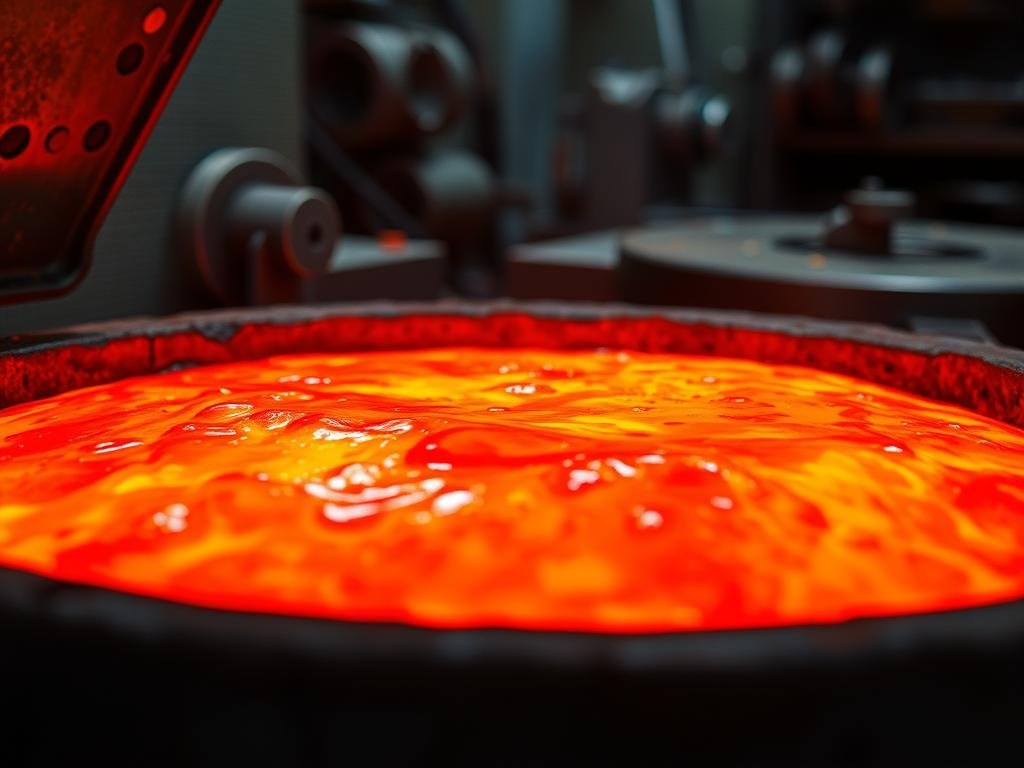
Nearly 30% of common grades that fabricators handle show melting ranges rather than a single value, a fact that surprises many designers and buyers.
Stainless steel is an engineered alloy that liquefies across a span near 2550–2790°F (1400–1530°C). Rapidaccu has over 15 years in CNC machining and uses this data to prevent warpage and ensure accurate tolerances from proto to mass runs.
This guide answers whats is the melt point of stainless steel and translates those ranges into real applications. We compare common grades like 304 and 316 and explain how chromium and nickel shift melting and softening behavior.
Expect clear links between melting ranges and performance at high temperature. That helps engineers pick the right material for ovens, furnaces, marine gear, and chemical service where parts must keep shape and strength.
Understanding Melting Points in Metals and Alloys
When heated, many metal alloys soften long before they become liquid, altering formability and strength.
This behavior matters for design and for machining. Parts can lose stiffness at service temperatures well below a quoted melting point. Rapidaccu uses that knowledge to set feeds and speeds so parts hold tolerance during runs.
Melting point vs. softening: what really changes with heat
Softening reduces yield and tensile strength. That helps forming but can cause springback or creep under load.
Full melting occurs later. Researchers often use a capillary method, heating at about 1°C per minute and recording when a sample goes fully liquid.
Why alloys have a melting range, not a single point
Alloys contain elements with different melting behavior. That mix creates a transition across temperatures instead of one fixed number.
- Softening begins well before liquid phase and impacts load capacity.
- Datasheet values usually list a range to reflect composition and processing.
- Manufacturing must control both temperature and time at temperature to preserve properties.
| Characteristic | Softening | Melting | Measurement |
|---|---|---|---|
| State change | Solid, reduced strength | Liquid | Capillary heating at 1°C/min |
| Design impact | Dimensional drift, lower load | Loss of form | Specify service limits, safety margin |
| Manufacturing control | Adjust feeds/speeds, cooling | Avoid reaching range | Monitor temps and soak time |
What Makes Stainless Steel Different: Composition, Grades, and Structure
Alloying elements and microstructure steer how different grades behave at high temperatures. Understanding composition helps engineers pick a steel that balances formability, corrosion resistance, and thermal performance.

Key elements and their roles
Stainless steel is an iron-based alloy with at least about 10% chromium. Chromium forms a thin, passive oxide that guards against corrosion.
Nickel stabilizes austenite and gives toughness. Molybdenum, common in 316, improves pitting resistance in chloride environments.
Controlled carbon affects weldability and carbide formation. Small shifts in composition nudge melting points and affect high-temperature oxidation.
Austenitic behavior and temperature stability
Austenitic stainless grades keep a face-centered cubic structure over a wide range of temperatures. That crystal form preserves ductility and toughness up to near melting ranges.
| Element | Role | Typical effect |
|---|---|---|
| Iron (~1535°C) | Base metal | Strength backbone for steels |
| Chromium (~1890°C) | Corrosion barrier | Passive film; raises oxidation resistance |
| Nickel (~1453°C) | Austenite stabilizer | Improves toughness and formability |
Rapidaccu uses these composition insights to recommend a stainless steel alloy and grade that match machining strategy and end-use limits for mission-critical parts.
whats is the melt point of stainless steel
For many common grades, full liquefaction happens across a defined temperature interval rather than at one exact degree. In practice, the stainless steel melting range sits near 2550–2790°F (1400–1530°C).
Specific grade values vary. Austenitic 304 typically melts around 1400–1450°C. Grade 316 can begin melting near 1375°C. Ferritic 430 may reach about 1510°C. These differences come from iron, chromium, and nickel in each alloy.
Engineers should use grade-specific melting point data to set safe processing temperatures. Published points reflect compositional tolerances, so always verify with material certificates for critical parts.
- Use grade ranges for process windows to avoid distortion.
- Account for softening well below melting when designing for load and heat.
- Partner with Rapidaccu to confirm grade and target temperatures for fabrication.
| Grade | Typical range (°C) | Approx °F |
|---|---|---|
| 304 (austenitic) | 1400–1450 | 2552–2642 |
| 316 (austenitic) | ~1375–1425 | 2507–2597 |
| 430 (ferritic) | ~1510 | 2750 |
Melting Point by Grade: 304 vs. 316 and Other Common Stainless Steels
Minor changes in alloy chemistry can shift a melting range by tens of degrees. Those shifts affect corrosion resistance, fabrication choices, and cost.
304 stainless steel melting range and where it’s used
304 stainless steel commonly melts near 1400–1450°C (2550–2640°F). That range makes 304 stainless a solid choice for appliances, food equipment, storage tanks, and enclosures.
It balances formability, machinability, and price for many moderate-temperature applications.
316 stainless steel melting range and chloride-rich environments
316 stainless steel melts near 1371–1399°C (2500–2550°F), roughly 50–100°F lower than 304 stainless. Grade 316 adds molybdenum and extra nickel for improved chloride and acid resistance.
That makes grade 316 preferred for marine gear, chemical processing, and wet environments despite a slightly lower melting range.
How chromium and nickel content influence melting behavior
Chromium raises oxidation resistance at high temperatures. Nickel stabilizes an austenitic phase and can lower melting slightly. Small carbon shifts also change behavior during welding and heat treatment.
| Grade | Typical range (°C) | Common use |
|---|---|---|
| 304 stainless steel | 1400–1450 | Appliances, food contact, tanks |
| 316 stainless steel | 1371–1399 | Marine, chemical processing |
| 430 (ferritic) | ~1510 | Trim, heat-resistant parts |
Published melting points are ranges tied to composition windows. For temperature-critical parts, check material certs and consult Rapidaccu for grade selection that matches temperatures, corrosive media, and fabrication methods.
From Heat to Performance: How High Temperatures Affect Strength and Corrosion
High temperatures reduce tensile strength and raise creep risk long before any alloy reaches liquid form.
Components under sustained heat can deform, especially thin sections and loaded members. Welded joints often show the first loss of strength due to microstructural change and residual stress.
Tensile strength and welded joints at elevated temperatures
Strength drops progressively; near 1000°C reductions become pronounced. Designers should set service limits well below melting point and add safety margins for load and time-at-temperature.
Oxidation and sulfidation resistance: the role of chromium and nickel
Chromium forms a stable oxide that limits corrosion and surface scaling. Nickel can alter that balance; in some alloys it reduces chromium exposure and changes sulfidation behavior.
- Pick grades that match temperatures and corrosion exposure.
- Design joints conservatively and control heat during welding.
- Use thermal barriers, ventilation, or coatings to manage heat.
- Qualify parts with real thermal-cycle testing when service is critical.
| Concern | Effect at heat | Practical action |
|---|---|---|
| Tensile strength | Declines as temperature rises; creep risk | Limit service temperature; add safety margin |
| Weld zones | Microstructure change and residual stress | Pre/post-heat treatment; conservative design |
| Oxidation/sulfidation | Surface scaling; reduced corrosion resistance | Select chromium-rich grades; consider coatings |
Rapidaccu engineers plan toolpaths, coolant, and post-process steps to limit heat input and protect final properties for reliable applications.
Implications for CNC Machining and Manufacturing with Rapidaccu
Material choice drives tool selection, cycle time, and final part performance in temperature-sensitive parts. Rapidaccu pairs over 15 years of CNC experience with early alloy review to avoid rework and hit tight tolerances.

Selecting the right grade for temperature-critical parts
Pick grades by expected temperatures and environment. For many general applications, 304 stainless steel offers good machinability and balance of properties.
When chloride or acid exposure is likely, 316 stainless steel provides superior resistance despite being tougher to cut. For temperature-critical parts, consider both melting behavior and softening thresholds to protect dimensional stability.
Machinability: prototypes versus production
304 machines easier, often with standard tooling and faster feeds. 316 demands optimized cutters, robust coolant, and slower parameters to control heat and avoid work hardening.
- Match grade to application and downstream steps like welding and passivation.
- Tune feeds, coolant, and toolpaths to manage heat and preserve finishes.
- Use in-process inspection to confirm tolerances across prototypes and runs.
| Aspect | 304 | 316 |
|---|---|---|
| Machinability | Better, faster cycles | Harder, needs special tooling |
| Corrosion resistance | Good | Superior in chlorides |
| Typical applications | General parts and enclosures | Marine and chemical equipment |
Collaborate with Rapidaccu early so we can recommend the optimal stainless steel alloy and process window. That balance saves cost and ensures parts meet performance, resistance, and lead-time goals.
Choosing the Right Stainless Steel for Your Application
Pick a grade that balances corrosion resistance, thermal performance, and manufacturability for each application.
Start by matching materials to the environment. For general exposure, 304 stainless steel offers broad utility and good resistance with easy fabrication. For chloride or acidic service, 316 stainless adds molybdenum for better resistance and longer life.
Consider service temperatures against melting points and softening behavior. Select grades with enough safety margin so parts keep strength and shape under expected heat.
Assess mechanical loads and required properties. Choose a grade that retains stiffness and resists creep in your operating range. Factor in fabrication steps—machining, welding, and forming—since composition affects throughput and cost.
- Confirm composition—chromium, nickel, carbon, and iron—via material certs.
- Compare grades side-by-side for resistance, machinability, and thermal response.
- Engage Rapidaccu early to validate selection and optimize manufacturing plans.
| Factor | 304 stainless steel | 316 stainless |
|---|---|---|
| Corrosion resistance | Good for general use | Superior in chlorides/acid |
| Fabrication | Easier to machine and form | Requires optimized tooling |
| Thermal behavior | Stable for many temperatures | Slightly lower melting points; better corrosion at heat |
Conclusion
Clear material limits make it easier to design parts that resist deformation and corrosion in hot service.
Stainless steel melting point values appear as ranges, not single numbers. Typical span sits near 2550–2790°F (1400–1530°C); 304 stainless runs about 1400–1450°C while 316 sits slightly lower.
Softening and loss of strength occur well before melting, so safe service limits must include margin. Oxidation and sulfidation behavior at high temperatures depends on chromium and nickel balance in alloys.
With 15+ years in CNC machining, Rapidaccu turns validated data into material selection and process plans that deliver parts on time and on tolerance. Tell us goals and constraints so we can recommend grade, melting point targets, and manufacturing approach for reliable components.
FAQ
What is the typical melting range for common stainless alloys like 304 and 316?
Most austenitic alloys such as grade 304 and grade 316 melt over a range rather than at one fixed temperature. Typical solidus values start near 2,425°F (1,330°C) and liquidus values reach about 2,645°F (1,450°C). Exact numbers vary with composition and contaminants.
Why do stainless alloys show a melting range instead of a single melting temperature?
Stainless alloys contain multiple elements (iron, chromium, nickel, carbon, and others) that form different phases. These phases melt at different temperatures, so the alloy softens and then fully liquefies across a span rather than at a sharp point.
How do chromium and nickel affect melting behavior?
Chromium raises corrosion resistance and changes phase stability, while nickel stabilizes the austenitic structure and lowers the overall solidus. Higher nickel typically broadens and slightly lowers the melting range, while chromium influences oxide formation at high heat.
What differences exist between 304 and 316 in high-temperature performance?
Grade 316 contains molybdenum and has better resistance to chloride-induced corrosion and slightly different phase behavior at temperature. Both grades have similar melting ranges, but 316 offers better corrosion control in aggressive environments.
At what temperatures do mechanical properties like tensile strength begin to degrade?
Tensile strength and yield drop noticeably well below melting. For austenitic stainless, strength loss becomes significant above about 800°F to 1,000°F (430°C–540°C). Welding and heat treatment can further change local properties.
How do oxidation and sulfidation affect stainless at elevated temperatures?
Chromium forms a protective oxide layer that resists oxidation. At very high temperatures or in sulfur-bearing atmospheres, this layer can break down, and sulfidation or rapid scaling may occur, reducing life and performance.
What should manufacturers consider when choosing a grade for parts exposed to heat?
Consider operating temperature, corrosion exposure (chlorides, acids), mechanical load, and joining methods. For chloride-rich or marine environments, pick 316 or higher-alloyed grades. For high strength at temperature, consult specialty alloys.
How do melting characteristics influence CNC machining and manufacturing with Rapidaccu or similar services?
Melting range matters less for machining than for hot forming or welding. Machinability, work hardening, and tool life differ between 304 and 316. Communicate required tolerances, post-weld heat treatment, and service temperature to the manufacturer.
Can alloy composition or impurities shift melting ranges significantly?
Yes. Small changes in carbon, silicon, sulfur, or trace elements alter phase formation and melting behavior. Controlled chemistry and certified material traceability are vital for temperature-critical applications.
Where can I find precise melting data for a specific stainless grade?
Use materials databases from ASM International, MatWeb, or manufacturer datasheets from producers like Outokumpu, Aperam, or ThyssenKrupp. These sources list solidus and liquidus temperatures and composition details for each grade.