
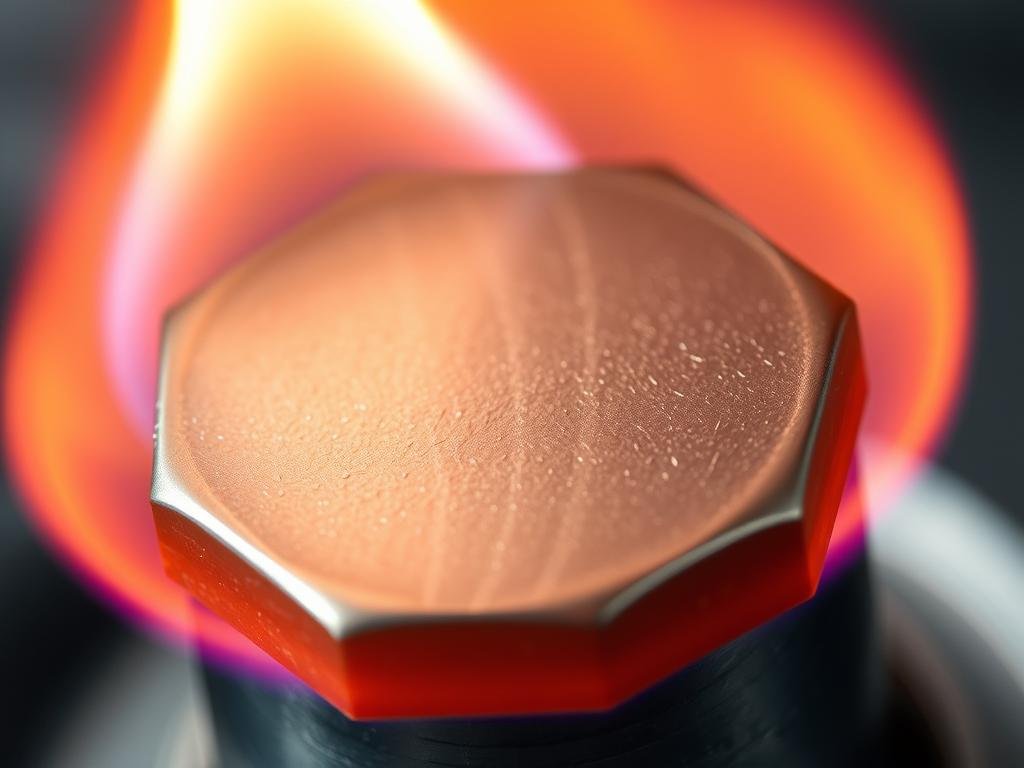
Nearly one billion tons of alloys worldwide rely on a single datum: pure nickel melts near 1455°C (2651°F), a fact that shapes design, safety, and cost across modern industry.
This concise guide explains whats is the nickel melting point and why that number matters for design and production in US manufacturing. Rapidaccu brings over 15 years of CNC machining experience and delivers precision plastic and metal parts from prototype to mass runs.
You will see how a high melting point gives this metal strength, ductility, and corrosion resistance for stainless steels, high‑temp alloys, and corrosion‑resistant products. We touch on casting, welding, and process windows to help you choose materials and avoid costly failures.
For quick technical context and sources, review Nickel facts on Wikipedia. This article links melting data to practical applications and to Rapidaccu’s machining capabilities for reliable, manufacturable designs.
Why Nickel’s Melting Temperature Matters in Present‑Day Manufacturing
Manufacturers plan around temperature limits to keep parts safe and within tolerance under heat. Small changes near a metal’s transition can cause creep, warping, or early failure long before full liquefaction.
Knowing the melting temperature sets safe upper bounds for service and for fabrication steps like casting and fusion welding. That data guides filler selection, heat input, and risk assessments for thin sections so teams avoid blow‑through and loss of geometry.
Rapidaccu uses 15+ years of CNC expertise to fold these limits into DFM reviews. We match material choices and process windows to required strength, corrosion resistance, and manufacturability for metals such as steel, aluminum, and nickel.
- Set safe operating ranges to protect tolerances and surface quality.
- Choose welding and casting parameters to control dilution and thermal damage.
- Specify tooling and fixtures for expected heat flow during process cycles.
| Process | Primary Heat Concern | Design Action |
|---|---|---|
| Casting | Fluidity and solidification control | Select furnaces and mold materials to match liquidus range |
| Fusion welding | Base metal fusion and HAZ | Balance filler melting range and heat input to limit distortion |
| Smelting | Extraction temperatures and contamination | Choose fluxes and atmospheres to protect chemistry |
whats is the nickel melting point
A material’s phase transition temperature acts as a guardrail for fabrication and long‑term performance.
Quick answer (°C and °F)
1455°C (2651°F) marks the melting point. The boiling temperature sits near 2913°C (5275°F).
What this measurement means
At the melting point, solid liquid equilibrium exists and a full change to a liquid state begins.
Metals soften before full liquefaction. Elevated temperatures below this point can still cause creep and distortion.
- Reference value for process and service limits: 1455°C (2651°F).
- Boiling near 2913°C (5275°F) is beyond normal industrial use.
- Atomic bonds weaken as atoms gain mobility toward a liquid state.
- Rapidaccu factors these temperatures into fixturing and toolpath plans to protect tolerances.
| Property | Value | Manufacturing relevance |
|---|---|---|
| Melting point | 1455°C / 2651°F | Sets process limits for welding, casting, and heat treatment |
| Boiling point | 2913°C / 5275°F | Not typically relevant for machining; useful for high‑temp processing |
| Pre‑liquid behavior | Softening and creep | Requires allowances to prevent loss of dimensional stability |
| Fundamental cause | Bond weakening and atom rearrangement | Explains onset of flow and loss of strength |
The science behind nickel’s melting point: structure, bonds, and influencing factors
At the atomic scale, lattice geometry controls how thermal energy breaks order. That view links crystal arrangement to how a metal moves toward a liquid state.
Crystal structure and bonding
Nickel adopts a face‑centered cubic (fcc) lattice. Dense packing and metallic bonds set resistance to heat.
Those bonds and lattice packing govern melting behavior and mechanical stability near high temperature.
Composition, impurities, and pressure
Alloy composition alters bond networks and produces melting ranges, not a single value. Small impurities can shift certified values.
High pressure raises the energy needed for atoms to free themselves, nudging melting temperatures upward in special service conditions.
From solid to liquid
Before the liquidus, softening and creep appear. Parts can lose tolerance well before full liquefaction.
Rapidaccu engineers use structure‑property links to set safe heat profiles and preserve surface quality.
- fcc packing and strong bonds slow the onset of flow.
- Alloying creates ranges and changes phase behavior.
- Pressure and impurities are key factors that move melting points.
| Factor | Effect | Manufacturing action |
|---|---|---|
| Crystal structure | Controls thermal resistance | Choose alloys with stable phases |
| Composition/impurities | Shifts temperature range | Specify material certs and heat analysis |
| Pressure | Raises transition energy | Adjust process parameters for extreme conditions |

How nickel compares: melting points across common metals
Comparing temperatures across common metals helps engineers pick materials that survive service heat and fabrication steps.
Nickel versus stainless and carbon steel ranges
Nickel sits near the mid to high end of common metals at about 1455°C. Stainless steel families range roughly 1375–1530°C, so overlap affects welding and post‑heat treatment choices.
Carbon steel spans about 1425–1540°C. Composition shifts these ranges and changes how systems handle heat during cast or weld cycles.
Nickel versus copper and aluminum
Copper melts near 1085°C and aluminum near 660°C. Those lower melting point metals need lower heat input and tighter controls to avoid distortion.
Alloying, refractories, and low‑end metals
Alloying in iron and steel systems alters phase behavior and process windows. Refractory metals like molybdenum (~2620°C) and tungsten (~3400°C) set the high end but are hard to machine.
Lead (~327.5°C) and zinc (~420°C) show how low melting materials serve simple cast parts yet fail in high‑heat service.
| Metal | Approx. melting (°C) | Manufacturing note |
|---|---|---|
| Nickel | 1455 | Good high‑temp ceiling for many alloys |
| Stainless steel | 1375–1530 | Overlaps nickel; affects weld selection |
| Copper / Aluminum | 1085 / 660 | Lower heat limits; control distortion |
| Tungsten / Lead | ~3400 / 327.5 | Extreme high and low cases; special handling |
Rapidaccu advises metal selection by matching melting points and process windows. That ensures designs have proper safety margins, correct filler choices, and reliable fixtures for production.
Melting ranges of nickel alloys used in industry
Industry alloys span a wide thermal map, and each composition demands its own processing window.
Below we contrast common families and their temperature ranges so designers and fabricators pick safe workflows. Rapidaccu helps specify alloys and machining plans that respect each range and thermal sensitivity.
Austenitic, ferritic, and martensitic stainless steels
Austenitic grades such as 304 and 316 typically run about 1400–1450°C. Ferritic 430 covers roughly 1425–1510°C. Martensitic 410 sits near 1400–1450°C.
Chromium content boosts corrosion resistance and nudges these ranges. That change affects welding parameters and hot work limits.
Inconel and other superalloys
Inconel series (600 and 625) show ranges near 1350–1400°C and 1290–1350°C, respectively. These nickel‑chromium superalloys keep strength at high temperatures despite slightly lower melting points than pure metal.
Monel, Hastelloy, and Nickel 200
Monel (nickel‑copper) melts near 1300–1350°C, trading thermal ceiling for corrosion resistance. Hastelloy C‑276 sits about 1325–1370°C. Commercially pure Nickel 200 remains around 1435–1446°C and suits applications needing high purity.
| Alloy / family | Typical range (°C) | Key trait |
|---|---|---|
| Austenitic (304, 316) | 1400–1450 | Good ductility; chromium aids corrosion resistance |
| Ferritic (430) | 1425–1510 | Magnetic; higher chromium shifts range |
| Inconel 600 / 625 | 1350–1400 / 1290–1350 | High‑temp strength; nickel‑chromium alloy |
| Monel | 1300–1350 | Excellent corrosion resistance; lower thermal ceiling |
| Hastelloy C‑276 / Ni 200 | 1325–1370 / 1435–1446 | Balance of corrosion and temp capability; high purity option |
Composition governs phase behavior. Even small shifts can change melting points and hot‑crack risk. Select process parameters below listed values to avoid microstructural damage. Rapidaccu recommends alloy‑specific machining feeds, coolant strategies, and thermal controls to hold geometry and finish during production.
Processes that rely on melting temperature: casting, welding, and smelting
Processes that push metals into liquid form shape choices across casting, joining, and extractive industries.

Casting and heat input: selecting furnaces and managing fluidity
In casting, furnaces must exceed an alloy’s melting value to gain fluidity and proper fill. Too little superheat causes misruns; too much raises oxidation and gas pickup.
Control of heat input guides gating design and pour timing. Rapidaccu works with customers to set furnace setpoints that balance flow and defect risk.
Welding versus brazing: matching filler metals and avoiding blowouts
Fusion welding forms a molten pool when base metals reach their melt range. Fillers match base chemistry to control dilution and strength.
When metals like iron and copper differ widely, brazing uses a lower‑melt filler to join parts without melting cores. That reduces burn‑through and metallurgical mismatch.
Melting versus smelting: processing pure metals and extracting ores
Melting handles scrap and alloys in controlled furnaces to produce liquid metal for casting or refinement. Smelting extracts elements from ore and often uses flux and a blast furnace.
Understanding solidification ranges for iron and copper systems helps avoid hot cracking and porosity during freeze‑out. Rapidaccu sets thermal inputs to stay below sensitive zones while achieving robust joints.
- Furnace superheat controls casting fluidity and defect rates.
- Heat input management prevents misruns and excessive oxidation.
- Brazing preserves component integrity when points differ widely.
- Smelting targets chemistry; melting targets reuse and alloying.
| Process | Primary concern | Typical action |
|---|---|---|
| Casting | Fluidity and superheat | Set furnace above melt range; control atmosphere |
| Fusion welding | Molten pool control | Match filler; manage heat input and HAZ |
| Brazing | Joint integrity without base melt | Use lower‑melt filler; limit applied heat |
| Smelting | Ore chemistry and extraction | Use fluxes and high‑temperature furnaces |
For reference on comparative metal data, consult melting points of metals when choosing process windows and filler alloys.
Applying nickel melting data to CNC machining and manufacturing with Rapidaccu
Practical shop floors turn metallurgical data into precise toolpaths and fixtures for repeatable runs. Rapidaccu brings over 15 years of CNC machining experience for metals and plastics, from prototype to mass production.
Material selection must consider thermal behavior: nickel alloys range from roughly 1290–1450+°C depending on grade. That range sets conservative cutting parameters that control heat and protect thin walls, bores, and edges.
Material selection, tolerances, and surface finish
Choose materials by application, conductivity, and expected post‑process heating. Tolerance and finish goals drive toolpath strategy and coolant delivery to limit localized heating.
Process optimization, quality control, and safety
We optimize feeds and speeds to avoid thermal damage during roughing and finishing. When assemblies need welding or brazing, sequencing keeps critical features below risky temperatures.
- QC verifies dimensional stability after thermal exposure and finishing.
- Fixturing and safety plans reflect high‑temperature realities for repeatability.
- DFM feedback aligns applications with manufacturable geometries to reduce rework.
| Concern | Effect | Rapidaccu action |
|---|---|---|
| High local heat | Distortion, loss of tolerance | Conservative toolpaths and coolant |
| Post‑weld heating | Feature drift | Sequence control and stabilizing fixtures |
| Alloy variability | Different thermal ranges | Material certs and tailored parameters |
Key factors to balance: temperature, structure, applications, and cost
Design teams must weigh thermal limits, microstructure, and cost when choosing metals for critical assemblies. Clear temperature bands help set safe operating margins for parts and systems.
Structure and chemistry shape how an alloy behaves near high heat. That affects weldability, castability, and the stability of key components in service.
Documented ranges such as ~1455°C for pure metal and common alloy windows (stainless ~1375–1530°C; Inconel ~1290–1425°C; Monel ~1300–1350°C) act as reference points. Use them to rate risk for each element and design choice.
- Temperature limits frame process windows and finish choices.
- Systems thinking ties geometry, joining, and finishing to avoid near‑melt regions.
- Cost and availability guide which alloys meet performance without excess spend.
| Factor | Typical range (°C) | Design action |
|---|---|---|
| Pure reference | ~1455 | Set conservative safety margins |
| Stainless family | 1375–1530 | Adjust welding and heat treatment |
| Superalloys / Monel | 1290–1425 / 1300–1350 | Prioritize corrosion or temp strength per application |
Rapidaccu partners with customers to balance performance, manufacturability, and budget. We recommend materials and processes that meet application needs while keeping project costs predictable.
Conclusion
Clear thermal data prevents surprises and keeps production on schedule. The melting point of about 1455°C anchors safe process limits for welding, casting, and heat treatment.
Compare values: aluminum ~660°C, copper ~1085°C, and many steels near 1375–1540°C. Nickel alloys span roughly 1290–1450+°C, so alloy choice affects tooling and joins.
Lower melting choices can cut cost but demand tighter heat control to avoid distortion. Use melting data early to reduce rework and schedule risk.
With 15+ years of CNC experience, Rapidaccu turns these numbers into manufacturable designs and reliable products. Contact us to review your alloy and process plan and protect geometry, finish, and delivery.
FAQ
What is the melting temperature of pure nickel in °C and °F?
Pure nickel melts at about 1455°C (2651°F) and has a boiling temperature near 2913°C (5275°F). These values guide casting, welding, and alloy selection in manufacturing.
What does "melting point" mean in metallurgy?
Melting point refers to the temperature where a solid and liquid exist in equilibrium, with the solid fully transitioning to liquid at the specified temperature under standard pressure.
How does crystal structure affect nickel’s transition to liquid?
Nickel has a face-centered cubic (fcc) lattice. Strong metallic bonding and close packing raise its energy needed for atoms to break free, so fcc and bond strength influence the temperature of liquefaction.
How do composition and impurities change nickel’s temperature behavior?
Alloying elements like chromium, iron, or copper alter phase stability and can raise or lower melting ranges. Impurities and pressure similarly shift solidus and liquidus temperatures, affecting processing windows.
How does nickel compare with stainless steel, copper, and aluminum?
Nickel’s melting temperature sits above copper and aluminum but overlaps some stainless steels depending on composition. Copper melts near 1085°C and aluminum near 660°C, while stainless families vary with chromium and nickel content.
What melting ranges exist for common nickel alloys?
Austenitic stainless steels and nickel‑rich superalloys have wide liquidus‑solidus gaps. Inconel series show higher ranges for high‑temperature strength, Monel sits lower due to copper, and Nickel 200 is near pure nickel values.
How do casting, welding, and smelting depend on melting temperatures?
Casting requires furnace selection and fluidity control based on melting and solidification ranges. Welding and brazing need compatible filler metals and heat control to avoid excessive heat‑affected zones and defects. Smelting processes extract and refine metals using temperatures above melting points.
How should manufacturers apply nickel melting data for CNC work and production?
Use melting and solidification data to choose materials, set machining allowances, control heat treatment, and establish safety procedures. Rapid prototyping and production benefit from matching material thermal behavior with tooling and coolant strategies.
What are the highest and lowest melting metals relevant to industry?
Tungsten and molybdenum rank among the highest, useful for extreme‑temperature applications. Lead and zinc have low melting ranges and serve in low‑temperature casting and soldering roles.
How does alloying with chromium or iron affect stainless steel melting ranges?
Chromium stabilizes certain phases and raises corrosion resistance; combined with nickel or iron, it changes solidus and liquidus temperatures, affecting weldability and casting behavior across ferritic, martensitic, and austenitic grades.
What safety and quality controls are critical when working near nickel’s liquefaction temperature?
Monitor furnace atmospheres, control ramp rates to avoid thermal shock, select compatible fluxes and fillers, and enforce PPE and ventilation. Quality checks should include metallography, hardness, and dimensional inspections after heat treatment.
Can pressure or environmental conditions shift the measured liquefaction temperature?
Yes. Elevated pressure typically raises melting temperatures, while reactive atmospheres can alter surface chemistry and apparent fusion behavior. Measure under relevant processing conditions for accurate data.