

Nearly 40% of global plumbing and drainage systems use polyvinyl chloride each year, a scale that makes thermal behavior a daily engineering concern.
For practitioners, the melting concept for this plastic means a processing window rather than a single fixed value. That window spans roughly 100°C to 260°C based on formulation, additives, and method.
Understanding temperature ranges matters for pvc pipe, electrical insulation, and medical parts. Correct heat control prevents warpage, loss of strength, or HCl-driven discoloration when material is overheated.
This guide shows typical processing bands — extrusion often runs near 180°C–210°C — and contrasts them with safe service limits, usually under about 55°C for long-term use. Special grades and CPVC extend those limits.
Rapidaccu brings 15+ years of CNC machining expertise to align materials, tooling, and metrology so heating and cooling cycles deliver accurate, durable parts across applications and production scales.
Understanding PVC as a Thermoplastic Polymer
Knowing when a vinyl-based resin softens helps engineers set safe, repeatable heating cycles for production.
Polyvinyl chloride structure and composition (C2H3Cl)
Polyvinyl chloride has repeating vinyl chloride units (CH2=CHCl) along long chains. Each repeat contains one chlorine atom, which raises polarity and intermolecular attraction.
That chloride content also contributes to self-extinguishing behavior and improved electrical performance compared to many other resins.
Amorphous behavior and lack of a single sharp melting point
As an amorphous thermoplastic, this material does not exhibit a single sharp transition. Instead, it softens gradually over a temperature window—roughly 120–150°C—then flows at higher temperatures used in processing.
Decomposition can start near 140°C and accelerate above about 170–180°C without stabilizers. Density, fillers, and plasticizers shift these responses.
- Rigid pvc formulations have fewer plasticizers and higher stiffness; flexible grades soften sooner.
- Molecular architecture affects glass transition and melt viscosity during forming and finishing.
- Resin choice guides tooling, fixturing, and cycle development for consistent parts.
Rapidaccu draws on 15+ years of precision machining to interpret these characteristics and translate them into stable, repeatable processes for plastic parts.
whats is the pvc melting point
Operators should view a melting temperature as a softening-to-flow window rather than a single number. Polyvinyl chloride behaves as an amorphous thermoplastic, so it gradually softens and then flows as heat rises.
Many compounds move from soft to flow near 185–205°C during processing, but formulations and additives extend that band from about 100°C up to roughly 260°C. Flexible grades start to flow at lower temperature because plasticizers reduce rigidity.
Chloride content and stabilizers shift when flow starts and when degradation begins. Overheat can trigger dehydrochlorination (HCl release) and cause discoloration or loss of mechanical strength.
Read datasheets as guidance on processing windows, not a single numeric reading. Set equipment to ramp evenly into the target window and monitor for local hot spots to protect surface finish and dimensional accuracy.
Establishing a stable temperature window supports repeatable quality, easier scale-up, and reliable process validation across extrusion, molding, or thermoforming work.
PVC Melting Temperature Range and Why It Varies
Manufacturers set thermal bands carefully to balance flow, stability, and surface quality for pipe and profile work.
Typical softening and flow windows span about 100°C to 260°C. Formulation, resin structure, molecular weight, and additives define where a compound will soften and then accept processing shear.
How grades compare
Rigid vinyl (uPVC) normally processes near 200–250°C because of higher stiffness and fewer plasticizers. Flexible grades with plasticizers often flow between 100–200°C, needing less heat to reach viscous flow. CPVC shifts higher, around 230–260°C, offering improved thermal resistance for hot-water systems.
Softening versus degradation
Softening gives workable viscosity; viscous flow enables extrusion and molding. Degradation begins with chloride-driven HCl release near 140°C and accelerates above 170–180°C without stabilizers, causing darkening and loss of properties.
| Grade | Typical Processing Band (°C) | Primary Driver | Common Application |
|---|---|---|---|
| Rigid (uPVC) | 200–250 | High stiffness, low plasticizer | Pipe, profiles, fittings |
| Flexible (pPVC) | 100–200 | Plasticizers lower viscosity | Hoses, cable insulation, tubing |
| CPVC | 230–260 | Chlorinated structure for heat resistance | Hot-water plumbing, industrial piping |
- Extrusion for pipe often runs 180–210°C; residence time and shear impact melt homogeneity and final dimensions.
- Stabilizers and antioxidants counter dehydrochlorination and preserve thermal stability during heating.
- Document zone setpoints, screw speed, and backpressure to reproduce temperatures and reduce scrap across lots.
For engineers, confirm each resin’s approved temperature range and adjust cooling and downstream handling to protect surface finish and tolerance. Rapidaccu uses controlled thermal profiles to stay within the optimal melting temperature window, reducing scrap and maintaining repeatable tolerances from prototyping through mass production.
For deeper guidance, see processing temperature recommendations.
Key Factors That Influence Melting Temperature and Thermal Stability
Processing teams must balance speed, shear, and formulation to protect part strength during heating.
Higher molecular weight resin raises viscous resistance and improves thermal stability. That gains strength but often demands higher temperature and longer residence time to reach flow. Chain interactions also affect toughness and dimensional accuracy.
Molecular weight and chain interactions
Longer chains increase cohesion between segments. Parts tolerate higher service loads, yet require adjusted heat profiles to avoid defects.
Role of additives: plasticizers, stabilizers, antioxidants, fillers
Plasticizers lower viscosity and reduce required temperature for flow. Stabilizers and antioxidants delay degradation and preserve thermal stability.
Fillers change heat transfer and stiffness. They can reduce cycle time or raise shear, so choose grades carefully.
Processing conditions: heating rate, pressure, residence time
Fast heating can create hot spots and trigger dehydrochlorination. Higher pressure and longer residence time improve melt uniformity but risk degradation without stabilizers.
Environmental stressors: UV exposure and oxidative effects
UV and oxygen accelerate polymer breakdown and lower usable temperature limits. UV stabilizers and coatings restore long-term performance.
| Factor | Effect on temperature | Impact on thermal stability | Manufacturing response |
|---|---|---|---|
| Molecular weight | Higher → higher processing temperature | Improved strength and stability | Increase dwell time; reduce shear spikes |
| Plasticizers | Lower required temperature | Reduced stiffness, lower heat resistance | Adjust cooling; monitor long-term properties |
| Stabilizers / antioxidants | Allow safer higher temperatures | Delay degradation onset | Specify additive package; track lots |
| Fillers | Alter heat transfer and viscosity | Can increase stiffness or brittleness | Tune screw design; test mechanicals |
Rapidaccu optimizes process windows with material characterization and in-line probes. That lowers scrap, keeps strength, and ensures consistent performance across production.
Processing Temperatures in Practice: Extrusion, Injection Molding, and Thermoforming
Practical processing requires tight thermal zoning and steady screw speeds to turn resin into consistent pipe and parts.
Rapidaccu’s process control—tight temperature zoning, optimized gating, and cycle time tuning—keeps surface finish and dimensional accuracy steady from pilot to production.
Extrusion of pipe: barrel and die bands
Run barrel and die zones near 180°C–210°C to reach homogenous flow while avoiding local overheating. Stage zones cooler at feed, warmer at compression, then match die setpoints to prevent melt spikes.
Monitor melt temperature against barrel setpoints and log residence time to catch deviations that can cause chloride-driven degradation or splay.
Injection molding: shear, gating, and cycle control
Manage shear heat by optimizing screw speed and backpressure. Design gates and vents to reduce trapped air and burn marks.
Balance cycle time and cooling so parts demold with stable dimensions without spending extra time at high temperature.
Thermoforming and degradation avoidance
Use controlled preheat profiles and even reheat to prevent thin-sheet hotspots. Maintain sheet thickness uniformity and limit dwell time under heat to protect additives and material stability.
- Recommended extrusion bands: feed 180°C, compression 195°C, metering 205°C, die 200°C.
- Check melt vs. barrel temps with IR thermography and melt pressure sensors.
- Keep stabilizers but never rely on additives alone; control temperature and time.
- Schedule cleaning and maintenance to avoid char and contamination that cause color shift.
- Ensure fume extraction and safe venting for HCl management and operator safety.
| Operation | Key setpoint | Primary control |
|---|---|---|
| Extrusion pipe | 180–210°C | Zone staging, residence time |
| Injection molding | Melt & mold temp | Shear control, gating, venting |
| Thermoforming | Preheat profile | Sheet uniformity, reheat timing |
Service Temperature Limits for PVC Pipe and Products
Long-term service temperatures set safe limits for pipe and parts. Stay within those limits to preserve strength, seals, and appearance.
Typical long-term use and special formulations
Most products perform reliably at or below about 55°C for continuous service. Specially formulated compounds raise that usable range to roughly 90°C for shorter durations.
Extended exposure at 100°C promotes degradation unless the material includes robust stabilizers. Heat and UV together speed aging and can trigger chloride-driven breakdown and discoloration.

Implications for water, drainage, and outdoor systems
Hot water applications often require CPVC rather than standard PVC to get higher thermal resistance and safety. For drainage, irrigation, or outdoor construction, consider ambient, media temperature, pressure, and cycling when selecting products.
- Derate pressure ratings at elevated temperatures to keep safety margins.
- Use UV stabilizers or protective coatings for outdoor installations to maintain stability and resistance.
- Inspect joints and seals regularly; prolonged heat raises creep and affects integrity.
- Validate formulations for intended applications and documented temperature use.
| Service Band (°C) | Common Applications | Notes |
|---|---|---|
| ≤ 55 | Cold-water distribution, drainage | Standard products rated for continuous use |
| 55–90 | Warm water, some industrial lines | Special formulations or CPVC advised for reliable life |
| ≥ 100 | High-temp process lines | Risk of degradation; require specific stabilization and testing |
Rapidaccu advises matching material choices to realistic field conditions. That reduces degradation, protects joints and seals, and improves lifecycle cost, reliability, and compliance.
Applications Informed by Melting Behavior and Properties
Match material behavior to use by mapping thermal flow windows to product duty. This helps select materials that hold shape, resist chemicals, and meet durability targets.
Rigid PVC performs well where stiffness and strength matter. Typical uses include pipe, window profiles, roofing membranes, and structural components. Its higher processing window supports weathering resistance and long service life in construction applications.
Flexible formulations rely on plasticizers to lower processing needs. That makes them ideal for medical tubing, IV bags, wire and cable insulation, and automotive seals. Insulation and softness combine with biocompatibility and durability when correctly processed.
CPVC should be specified for hot water and industrial systems. Where water or process fluids exceed normal service bands, this grade gives extra thermal resistance and safety for pressurized lines.
- Map melting behavior to application categories so rigid pvc serves structural uses while flexible grades cover bendable products.
- Insulation performance, weathering resistance, and chemical compatibility drive selection for electrical and exterior products.
- Control processing and melt temperature to protect strength, dimensional stability, and cosmetic quality.
- Observe regulatory testing for medical, flammability, and building codes during specification.
| Application | Preferred Grade | Key Property | Why thermal behavior matters |
|---|---|---|---|
| Water distribution and drainage | Rigid PVC | Stiffness, chemical resistance | Thermal control prevents warpage and keeps joint integrity |
| Medical tubing and devices | Flexible PVC | Softness, biocompatibility | Lower processing temperatures protect cleanliness and additives |
| High-temp process lines | CPVC | Raised heat resistance | Higher processing window required for safe long-term use |
Rapidaccu supports application-driven decisions by matching materials and processing to performance targets. Validate settings in prototype runs so production yields reliable, compliant products. For more processing guidance see processing temperature recommendations.
Comparing PVC Melting Point and Properties to Other Thermoplastics
Choosing between common thermoplastics often starts with comparing how they behave under heat and during molding.
PE, PP, and ABS melting temperatures versus PVC
LDPE softens near 105–115°C, while HDPE needs about 120–130°C. Polypropylene ranges roughly 130–171°C and ABS sits around 105–125°C.
By contrast, polyvinyl chloride often requires higher processing temperatures and has a wider range up to about 260°C depending on formulation and additives.
Trade-offs: strength, impact resistance, chemical and weather resistance
Rigid pvc gives higher stiffness and strength than PE and PP and excels at chemical and weather resistance. ABS offers superior impact performance but lower chemical durability.
- Processing complexity: rigid pvc needs tighter thermal control and longer cooling to meet dimensional targets.
- Productivity: lower processing temperatures for PE and ABS can mean faster cycles, but may sacrifice stiffness.
- Insulation and heat exposure: choose materials with suitable thermal stability for electrical or outdoor applications.
| Material | Processing temps (°C) | Key property |
|---|---|---|
| LDPE | 105–115 | Flexibility, easy molding |
| HDPE | 120–130 | Higher strength, low cost |
| PP | 130–171 | Good chemical resistance |
| ABS | 105–125 | High impact, finish quality |
| Polyvinyl chloride | 100–260 | Chemical/weather resistance, stiffness |
Rapidaccu helps teams weigh processing feasibility, cost, and lifetime performance so selected materials meet surface, tolerance, and application goals for pipe or used construction parts.
From Material to Precision Parts: How Rapidaccu Optimizes PVC and Polymer Processing
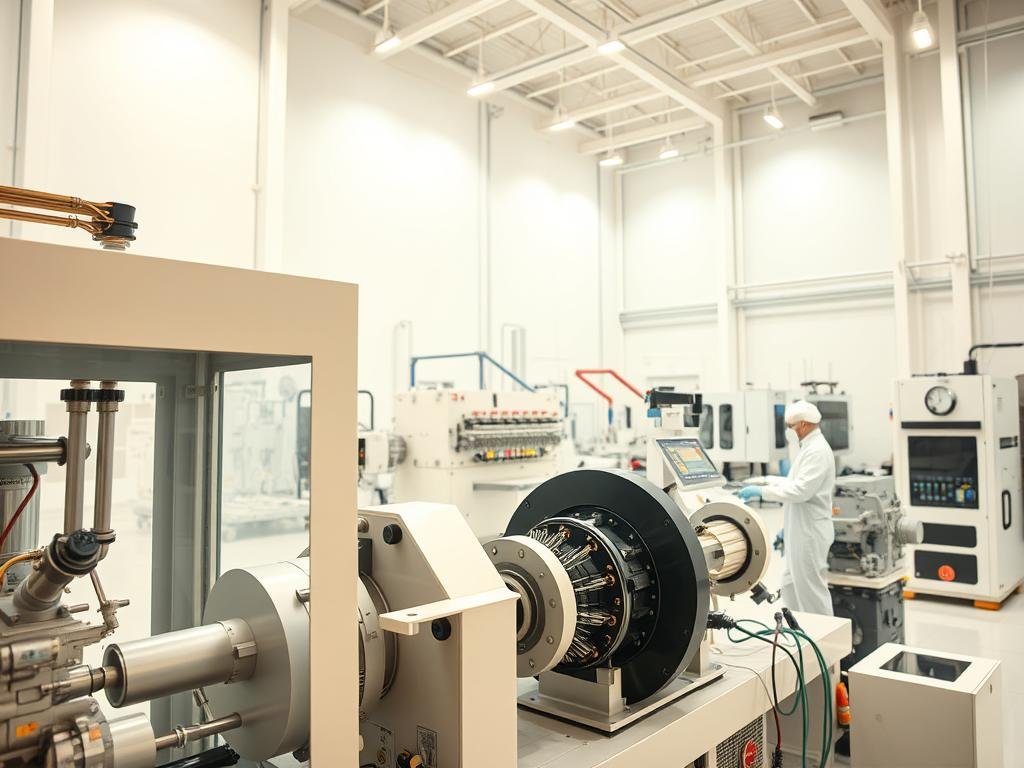
Rapidaccu turns material data into repeatable parts by combining thermal profiling with precision CNC machining. Our teams pair process control and metrology so settings remain stable across shifts and runs.
With over 15 years of experience in plastics and metals, we set tight temperature and time windows to protect resin from degradation while meeting throughput goals. We manage residence time, zoning, and shear to avoid local hot spots that cause HCl-driven issues.
Tooling and fixturing are designed to keep melt flow uniform and to reduce warpage during molding and machining. In-process sensors catch drift early so corrections happen before scrap increases.
- Prototype-to-production: DOE, capability studies, and control plans validate settings before scale-up.
- Systems integration: fixtures, cooling circuits, and sensors maintain consistent thermal control across sites.
- Finishing: precision machining and post-process methods deliver target surface finish and final tolerances.
| Service | Primary focus | Outcome | Why it matters |
|---|---|---|---|
| Thermal profiling | Zone setpoints & dwell time | Stable melt, reduced degradation | Protects parts and preserves appearance |
| Tooling & fixturing | Uniform flow, minimal distortion | Repeatable dimensions | Reduces rework and scrap |
| In-process control | Sensors & logs | Early drift detection | Keeps production predictable |
Engage Rapidaccu early to compress development time and lower risk from design to high-volume production. We align materials, molding methods, and machining to deliver reliable, scalable products.
Conclusion
Clear thermal guidelines help manufacturers turn resin behavior into predictable, high-quality parts.
Polyvinyl chloride behaves as an amorphous plastic, so define a workable melting temperature window rather than a single point during process setup. Typical processing spans roughly 100–260°C; extrusion for pipe often runs near 180–210°C.
Keep service temperatures below about 55°C for long-term use, and select CPVC for hotter water or industrial lines. Control heating, residence time, and uniformity to limit chloride-driven degradation and protect strength and insulation performance.
Choose rigid pvc, flexible grades, or CPVC to suit applications and environment. Use stabilizers and additives to delay breakdown and preserve resistance under elevated temperatures.
Rapidaccu stands ready to guide material choice, process design, and prototype trials that lock in settings for durable, accurate, cost-effective production. Contact us to translate melting behavior into validated, production-ready outcomes for pipe and components.
FAQ
What is the PVC melting point and why does it matter?
Polyvinyl chloride does not have a single sharp melting temperature. Its transition from a rigid solid to a soft, workable mass occurs over a range. That behavior determines processing windows, end-use temperatures, and risk of thermal degradation that releases HCl. Understanding this range guides manufacturing, welding, and product selection for plumbing, profiles, and electrical insulation.
How does polyvinyl chloride’s molecular structure affect thermal behavior?
PVC’s repeating C2H3Cl units create a polar chain with strong intermolecular interactions. Those interactions, plus its largely amorphous nature, produce a glass transition and a broad softening interval rather than a single melt point. Chain length and tacticity influence stiffness and heat response.
What temperatures define the typical softening and processing window?
Processing commonly occurs between about 100°C and 260°C. Lower values cover softening and thermoforming; higher zones appear in melt-processing like extrusion and injection molding. Operators aim to stay below thresholds that trigger HCl release and discoloration.
How do rigid, flexible, and chlorinated variants compare?
Rigid grades (uPVC) contain few plasticizers and soften at higher temperatures than flexible grades, which include phthalates or other plasticizers that lower the softening range. CPVC (chlorinated PVC) has a higher service and processing temperature due to extra chlorine in the chain, making it suitable for hotter water systems.
What factors raise or lower the effective melting and thermal stability?
Molecular weight and chain entanglement, plasticizers, heat stabilizers, antioxidants, and fillers all shift thermal behavior. Processing conditions — heating rate, applied pressure, and residence time — also matter. Environmental stressors such as UV and oxidation reduce stability over time.
What are typical temperature bands used when extruding pipe?
For extrusion of pressure and drainage pipe, barrel and die zones usually run around 180°C to 210°C. Those bands vary by formulation, screw design, and throughput to produce consistent melt viscosity and dimensional control.
What should injection molders watch for with heat and shear?
Excessive shear or long residence times can raise melt temperature locally and promote HCl-driven degradation. Molders control gate design, cycle time, and cooling to prevent discoloration, loss of mechanical properties, and odorous emissions.
At what temperature does thermal degradation become a real concern?
Degradation can begin as temperatures exceed the safe processing window and when HCl evolution accelerates, typically above 200–260°C depending on formulation and stabilizers. Proper stabilizers and controlled heating reduce this risk.
What are safe long-term service temperatures for pipe and fittings?
For most rigid formulations, long-term exposure is limited to about 55°C or lower. Special formulations and CPVC variants permit continuous service up to roughly 90°C. Always consult manufacturer specifications for pressure ratings at temperature.
How do these limits affect application choices like hot-water plumbing or outdoor systems?
Standard rigid grades suit cold-water distribution, drainage, and many outdoor uses. For hot-water lines or high-temperature industrial systems, specify CPVC or alternative polymers designed for elevated temperatures to ensure longevity and safety.
Where is flexible vinyl preferred because of thermal behavior?
Flexible vinyl, with plasticizers, suits medical tubing, wire and cable jacketing, and seals where softness and bendability at low temperatures matter. Those plasticizers lower the softening range, so designers account for reduced heat resistance versus rigid grades.
How does PVC compare to polyethylene, polypropylene, and ABS on melting and properties?
Polyethylene and polypropylene typically have clearer melting points and higher crystallinity, with differing temperature limits and chemical resistance. ABS melts at higher processing temperatures and offers better impact resistance. PVC trades some impact toughness for superior chemical and weather resistance and flame-retardant behavior without additives.
What processing controls help maintain material stability and part quality?
Precise control of temperature, residence time, screw speed, mold cooling, and tool design preserves molecular integrity. Adding effective heat stabilizers, antioxidants, and appropriate fillers further improves tolerance to processing stresses.
When should engineers specify CPVC instead of standard vinyl for systems?
Choose CPVC when continuous service temperatures or intermittent exposure approach or exceed typical PVC limits, such as in hot domestic water, certain industrial process lines, or applications demanding higher thermal aging resistance.
How do manufacturers like Rapidaccu optimize processing for PVC and similar polymers?
Experienced suppliers combine material selection, CNC machining know-how, and robust process control to manage temperature, tooling, and cycle timing. That expertise shortens prototyping, improves dimensional accuracy, and ensures repeatable surface finishes for production parts.