
Aluminum vs Brass: What I Recommend for Hardware, Threads, and Premium Finish
“In high-end hardware, the choice between Aluminum and Brass is the difference between modern efficiency and timeless substance.” — Jack, Senior Engineer
Jack
15-Year Manufacturing Veteran
Precision Machining Expert at Rapidaccu
The Engineer’s Dilemma: Modern vs. Classic
I’ve spent over a decade on the shop floor at Rapidaccu, watching CAD designs transform into physical reality. When it comes to visible hardware—knobs, enclosures, and threaded connectors—the choice between aluminum machining and brass machining is never just about cost. It’s about how the part feels in the hand, how it resists the environment, and how the threads hold up after 1,000 cycles.
Whether you are an Industrial Designer chasing that perfect gold luster or a Structural Engineer worried about thread stripping, this guide is based on my 15 years of seeing what actually works (and what fails) in the field.
Aluminum vs Brass: Material Properties & Machinability
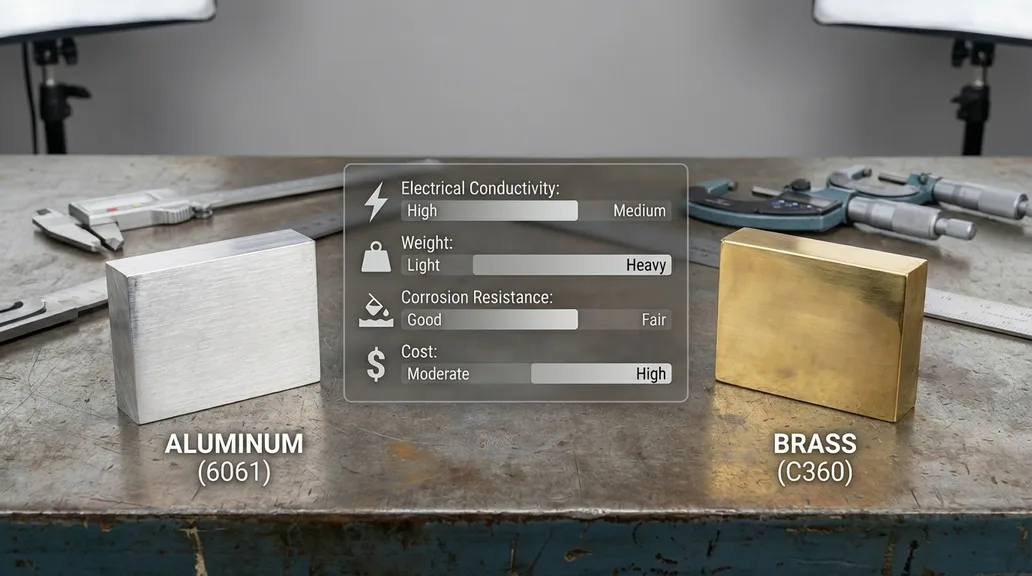
| Metric | Aluminum (6061-T6) | Brass (C360) |
|---|---|---|
| Density | 2.70 g/cm³ | 8.50 g/cm³ |
| Machinability | 80% | 100% |
| Corrosion | High | Extreme |
| Yield Strength | 276 MPa | 310 MPa |
*Comparing 6061-T6 Aluminum with C36000 Free-Cutting Brass. Note the 3x density difference which defines the “heft” of brass components.
Aluminum vs Brass: Typical Application Matchup
Aluminum Dominance
- Aerospace Brackets 6061-T6
- Electronics Enclosures Anodized 5052
- Heatsink Fins 1050/6063
- Camera Housings Sandblasted Finish
Brass Dominance
- Premium Audio Knobs High-Polished
- Marine Fittings C464 Naval Brass
- Threaded Inserts C360 Brass
- Watch Components Precision CNC
Fast Answer: The Quick Decision Rule
- Choose Aluminum: When weight reduction is critical (aerospace) or you need custom colors via anodizing.
- Choose Brass: When hand-feel, premium heft, and high-cycle thread reliability are required.
2026 Global Standards: Lead-Free Brass & Compliance
The Green Shift
By 2026, compliance with RoHS 3.0 and California Prop 65 is no longer optional for global exports. Traditional C36000 (Free-Cutting Brass) contains ~2.5-3.7% lead for machinability.
C68700 (Eco-Brass): The 2026 standard for potable water and medical devices. Lead-free and corrosion-resistant.
Machining Impact: Lead-free brass is harder on tools. Expect a 15-20% increase in machining time compared to leaded brass.
Compliance Checklist:
- Medical Grade: Must use lead-free alloys.
- EU Exports: Check RoHS 10 substances list.
- Potable Water: NSF/ANSI 61 requirements.
“At Rapidaccu, we provide full material certifications (MTR) for all lead-free brass orders to ensure your 2026 supply chain remains compliant.” — Jack
The DFM Warning: Galvanic Corrosion
Chemistry Risk
Never ignore the Anodic Index. In my 15 years, I’ve seen aluminum enclosures literally “disintegrate” around brass screws in humid environments. This is Galvanic Corrosion.
When Aluminum (Anode) and Brass (Cathode) touch in the presence of moisture, the aluminum sacrifices itself to protect the brass. This leads to rapid pitting and structural failure.
Hand-Feel & “Heft”: The Secret of High-End Hardware
In the B2B world, we often talk about tolerances and SFM, but in consumer hardware, the most important metric is Perceived Quality. This is where Brass wins every time.
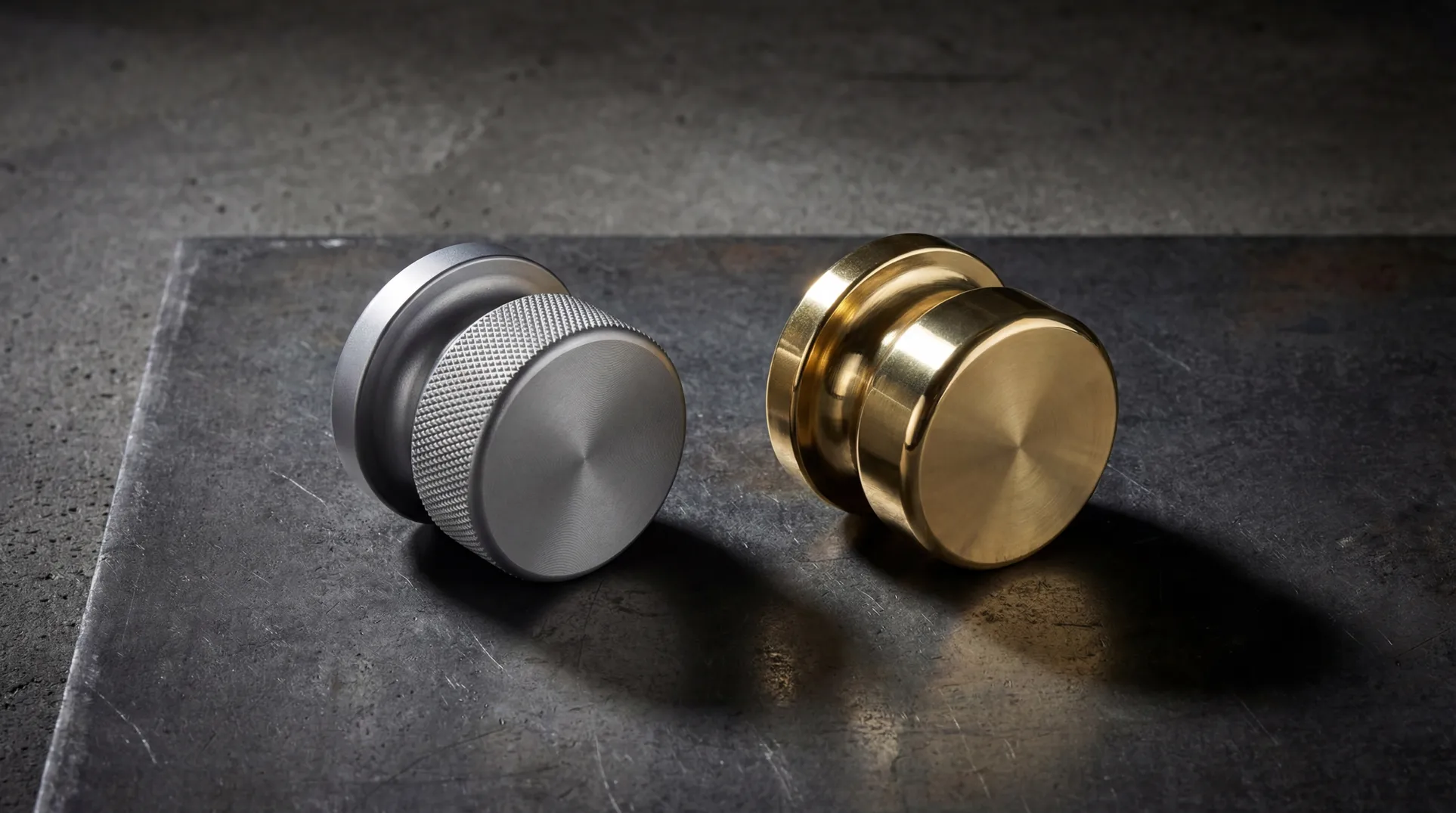
The 38g vs 120g Comparison
“Imagine a 30mm diameter control knob. In Aluminum, it weighs roughly 38g—it feels light, agile, and modern. In Brass, that same knob weighs 120g. It has ‘Heft’. For a $500+ audio amplifier or a luxury watch winder, that weight translates to ‘Substance’ and ‘Value’ in the customer’s mind.”
Premium Factor
- Acoustic Damping: Brass absorbs vibration better for audio gear.
- Inertia: Heavy brass knobs ‘coast’ better for fine tuning.
- Timelessness: Aluminum is high-tech; Brass is legacy.
Threads & Assembly: Preventing the “Stripped Screw” Nightmare
In my 15 years, the most common failure I see isn’t material fracture—it’s thread stripping. Aluminum is soft. If your assembly requires frequent maintenance (opening/closing a hatch), aluminum threads will eventually gall and fail.
Jason’s Thread Rule:
“If a screw is turned more than 5 times in its life, use a Brass Threaded Insert in your aluminum part, or switch to Full Brass. Brass is naturally self-lubricating; it doesn’t ‘bite’ like aluminum does.”
- Risk: Anodizing increases thread friction, leading to false torque readings.
- Action: Specify a dry-film lubricant for aluminum threads in critical assemblies.
Assembly Torque Comparison
How much force can the threads handle before they deform?
Maintenance Over Time: Patina vs. Protection
Aluminum: Anodized Durability
Aluminum is best for modern, high-tech aesthetics. Anodizing converts the surface into a ceramic-like layer that is nearly immune to scratches and environmental wear.
Brass: The Living Metal
Brass offers a warmth that aluminum cannot replicate. But remember: Brass is reactive. Without a clear coat (lacquer) or PVD plating, it will develop a unique patina over time.
Rapidaccu Integrated Manufacturing Path
Prototype
3D Printing or CNC Machining for form-fit testing. Fast iteration in 3-5 days.
Pilot Run
Sheet Metal or Vacuum Casting. Low-volume validation (10-100 units).
Production
Injection Molding, Stamping, or High-Speed CNC. Scaled for global export.
Cost Traps I See: 7 Common Procurement Mistakes
Material vs. Machine Hour: Brass is 5x more expensive per kg, but it machines 25% faster. On tiny parts, brass is often cheaper because machine time is the dominant cost.
The “Polishing” Surprise: Brass requires manual polishing for a mirror finish, which is labor-intensive. Aluminum can be chemically brightened for a similar effect at lower cost.
Thread Rework: Using aluminum for high-cycle threads leads to field failures. The cost of a “return and repair” is 100x the cost of a brass insert.
Shipping Weight: For large enclosures, brass weight can triple your international air freight costs. Always calculate the “landed” cost.
Tool Wear on Hard Alloys: Specifying 7075 Aluminum instead of 6061 can double your tooling costs. Only use it if you truly need the yield strength.
The “Anodizing Match” Trap: Different aluminum alloys (e.g., 6061 vs 7075) anodize to different shades. Never mix them on the same visible assembly.
Ignoring Scrap Value: Brass scrap is worth ~60-70% of new material. For high-volume Swiss machining, we factor this in to lower your quote.
Frequently Asked Questions
Is brass stronger than aluminum?
In terms of raw yield strength, Brass C360 (~310 MPa) is slightly stronger than Aluminum 6061-T6 (~276 MPa), but aluminum has a much higher strength-to-weight ratio.
Will brass tarnish outdoors?
Yes, unless clear-coated or plated, brass will develop a dark patina (brown/green) outdoors. Aluminum forms a protective oxide that stays relatively silver/grey.
Which is better for electrical grounding?
Brass is often preferred for grounding terminals because it resists corrosion better in humid environments and has consistent conductivity at connection points.
Can I anodize brass?
No, anodizing is a process unique to aluminum. Brass is colored via plating (nickel, chrome, gold) or chemical patination.
Why are brass threads more reliable?
Brass has lower friction and higher wear resistance, preventing “galling” where two metal surfaces weld together under pressure during tightening.
Is aluminum food safe?
Anodized aluminum is widely used in food processing. Brass contains lead (in alloys like C360), so it requires lead-free variants for food contact.
Which metal is easier to CNC machine?
Brass C360 is considered the “easiest” machining metal in the world. Aluminum 6061 is excellent but can be “sticky” and requires more chip management.
What is the scrap value difference?
Brass scrap is significantly more valuable than aluminum scrap, which can help offset the higher initial material cost for high-volume orders.
Let’s Refine Your Design
Ready to transition from prototype to production? Our engineering team provides free DFM reviews on every quote.
Email Our Engineers
info@rapidaccu.com