
Aluminum vs Copper: How I Choose Materials for Thermal & Electrical Performance (15-Year Engineer’s Guide)
In the world of heat sinks and busbars, there is no “best” material—only the most efficient one for your specific thermal envelope and budget.
[Image: Jack at Rapidaccu CNC Facility]
Jack
Senior Engineer, Rapidaccu
15 Years in Precision Manufacturing
My Experience on the Thermal Frontline
I’ve spent 15 years watching engineers battle the laws of thermodynamics. I’ve seen copper heat sinks that were too heavy for the PCB to support, and aluminum busbars that melted because someone forgot about contact resistance.
At Rapidaccu, we specialize in both aluminum machining and copper machining. Whether you are designing Liquid Cooling Cold Plates for the next generation of AI Servers or lightweight heat sinks for EV powertrains, my job isn’t to sell you the most expensive metal; it’s to ensure your device doesn’t throttle or fail in the field. This guide is the distilled logic I use every day.
Heat Flow 101: The Engineer’s Analogy
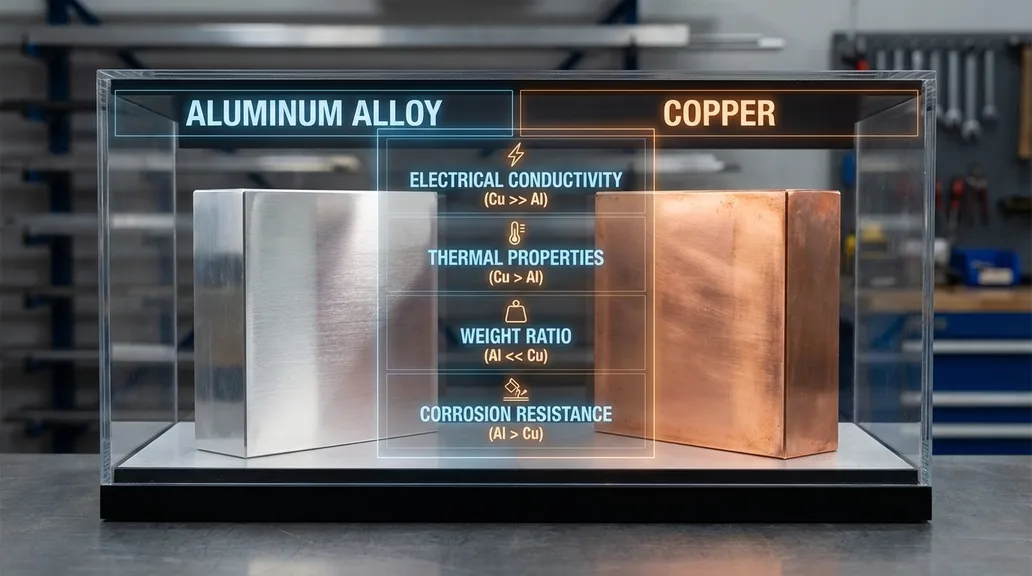
Think of Thermal Conductivity as the “Width of a Highway.” Copper is an 8-lane superhighway (400 W/m·K), while Aluminum is a 4-lane road (200 W/m·K).
However, Thermal Diffusivity is how fast heat spreads. Aluminum is surprisingly good at this, spreading heat across large surface areas like laptop chassis without creating hot spots.
Finally, Interface Resistance is the “Traffic Jam at the Exit.” No matter the metal, poor DFM or surface flatness will cause failure at the joint.
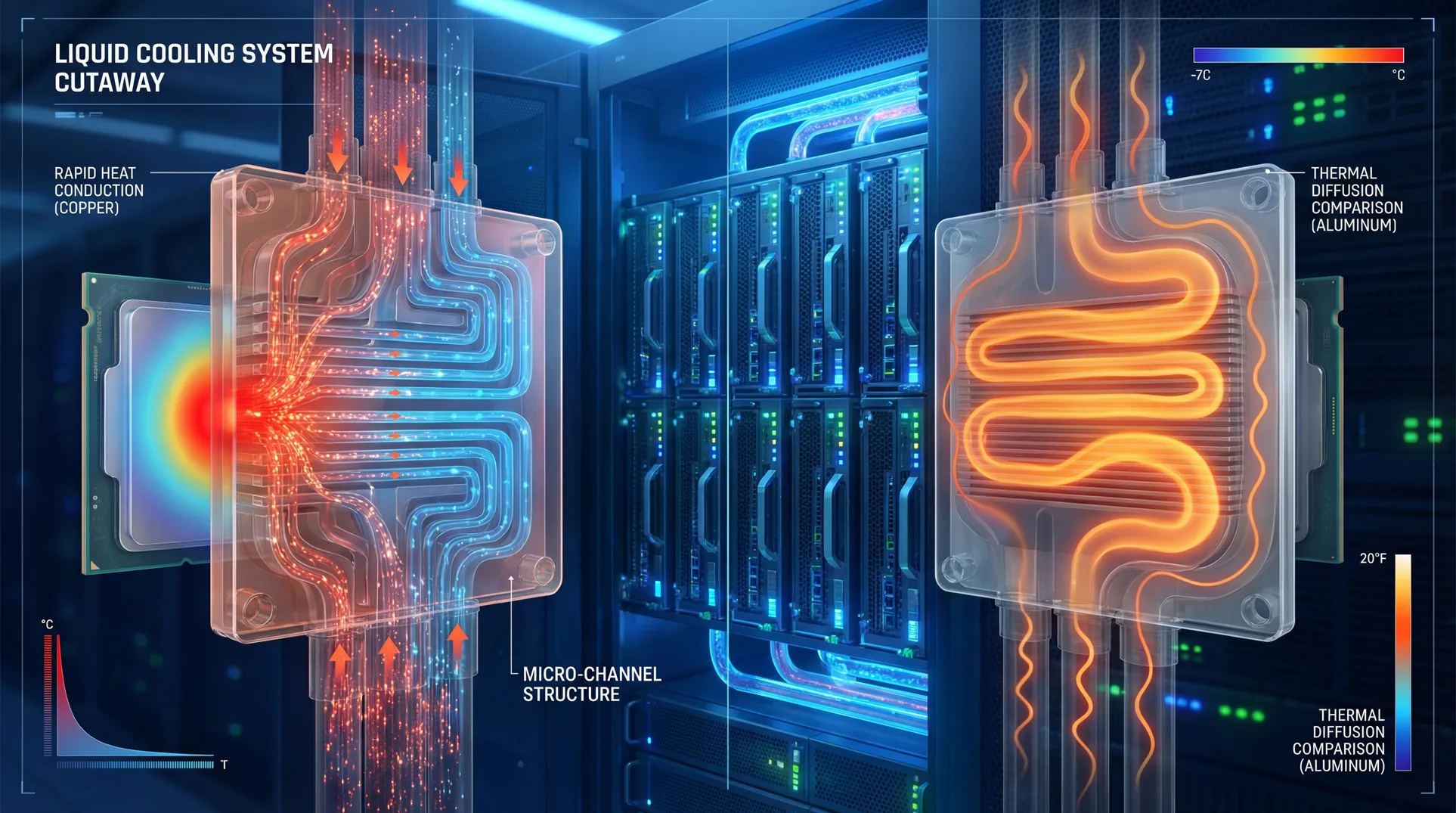
Table 1: Physical & Thermal Properties (Deep Dive)
| Property | Pure Copper (C11000) | Aluminum (6061-T6) | Aluminum (6063) |
|---|---|---|---|
| Thermal Conductivity (W/m·K) | ~390-400 | ~167 | ~200-210 |
| Density (g/cm³) | 8.96 | 2.70 | 2.70 |
| Volumetric Heat Capacity (J/cm³·K) | 3.45 | 2.42 | 2.43 |
| Specific Heat (J/kg·K) | 385 | 897 | 900 |
| Thermal Diffusivity (mm²/s) | 117 | 64 | 80 |
| Performance-to-Weight Ratio | 44.6 (Baseline) | 61.8 (Winner) | 74.1 (Winner) |
Data sourced from ASTM B187 (Copper) and ASTM B221 (Aluminum) international standards, cross-referenced with Rapidaccu internal thermal lab testing.
Visual Comparison: Why Air-Cooling Prefers Aluminum
Thermal Conductivity Comparison
Engineering Note: While Copper has 2x the conductivity, its 3.3x higher density creates a “Thermal Inertia” penalty. In weight-sensitive Aerospace & EV applications, the specific thermal performance per gram is significantly higher for Aluminum.
The “Hybrid” Solution Model
Typical “AI Server Cold Plate” architecture: Copper for the hot-spot spreading, Aluminum for the volume dissipation.
Table 2: Cost, Weight & DFM Efficiency
| Metric | Pure Copper (C11000) | Aluminum (6061/6063) |
|---|---|---|
| Raw Material Cost | 3x – 5x higher ($/kg) | Baseline (Economical) |
| Cutting Speed (SFM) | 200 – 400 (Low) | 800 – 1500+ (High) |
| Machining Efficiency | Baseline | 3x – 5x Faster Throughput |
| Tool Life | Short (Abrasive/Gummy) | Long (Excellent Chip Control) |
| Secondary Finishing | Plating (Ni/Sn) Required | Anodizing (Clear/Color) |
Why the cost gap is wider than you think: It’s not just the metal. Because Aluminum can be machined 3-5x faster, the “Machine Hour” cost is drastically lower. A complex copper heat sink often costs 8x more than an aluminum equivalent when labor and tool wear are factored in.
Thermal Decision Checklist
Check the boxes that apply to your project to see our engineering recommendation.
Rapidaccu Engineering Verdict
Design Patterns for 2026: AI & EV Cooling
AI GPU Cold Plates
The 2026 standard for high-density compute. Copper bases with micro-channels are essential to handle >700W TDP, often paired with Aluminum housings to reduce total rack weight.
Liquid Cooling Manifolds
Copper is the absolute king here. It prevents internal oxidation that can clog fine fins and offers superior resistance to glycol-based coolants compared to Aluminum.
EV Battery Cold Plates
Large surface area favors Aluminum extrusions. The weight savings directly translate to vehicle range, and 6063-T6 provides the necessary structural integrity.
High-Voltage Busbars
For AI data centers and EV chargers, C11000 Copper is mandatory to minimize I²R losses and prevent localized thermal runaway at connection points.
Aerospace Heat Pipes
Often uses Copper-Water for efficiency, but Aluminum-Ammonia is the go-to for satellite radiators due to the extreme “Weight-to-Performance” requirements.
Surface & Oxidation: The Invisible Thermal Barrier
Aluminum Anodizing
Anodizing creates an insulating oxide layer. While it looks great and prevents corrosion, it is thermally resistive. For critical heat paths, I always specify “Masking” on the contact surfaces to ensure raw metal-to-metal contact.
Copper Plating (Nickel/Tin)
Copper oxidizes quickly in air (turning brown/green). This oxide is both electrically and thermally resistive. I recommend Electroless Nickel Plating for most thermal interfaces, or Tin Plating for electrical busbars to prevent corrosion.
Pro Tip: The “Flatness” Trap
“I’ve seen engineers spend $200 extra on a copper heat sink, then use a cheap 0.5mm thermal pad because the surfaces weren’t flat. If you can’t achieve 0.05mm flatness, the material difference between Al and Cu becomes irrelevant due to the interface gap.” – Jack
Rapidaccu Integrated Manufacturing
CNC Machining
Sheet Metal
Stamping
3D Printing
Injection Molding
Procurement Notes: Lead Times & Inspection
Material Availability
Aluminum 6061 and 6063 are standard stock. Copper C11000 is common, but high-purity C10100 (Oxygen-Free) can have a 2-4 week lead time premium.
Cost Volatility
Copper is a commodity with high price swings. I recommend locking in quotes for large production runs within 7 days to avoid price adjustments.
Inspection Focus
For copper, always request a Material Test Report (MTR). Low-purity copper recycled from scrap can have significantly lower conductivity than specified.
Frequently Asked Questions
Is copper always better than aluminum for heat sinks?
When should I use a “Hybrid” (Copper base, Aluminum fins)?
Why is aluminum 6063 better for extrusions than 6061?
Can I use aluminum for electrical busbars?
Does nickel plating hurt thermal performance?
Is 3D printed aluminum as conductive as machined aluminum?
What is the main manufacturing risk with copper?
How do I prevent galvanic corrosion between Cu and Al?
Expert Thermal Design Review
Upload your STEP files and let my team at Rapidaccu verify your material choice and manufacturing feasibility. We respond to all technical inquiries within 24 hours.
- info@rapidaccu.com
- Free DFM & Material Optimization
- Global Export & Rapid Prototyping
[Contact Form: 7 id=”00376c3″ title=”Request Quote”]