
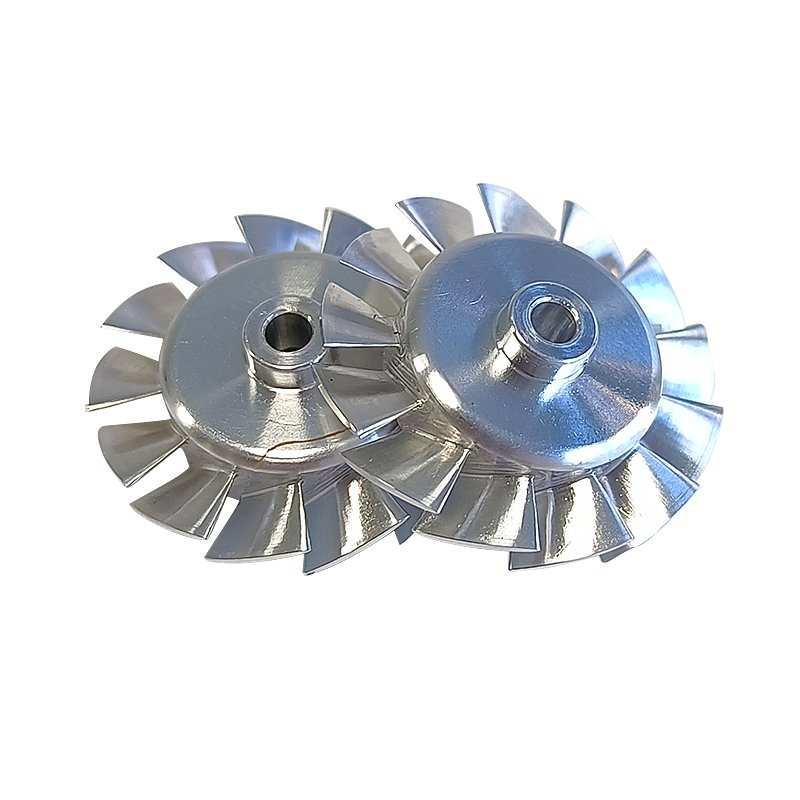
Precision CNC Manufacturing
Open Impeller Machining Service
Open impeller components demand more than general CNC capability. Their exposed blades, flowing passages, hub geometry, and balance requirements make them highly sensitive to toolpath strategy, fixturing stability, and surface consistency. At Rapidaccu, we provide precision open impeller machining for customers who need reliable dimensional control, repeatable blade profiles, and production support from prototype through batch manufacturing.
We specialize in complex multi-axis CNC machining for parts with demanding curved surfaces and internal flow features. Using advanced 5-axis equipment, broad material processing experience, and strict quality control, we machine open impeller parts for pump manufacturers, fluid equipment companies, R&D teams, industrial automation builders, and engineering buyers sourcing lightweight, high-flow rotating components.
5-Axis CNC
Advanced multi-axis machining for complex blade geometry
Multi-Material
Aluminum, stainless steel, titanium, brass, and more
Prototype Ready
Fast turnaround from 3D model to finished sample
Quality Controlled
Dimensional inspection and documentation for critical features
What Is an Open Impeller?
An open impeller is a type of impeller with vanes that are exposed on one or both sides rather than enclosed between shrouds. This structure creates a more accessible blade form and a relatively open flow path, making it suitable for applications where solids handling, easier cleaning, reduced clogging risk, or lower weight are important considerations.
Compared with closed impellers, open impellers are often preferred when the design needs simpler geometry access for inspection and maintenance, or when process conditions involve suspended particles or more demanding media. From a manufacturing standpoint, open impeller parts still require high precision because blade contour accuracy directly influences hydraulic performance, flow behavior, vibration, and assembly fit.
For engineering and procurement teams, the challenge is finding a supplier that can accurately machine complex vane profiles while maintaining consistency at the bore, mounting surfaces, and critical datums. Rapidaccu addresses that challenge with multi-axis machining strategies tailored to open impeller geometry.
Our Open Impeller Machining Capabilities
Rapidaccu offers dedicated open impeller machining services for parts that require accurate blade shaping, hub machining, center bore processing, mounting feature control, and finished surface quality. We work from customer-supplied 3D CAD data and 2D technical drawings to manufacture parts that match both functional and assembly requirements.
Our equipment and process planning are particularly suitable for open impeller designs with curved blades, variable thickness sections, complex transition areas, and surfaces that benefit from 5-axis tool access. This helps reduce repositioning, improve contour continuity, and support more stable dimensional outcomes on complex forms.
Production Support
- Prototype open impeller machining for design verification
- Small-batch production for pilot builds
- Medium-volume manufacturing for ongoing equipment supply
- Material-specific machining for corrosion resistance, weight reduction, or mechanical strength
- Secondary finishing and inspection according to drawing requirements
Typical Machining Scope
- Blade profile machining
- Hub and center hole machining
- Mounting face and locating feature machining
- Keyways, slots, and interface features where applicable
- Deburring, edge refinement, surface finishing, and inspection
If your part includes thin blades, tight runout limits, or critical flow surfaces, we can review manufacturability before production to help reduce machining risk and improve repeatability.
Get StartedMaterials for Open Impeller Parts
Material selection has a direct impact on open impeller performance, weight, corrosion resistance, wear behavior, and machining efficiency. Rapidaccu supports a range of metals and engineering materials commonly specified for fluid handling and rotating equipment applications.
For many open impeller applications, stainless steel is selected for its balance of corrosion resistance and mechanical durability. Aluminum alloys are often used where weight reduction matters, especially in development equipment or lightweight rotating assemblies. Brass and bronze can be suitable for certain pump and marine-related environments, while high-performance alloys may be required for more aggressive media or demanding operating conditions.
| Material | Key Advantages | Common Applications | Machining Notes |
|---|---|---|---|
| Aluminum 6061 / 7075 | Lightweight, good machinability, fast turnaround | Lightweight fluid systems, prototypes, automation equipment | Efficient cutting, good for complex 5-axis contouring |
| Stainless Steel 304 / 316 | Corrosion resistance, good strength, broad industrial use | Pumps, chemical handling, wet environments | Requires stable cutting parameters and tool wear control |
| Brass | Good machinability, corrosion resistance in select media | Specialty pump parts, fluid control components | Excellent surface finish potential |
| Bronze | Wear resistance, suitability for marine and pump uses | Pump impellers, industrial fluid equipment | Good for durable functional parts |
| Carbon Steel | Strength and cost balance | General industrial equipment | May require protective finishing |
| Titanium | High strength-to-weight ratio, corrosion resistance | Specialized R&D, high-performance equipment | More demanding machining and cost considerations |
If your team is deciding between performance, cost, and lead time, we can help assess the best machining material for your open impeller part based on geometry and operating conditions.
Why 5-Axis CNC Matters for Open Impeller Manufacturing
An open impeller may look more accessible than a shrouded design, but accurate production is still technically demanding. Blade surfaces often include compound curves, changing wall thickness, and tight transitions into the hub. Conventional 3-axis machining can struggle to maintain cutter access and surface consistency across these areas, especially when the part requires close profile control.
This is where 5-axis CNC machining provides a clear advantage. By adjusting tool orientation during cutting, 5-axis machining enables better access to blade flanks, smoother contour generation, and fewer setups. That means reduced cumulative positioning error, improved surface finish on complex geometries, and more efficient machining of difficult-to-reach sections.
Accurate Blade Contouring
Multi-axis tool orientation ensures precise following of compound curves and variable-thickness blade forms.
Better Flow-Path Surface
Continuous 5-axis toolpaths produce smoother flow channel surfaces with fewer scallops and transitions.
Reduced Manual Rework
Higher-quality machined surfaces minimize the need for post-process blending or hand finishing.
Improved Batch Repeatability
Consistent setup strategies and toolpath programs support stable quality across multiple production runs.
Thin Blade Capability
Optimized approach angles reduce cutting forces on thin or angled blade features, minimizing deflection and chatter.
Fewer Setups Required
Single-setup machining of complex geometry reduces repositioning error and shortens overall production time.
Open Impeller vs Closed, Semi-Open, and Vortex Impellers
Many buyers researching an open impeller are also comparing it against closed, semi-open, or vortex designs. The right choice depends on fluid characteristics, efficiency targets, maintenance expectations, solids handling needs, and manufacturing priorities. While Rapidaccu focuses on machining rather than hydraulic design consulting, understanding these differences helps customers align part sourcing with application requirements.
An open impeller offers exposed vanes and generally better accessibility for inspection and cleaning. Closed impellers usually deliver higher hydraulic efficiency in cleaner fluids but are more enclosed and often more complex to manufacture. Semi-open impellers sit between these two approaches. Vortex impellers, meanwhile, are often chosen for handling challenging solids-laden media with minimal clogging, though their operating characteristics differ substantially.
| Impeller Type | Structural Characteristics | Typical Advantages | Common Trade-Offs |
|---|---|---|---|
| Open Impeller | Exposed blades, no full enclosing shrouds | Easier cleaning, better solids tolerance, accessible inspection, lighter structure | Lower efficiency in some applications, blade wear sensitivity |
| Semi-Open Impeller | Partial shroud with more support than open design | Balanced performance, moderate solids handling, better blade support | More complex than open design, still application-dependent |
| Closed Impeller | Blades enclosed between shrouds | High efficiency in clean fluid systems, strong hydraulic control | Harder to clean, less tolerant of solids, more complex manufacturing |
| Vortex Impeller | Fluid movement generated with limited direct solids contact | Very good clog resistance, useful for wastewater or heavy solids | Lower efficiency compared with conventional impeller designs |
If you already know your impeller type and need a manufacturing partner, we can review your model and identify the best process route for the specified geometry.
How Open Impellers Work
The working principle of an open impeller is based on rotational energy transfer. As the impeller rotates, its vanes accelerate the fluid outward from the center toward the outer diameter. This creates velocity and pressure changes that drive fluid movement through the pump or related system. In open impeller designs, the exposed vane structure allows fluid to pass through a more accessible path, which can be beneficial in applications involving suspended solids, fibrous material, or media that would be harder to manage with more enclosed impeller types.
Because the blades are exposed, the geometry of each vane becomes critically important. Blade angle, thickness, curvature, spacing, and hub transition all influence how effectively the impeller moves fluid. Even small deviations in the machined profile can affect flow, efficiency, noise, and wear behavior. That is why precise manufacturing is essential, especially for engineered systems where repeatable performance matters.
From a machining perspective, the functional demands of open impellers mean that contour fidelity and surface finish are not secondary details. They are directly connected to performance. Rapidaccu applies multi-axis toolpaths and controlled inspection methods to help ensure the manufactured part closely matches the intended blade form and interface geometry.
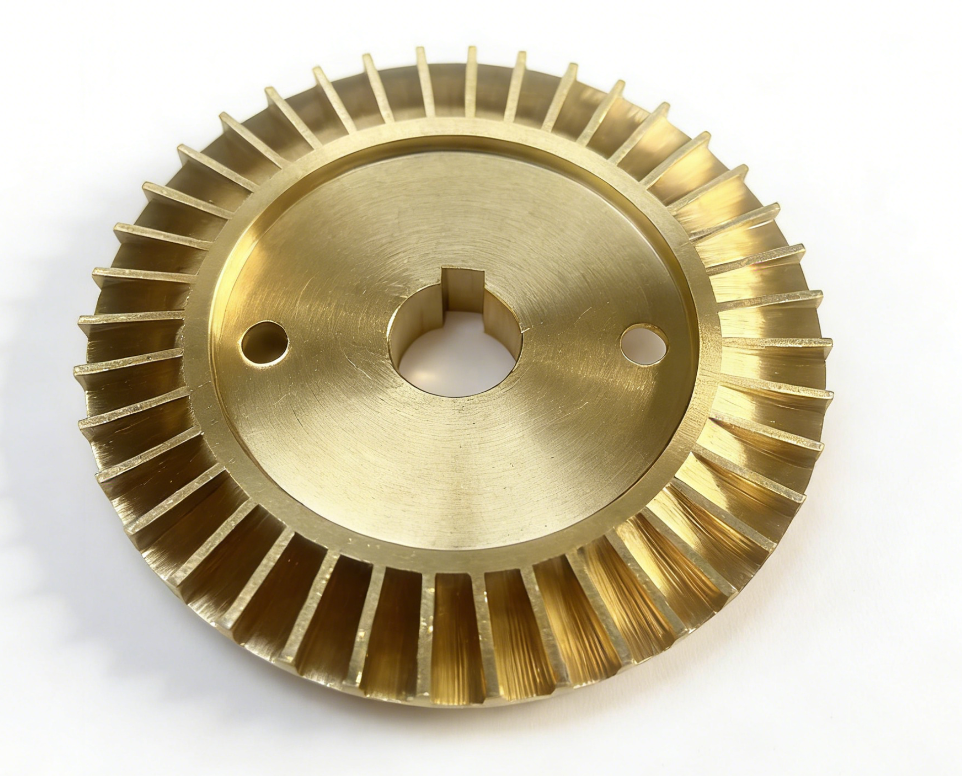
Typical Applications for Open Impeller Components
Open impellers are used across a broad range of industries where fluid movement, solids tolerance, service accessibility, or lower rotational mass are important. Their suitability often depends on the media being handled, the operating environment, and the maintenance philosophy of the equipment manufacturer.
For procurement teams, the benefit of a custom-machined open impeller is the ability to source geometry that matches exact application demands rather than adapting to limited catalog options. That may include custom bore sizes, blade counts, vane shape optimization, mounting interfaces, or material upgrades.
| Industry / Use Area | Why Open Impeller Is Used | Typical Part Requirements | Common Material Choices |
|---|---|---|---|
| Pump Manufacturing | Solids handling, easier maintenance access | Accurate blade profile, bore precision, balance-ready geometry | Stainless steel, bronze, aluminum |
| Fluid Equipment OEMs | Custom flow path and compact assembly integration | Tight mounting tolerances, smooth passages, repeatability | Stainless steel, brass, aluminum |
| R&D and Test Systems | Fast iteration and nonstandard geometry development | Prototype speed, design flexibility, drawing revision support | Aluminum, stainless steel, titanium |
| Industrial Automation | Lightweight and application-specific rotating components | Consistent dimensions, repeat orders, assembly fit | Aluminum, carbon steel, stainless steel |
If you are sourcing for a specialized application, send us the operating context along with your CAD files. That helps us recommend a practical machining route from the start.
Our Open Impeller Manufacturing Process
A successful open impeller project depends on more than machining time alone. Geometry review, process planning, workholding strategy, and inspection preparation all play an important role in producing a stable and repeatable result. Rapidaccu follows a structured process designed for complex precision parts.
This process is designed to reduce risk for engineering and purchasing teams alike. It supports faster issue identification, better communication on critical features, and a smoother transition from prototype to production.
Tolerances, Inspection, and Quality Control
For open impeller parts, quality is rarely about one dimension alone. A part may include blade profiles, bore dimensions, mounting surfaces, concentricity requirements, and controlled transitions that all affect final performance. That is why our quality approach considers both individual features and the overall relationship between them.
Rapidaccu performs inspection based on drawing requirements and part criticality. Depending on the geometry, this may include dimensional verification of bores, hub features, mounting interfaces, blade-related checkpoints, and surface finish requirements. We focus especially on features that affect installation, rotation, and flow performance.
| Quality Feature | Why It Matters | Typical Inspection Focus | Production Benefit |
|---|---|---|---|
| Center Bore Accuracy | Affects shaft fit and rotational stability | Diameter, roundness, fit tolerance | Reliable assembly and reduced vibration risk |
| Blade Profile Consistency | Influences flow behavior and balance condition | Contour checkpoints, visual and dimensional verification | More predictable part performance |
| Mounting Face Precision | Impacts installation alignment | Flatness, position, datum relationship | Improved mating accuracy |
| Surface Finish on Flow Areas | Can affect fluid movement and cleaning ease | Roughness requirement verification where specified | Better functional consistency and reduced post-processing needs |
If your drawing includes critical tolerances or inspection report requirements, we can align our control plan accordingly before production begins.
Surface Finishing Options
Surface finishing for an open impeller is not only about appearance. It can also affect corrosion resistance, wear behavior, edge condition, and suitability for the operating environment. Depending on your material and application, Rapidaccu can provide finishing support as part of the manufacturing package.
For open impeller components, finishing needs often vary by application. Some customers prioritize smooth blade surfaces and clean flow paths, while others focus on corrosion protection or post-machining appearance for exposed assemblies. We can help determine which finish supports your design intent without adding unnecessary processing cost.
Deburring and Edge Break
Removal of burrs and sharp edges from machined blade surfaces and transitions.
Polishing
Improved surface smoothness on flow areas and exposed blade faces where required.
Bead Blasting
Uniform matte appearance on selected materials for consistent surface texture.
Anodizing
Protective oxide layer for aluminum open impeller parts, improving corrosion resistance and appearance.
Passivation
Enhanced corrosion resistance treatment for stainless steel impeller components.
Protective Coating
Material- and application-specific coating options for extended service life in demanding environments.
When submitting an RFQ, it is helpful to specify whether the finish is cosmetic, functional, or both. That allows us to recommend the most practical route for your part geometry and end use.
Prototype to Batch Production Support
Many open impeller projects begin with prototyping, especially when blade design, flow characteristics, assembly interfaces, or material choices are still being validated. At the same time, OEMs and equipment manufacturers often need a supplier that can continue beyond the first sample and support repeatable batch production once the design is frozen.
Rapidaccu supports both stages. For prototype work, we focus on fast technical review, practical manufacturability feedback, and efficient setup for complex geometry. For production work, we emphasize process repeatability, dimensional stability, and consistent communication around revisions and delivery plans.
This is particularly valuable for teams facing development schedule pressure, supplier inconsistency on complex parts, difficulty scaling from first article to recurring orders, drawings with multiple critical geometry zones, or need for one source covering machining, finishing, and inspection.
Discuss Your Project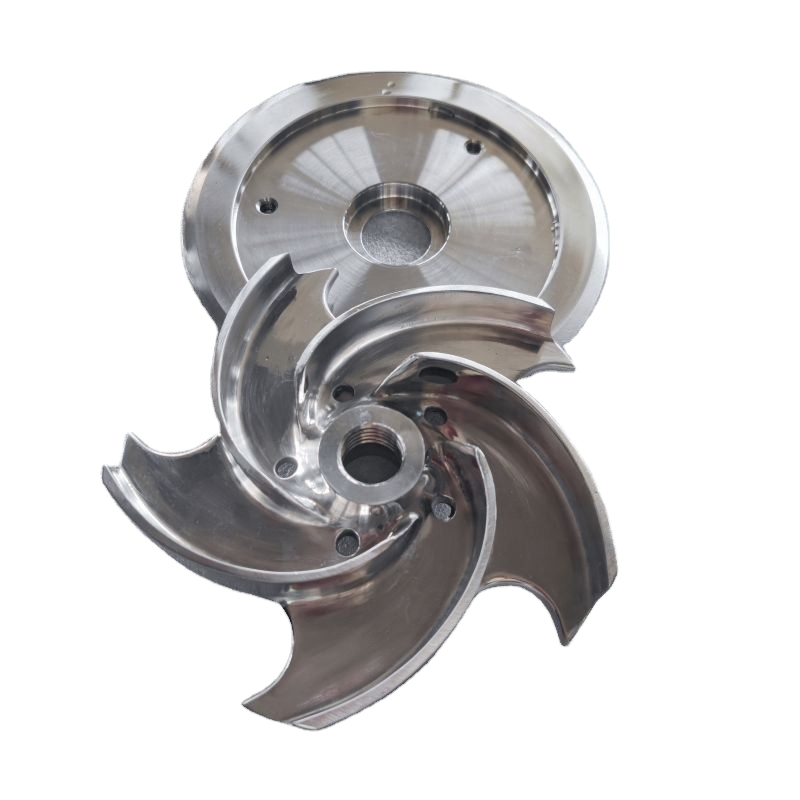
Why Choose Rapidaccu for Open Impeller Machining
When sourcing an open impeller, buyers are often balancing several concerns at once: geometric complexity, dimensional accuracy, lead time, material suitability, and the risk of quality drift across batches. Rapidaccu is structured to address those concerns through a manufacturing approach centered on multi-axis precision and practical production control.
We understand that engineering teams need technical confidence, while procurement teams need responsiveness and predictable execution. That is why we focus on clear review, manufacturability awareness, and practical production planning rather than one-size-fits-all quoting.
Frequently Asked Questions
Common questions about open impeller machining and our manufacturing services
What is an open impeller and when is it used?
Why is 5-axis CNC machining important for open impellers?
What materials can you machine for open impeller parts?
Can you support both prototype and batch production orders?
What information do I need to provide for a quote?
What surface finishing options are available for open impellers?
Request a Quote for Open Impeller Parts
If you are looking for a dependable supplier for open impeller machining, Rapidaccu can support your project with multi-axis CNC manufacturing, material flexibility, precision inspection, and scalable production capacity. We work with pump manufacturers, fluid equipment builders, R&D teams, automation companies, and industrial buyers who need complex impeller parts produced accurately and efficiently.
Contact Information
Longhua District, Shenzhen, China
To receive a quote, send us:
- 3D CAD model
- 2D drawing with tolerances
- Material requirement
- Quantity and delivery schedule
- Surface finish or treatment requirement
- Inspection or delivery notes