
Precision CNC Manufacturing
Semi-Open Impeller Machining Services
Semi-open impeller components are often selected when fluid handling systems need a practical balance between hydraulic performance, solids tolerance, manufacturability, and serviceability. At Rapidaccu, we provide precision semi-open impeller machining services for pump manufacturers, wastewater equipment builders, chemical processing OEMs, general machinery companies, and R&D teams.
Using 3-axis, 4-axis, and 5-axis CNC machining, we manufacture semi-open impellers with complex blade profiles, hub features, back-side geometry, bores, keyways, and critical mounting surfaces. Our process is built for parts where blade consistency, dimensional accuracy, surface quality, and assembly fit directly affect fluid performance and operational stability.
Need a manufacturability review? Send us your drawing or 3D model and we’ll assess geometry, tolerances, material choice, and machining strategy before production begins.
Request a Quote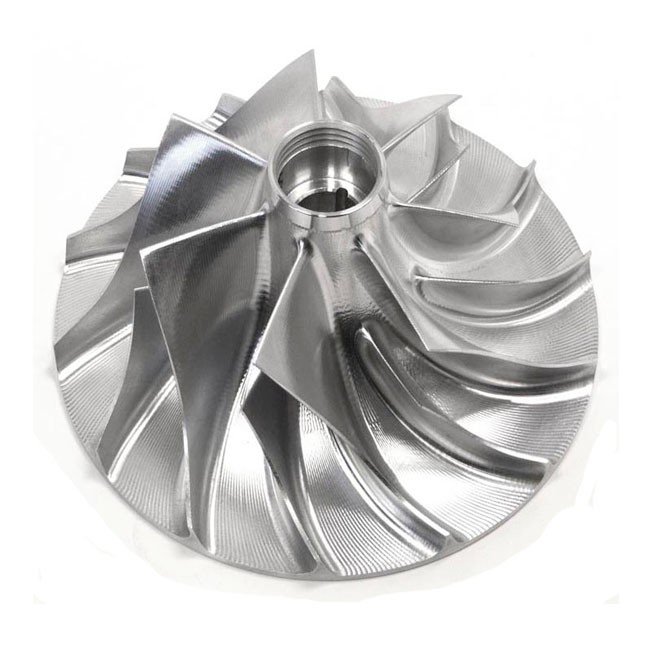
3, 4 & 5-Axis CNC
Multi-axis machining for complex blade profiles, hub features, and precision-fit mounting surfaces with fewer setups.
DFM Support
Early design-for-manufacturability feedback to reduce machining risk, avoid costly redesign loops, and shorten lead times.
Prototype to Production
Scalable service from single validation prototypes through low- and mid-volume repeat orders with consistent quality control.
What Is a Semi-Open Impeller?
A semi-open impeller is an impeller design that typically features vanes attached to a hub with a partial shroud on one side, leaving the opposite side comparatively open. This structure sits between fully open and fully closed impeller designs, making it a useful choice in many pumping and fluid handling applications where both flow behavior and practical maintenance matter.
Compared with an open impeller, a semi-open impeller generally offers better vane support and improved dimensional stability. Compared with a closed impeller, it can be easier to machine, inspect, trim, and maintain for applications that deal with slightly contaminated fluids, suspended solids, or process variability. For buyers and engineers, this means the semi-open design often delivers a strong compromise between efficiency, clog resistance, and manufacturing feasibility.
From a machining perspective, semi-open impellers demand precise control of blade thickness, passage geometry, hub concentricity, bore size, and face relationships. Even small errors in blade form, runout, or surface finish can influence pump performance, vibration, and assembly quality. That is why CNC strategy, fixture planning, and inspection discipline are central to successful semi-open impeller production.
Key Design Characteristics
- Vanes supported by hub with one partial side enclosure
- Better vane support than fully open designs
- Easier to machine and inspect than closed impellers
- Practical tolerance for suspended solids and process variability
- Requires precise blade thickness, bore, and face relationship control
- Strong balance of manufacturability and hydraulic performance
Our Semi-Open Impeller Machining Capabilities
Rapidaccu machines semi-open impellers for applications that require a controlled combination of geometry accuracy, surface quality, and production reliability. We work with complex blade channels, contoured flow paths, and precision-fit mounting features using multi-axis CNC processes suited to demanding impeller forms.
For simpler designs, 3-axis and 4-axis machining may be sufficient for selected features or roughing operations. For more advanced blade geometry and better tool access, 5-axis CNC machining is often the preferred method. This helps reduce setups, improve surface continuity, and maintain tighter positional control across multiple complex surfaces.
DFM Support Included
We provide DFM support early in the process. If your design includes thin blades, deep channels, tight internal radii, difficult undercuts, or demanding tolerances that may drive cost or risk, we can recommend practical adjustments before machining starts. That support is especially valuable for prototype validation and low- to mid-volume purchasing programs where each revision affects time and budget.
Why Choose Rapidaccu for Semi-Open Impeller Manufacturing
Sourcing a semi-open impeller is not only about finding a machine shop that can cut metal. It is about reducing the risk tied to complex geometry, maintaining stable quality across orders, and getting parts delivered on a schedule that supports your production or validation plan. Rapidaccu is structured around those priorities.
Our advantage starts with broad precision machining experience across industries where rotating and flow-related components must perform reliably. Semi-open impellers involve intersecting requirements: fluid-path geometry, structural support, machining access, tolerance stack-up, and inspection credibility. We understand how these factors interact and build our process around them.
Multi-Axis CNC Capability
Advanced machining for complex impeller geometries that require 3, 4, or 5-axis access and precision toolpath planning.
DFM That Prevents Delays
Upfront design review to help avoid costly redesign loops and manufacturing surprises before production begins.
Stable Lead Times
Realistic delivery commitments for prototypes and repeat orders, with fewer quality escalations for procurement teams.
Blade Consistency Control
Controlled machining for blade uniformity and assembly accuracy, critical for flow performance and rotational stability.
Material Flexibility
Support for a wide range of engineering metals and plastics matched to your operating environment and performance targets.
Inspection Reporting
Dimensional verification and documentation tailored to engineering and purchasing requirements for confident part acceptance.
Semi-Open Impeller vs Open and Closed Impellers
For many buyers and engineers, one of the key questions is not just how to machine a semi-open impeller, but when it is the right choice compared with open or closed impeller designs. The answer depends on the fluid being handled, efficiency targets, solids content, maintenance expectations, and manufacturing constraints.
Open impellers are typically simpler and may be preferred where easy cleaning or lower initial cost matters. Closed impellers often offer higher hydraulic efficiency in cleaner service conditions, but they can introduce added complexity in manufacturing and maintenance. A semi-open impeller is often selected as a middle-ground option, especially in applications that need more vane support than an open design while still maintaining better tolerance for certain solids or process variability than a fully closed design.
| Impeller Type | Structural Characteristics | Typical Advantages | Typical Limitations |
|---|---|---|---|
| Open Impeller | Vanes with minimal or no shroud support | Easier cleaning, simpler geometry, useful for some solids-handling applications | Lower structural support, more sensitive to wear and efficiency loss |
| Semi-Open Impeller | Vanes supported by hub with one partial side enclosure | Balanced efficiency, better vane support, practical maintenance access, good application flexibility | Requires careful clearance control, efficiency may be lower than closed designs in some clean-fluid cases |
| Closed Impeller | Vanes enclosed by shrouds on both sides | Higher hydraulic efficiency in many clean-liquid applications, stronger fluid guidance | More complex to manufacture, harder to inspect and repair, less tolerant in some solids-handling conditions |
| Semi-Open for CNC Production | Partial shroud with accessible blade geometry | Strong balance of manufacturability and performance for custom or precision machined parts | Blade shape, runout, and assembly surfaces still require advanced machining and inspection |
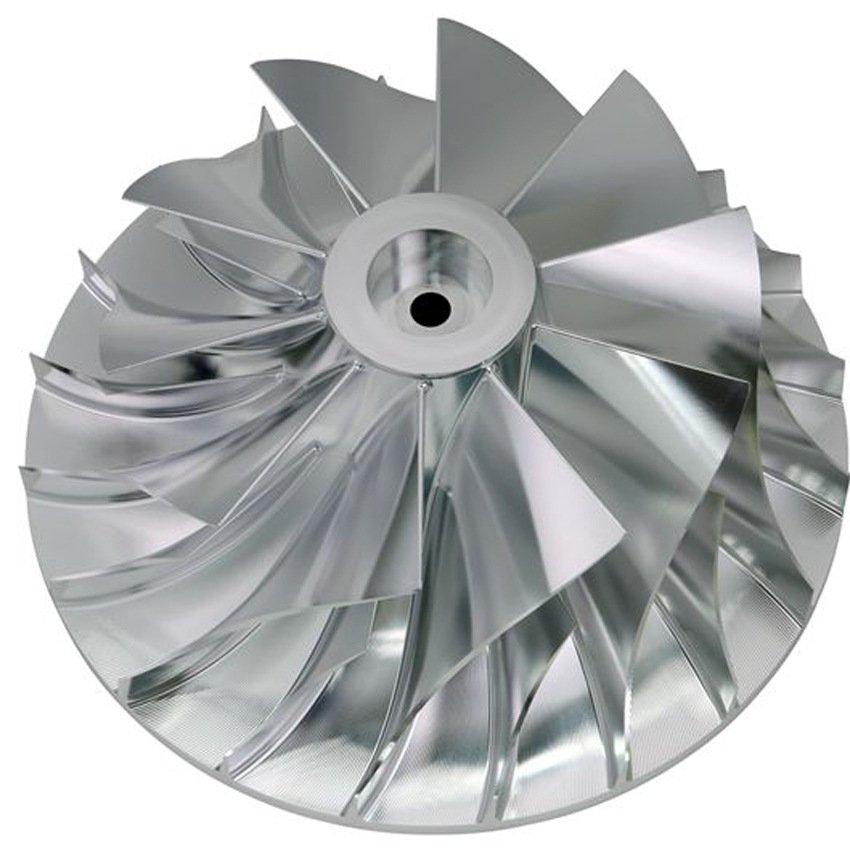
For OEMs and R&D teams, the semi-open impeller is frequently the practical answer when application demands sit between these two extremes. It gives room to optimize performance without forcing every project into the manufacturing complexity of a fully closed impeller.
Materials for Semi-Open Impeller Machining
Material selection has a direct effect on service life, corrosion resistance, wear behavior, machinability, and part cost. We machine semi-open impeller components in a range of metals according to the demands of the operating environment and the customer’s design priorities.
For example, wastewater and chemically aggressive environments often push designs toward stainless steel grades. Abrasive service may require a stronger focus on wear behavior and surface condition. Prototype projects may prioritize machinability and speed, while production buyers may focus more on lifecycle cost and repeatability.
| Material | Key Benefits | Typical Considerations | Common Applications |
|---|---|---|---|
| Stainless Steel 304 | Good corrosion resistance, widely available, suitable for many general fluid applications | Not ideal for all highly corrosive or abrasive media | General pumps, utility systems, process equipment |
| Stainless Steel 316/316L | Better corrosion resistance in harsher chemical or wet environments | Higher material cost than 304, machining can be slower | Chemical equipment, wastewater, marine-adjacent use |
| Carbon Steel | Cost-effective, good strength, practical for controlled service conditions | Requires protection against corrosion in many environments | General industrial machinery, non-corrosive fluid systems |
| Aluminum Alloys | Lightweight, good machinability, faster prototype turnaround | Lower wear and corrosion suitability for some demanding environments | Functional prototypes, light-duty systems, testing programs |
| Bronze / Brass Alloys | Good anti-corrosion behavior in certain fluid systems, useful bearing and wear properties | Material choice must match fluid and operating conditions carefully | Specialty pumps, marine-related or legacy equipment |
| Engineering Plastics | Corrosion resistant, lightweight, useful for selected low-load or chemical applications | Limited by temperature, structural load, and wear demands | Specialized chemical or low-duty fluid handling components |
If you are unsure which material is best for your semi-open impeller, we can review your application requirements and recommend options that balance performance, manufacturability, and cost.
Tolerance Control, Surface Finish, and Inspection
Semi-open impellers place high demands on geometric control because their performance depends not only on overall dimensions, but also on the relationship between blades, hub, bore, faces, and rotational axes. At Rapidaccu, we approach semi-open impeller machining with attention to tolerance stack-up from the start, not just at final inspection.
Critical controls often include bore diameter, concentricity, face runout, blade thickness consistency, profile accuracy, shroud-related dimensions, and mating features for assembly. Tight control in these areas helps reduce vibration risk, improve fit with shafts or adjacent components, and support more stable hydraulic behavior. Surface finish also matters, especially on flow-contact areas where roughness can affect performance and contamination behavior.
| Quality Focus Area | Why It Matters | Typical Control Method | Benefit to Customer |
|---|---|---|---|
| Bore and Shaft Fit | Ensures accurate assembly and torque transmission | Precision bore measurement, gauge verification | Better installation consistency and reduced fit issues |
| Concentricity and Runout | Affects rotation stability and vibration behavior | Dial indicators, CMM checks, rotary measurement methods | Improved operational smoothness and lower imbalance risk |
| Blade Thickness and Profile | Influences flow passage consistency and structural integrity | CMM/profile inspection, programmed verification points | More repeatable fluid performance and reduced part variation |
| Face Flatness and Datum Accuracy | Supports proper mounting and assembly alignment | Surface and datum measurement during inspection | Reliable integration into pump or rotating assemblies |
| Surface Finish on Flow Areas | Can affect fluid behavior, wear, and cleaning performance | Surface roughness testing where required | Better part functionality and quality confidence |
If your project has defined drawing requirements or internal quality standards, we can align our process and documentation accordingly before production starts.
Applications of Semi-Open Impellers
The semi-open impeller is widely used in applications where clean-fluid efficiency is important, but not the only priority. It is particularly relevant when the operating environment may involve suspended solids, fibers, process contamination, or maintenance realities that make a fully closed design less practical.
For purchasing teams, this versatility matters. A semi-open impeller can fit multiple product lines and operating conditions, making it a practical component category for custom machining and controlled-volume supply.
Pump Manufacturing
Centrifugal and transfer pump impellers for efficiency-focused and versatile fluid systems.
Wastewater Treatment
Equipment requiring tolerance for suspended solids and broader operating range performance.
Chemical Processing
Systems handling aggressive or variable process fluids where corrosion resistance is critical.
Industrial Transfer Pumps
General fluid transfer applications in industrial machinery requiring reliable, serviceable design.
General Fluid Handling
Mechanical fluid handling equipment where a compromise between performance and serviceability is needed.
Prototype & R&D Programs
Concept validation and hydraulic testing where design iteration speed and blade geometry flexibility are priorities.
Our Manufacturing Process for Semi-Open Impeller Parts
A reliable semi-open impeller starts with a process that is engineered around geometry and risk, not simply around machine availability. At Rapidaccu, we follow a structured workflow to improve consistency and reduce delays caused by rework, fixture issues, or late-stage dimensional surprises.
Before machining begins, we review design details such as minimum blade thickness, root radii, tool access, datum strategy, bore tolerance, and any features that may influence workholding. This is especially important for a semi-open impeller, where a feature that looks minor on the drawing can have a major impact on machining stability or inspection access.
Have a 3D model ready? Send it over and we’ll review the part for manufacturability, lead time, and inspection requirements.
Send Your ModelPrototype to Low- and Mid-Volume Production Support
Prototype Support
For prototype work, speed and technical communication are often the priorities. We help teams identify geometry features that may create avoidable delays, such as overly thin blades, inaccessible internal corners, or tolerance callouts that do not align with actual performance needs.
This can make the first build more practical and improve the quality of the test data you get back.
Production Support
For low- and mid-volume production, repeatability becomes equally important. We focus on stable setups, process control, and inspection discipline so that each semi-open impeller matches the design intent consistently.
This is especially valuable for OEMs and purchasing teams that need a dependable supply partner for specialized parts that are too complex for generic job-shop handling.
Common Design and Sourcing Challenges We Help Solve
Semi-open impeller projects often encounter the same set of issues: complex blades that are difficult to machine cleanly, tolerance requirements that are stricter than necessary in some areas but too vague in others, material choices that do not match the operating environment, and lead times that slip because manufacturability was not reviewed early enough. We help customers address these challenges before they become production problems.
Complex Blade Geometry
We adjust blade geometry to improve tool access and surface continuity, avoiding the chatter and rework that result from poor toolpath planning on thin or twisted vanes.
Tolerance Optimization
We identify datums that support better inspection and recommend practical tolerance zones for non-critical features, reducing cost without compromising function.
Material Mismatch
We review application requirements and propose materials that match the operating environment, preventing premature wear or corrosion failures in service.
Lead Time Reliability
Upfront manufacturability review prevents late-stage surprises, helping procurement teams rely on realistic delivery commitments from the start of the project.
Frequently Asked Questions
What is a semi-open impeller used for?
How does a semi-open impeller differ from a closed impeller?
What materials can you use for semi-open impeller machining?
Do you provide DFM feedback before machining starts?
Can you machine semi-open impellers for both prototypes and production?
What information is needed to get a quote?
Request a Quote for Semi-Open Impeller Machining
If you need a machining partner for a semi-open impeller project, Rapidaccu can support your team from design review to final delivery. We machine complex impeller geometries using 3-axis, 4-axis, and 5-axis CNC processes, with attention to DFM, tolerance control, surface quality, and inspection reporting.
Contact Information
Longhua District, Shenzhen, China
To get started, send us:
- 2D drawings and/or 3D CAD files
- Material requirements
- Quantity and delivery targets
- Critical tolerances or inspection needs
- Application notes if available