
BMQC Blind-Mate Quick Couplings (Open Rack V3): ±5 mm Self-Alignment, 100% Helium Tested, Stainless Steel Reliability
Modular blind-mate fluid connection solution engineered for high-density data center server manifolds and OCP Open Rack V3 architectures.
±5 mm
Radial Misalignment
±2.7°
Angular Misalignment
100%
Helium Leak Tested
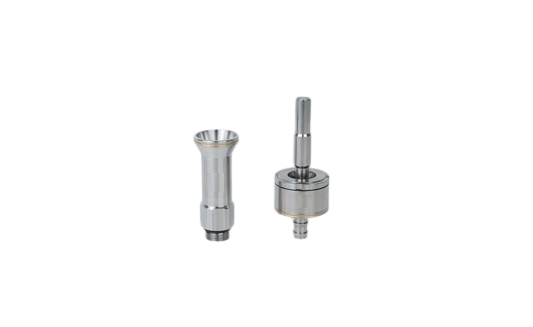
The Data Center Assembly Challenge BMQC Solves
High-density rack environments push traditional fluid connections beyond their limits. BMQC is purpose-built for the constraints of modern data center liquid cooling.
Zero Visibility
Connections deep inside racks where operators cannot see the coupling port.
No-Reach Access
Server modules slide in along rails—hands cannot reach the fluid connection point.
High Assembly Rate
Volume deployments demand fast, repeatable connections with zero rework.
BMQC Solution
±5 mm radial & ±2.7° angular tolerance absorbs all typical mounting deviations automatically.
BMQC vs. Standard Quick Connects
Developed to Meet OCP Open Rack V3
The BMQC coupling series is engineered to align with OCP Open Rack V3 specifications for blind-mate liquid cooling interfaces. Our design addresses the mechanical, dimensional, and performance criteria defined for rack-level fluid quick-connect systems in high-density compute environments.
Interface Dimensional Compliance
Coupling envelope, port positions, and mounting geometry per Open Rack V3 framework
Performance Benchmark Alignment
Leak rate, pressure rating, and cycle life benchmarks referencing OCP thermal management criteria
Material & Environmental Provisions
Stainless steel construction and seal selection aligned with OCP environmental requirements
Target System Integration
Open Rack V3 Cabinets
Rack-level blind-mate connection for modular compute/cooling sleds
Server Manifolds
Direct manifold-to-server blind coupling at the sled interface plane
CDU Interfaces
Coolant Distribution Unit connections with standardized blind-mate handshake
Documentation: Detailed specifications, Interface Control Documents (ICD), and assembly guides available under NDA. Contact us to initiate.
±5 mm Radial & ±2.7° Angular Misalignment Tolerance
The industry’s most forgiving blind-mate alignment window for rack-level liquid cooling—absorbing real-world mounting deviations that other couplings cannot handle.
±5 mm Radial Offset
Lateral displacement perpendicular to engagement axis
The coupling guide structure captures and corrects up to 5 mm of lateral offset in any radial direction. This absorbs cumulative positional error from rack frame fabrication, manifold mounting, rail alignment, and server sled tolerance—all without operator intervention.
What this means for you: Rack frame and manifold mounting tolerances can be relaxed significantly, reducing fabrication cost and assembly time across your fleet.
±2.7° Angular Misalignment
Tilt deviation from ideal coaxial alignment
The floating compensation mechanism absorbs angular tilt when the server sled or module insertion axis is not perfectly parallel to the manifold port axis. Combined with the radial tolerance, this creates a forgiving capture zone that ensures first-attempt mating success.
What this means for you: Eliminates sensitivity to rack squareness, rail parallelism, and thermal-induced frame distortion that accumulates in large-scale deployments.
Tolerance Chain Example: Rack → Manifold → Coupling
Rack Frame
Mounting surface datum & hole-pattern tolerance
Manifold
Port position & face orientation on distribution header
BMQC Float
Floating mount absorbs ±5 mm radial & ±2.7° angular stack-up
The BMQC floating mechanism is specifically sized to absorb the worst-case tolerance stack-up from all upstream components in the Open Rack V3 assembly chain.
Guide → Align → Seal → Lock
A precision-sequenced engagement process ensures reliable blind-mate connection with every cycle.
Approach & Guide Capture
Server sled slides toward the manifold. The tapered guide funnel on the receptacle captures the coupling plug, beginning radial correction well before seal surfaces engage.
Self-Alignment & Float
The floating mechanism absorbs remaining radial offset (±5 mm) and angular tilt (±2.7°). The coupling halves are progressively steered into coaxial alignment.
Seal Contact & Valve Open
Now aligned, sealing surfaces engage with controlled compression. Both poppet valves open simultaneously, establishing the full-flow fluid path with zero restriction.
Positive Lock Confirmation
The latch mechanism clicks into position with audible and tactile feedback. The connection is leak-tight at full system pressure. No tools needed at any step.
Disconnect & Maintenance
Upon disconnection, dual dry-break poppets self-seal both coupling halves independently. Residual fluid is controlled to trace levels, minimizing drip and preventing air ingress into the active cooling loop.
Key Structural Features
Configurable for Your Open Rack V3 System Integration
BMQC is an engineering-configurable platform—not a fixed catalog item. Every dimension below is open for customization to match your specific system requirements.
| Dimension | BMQC Baseline | Customizable Scope | Customer Provides | Rapidaccu Delivers |
|---|---|---|---|---|
| Alignment Window | ±5 mm / ±2.7° | Guide length, float travel, insertion stroke, stop position | Installation offset, stroke, interference zones | Alignment design + tolerance chain advisory |
| Manifold Interface | Face seal / Threaded / Flange | Port face geometry, hole pattern, seal groove, mounting | Manifold drawings / ICD | DFM review + interface customization |
| Port Layout | Single / Multi-port | Port count, spacing, direction, keying | System layout, port definition | Layout optimization + accessibility review |
| Material & Corrosion | Stainless steel body | Steel grade, local reinforcement, corrosion grade | Environment, media, life target | Material + surface treatment recommendation |
| Seal Selection | Standard elastomer seals | EPDM / FKM, hardness, cross-section | Temperature, media, maintenance cycle | Compatibility advisory + validation plan |
| Leak Spec & Testing | 100% helium leak testing | Leak threshold, test pressure, fixture interface | Customer acceptance criteria | Test procedure + report format alignment |
| Mounting Method | Panel / Bracket fixed | Locating pins, floating mount, hard stops | Cabinet structure & assembly process | Installation guide + fixture recommendations |
| Marking & Traceability | Batch traceability | Barcode / QR / serial number, label position | Traceability requirements | Coding rules + records system |
| Cleaning & Packaging | Industrial-grade cleaning | Low-residue / cleanroom-grade / dust caps | Cleanliness level requirements | Cleaning + packaging specification |
100% Helium-Leak Testing: The Trust Foundation
Every single BMQC coupling is individually helium-leak tested before shipment. No sampling. No exceptions.
Why Helium Testing?
Helium is the smallest inert gas molecule, making helium-leak detection the most sensitive method for verifying micro-leak integrity. It detects leakage rates orders of magnitude below what pressure-decay or air-under-water methods can identify—critical for high-reliability fluid connections in data center environments.
10⁻⁷
mbar·L/s detection sensitivity
100%
Every unit individually tested
Customer Witness & Audit
On-site witness of helium testing and inspection processes is welcome at our Shenzhen facility. Sampling strategies can be jointly defined for volume production lots.
Complete Test & Inspection Scope
100% Helium Leak Test
Every coupling tested to defined leak-rate threshold at specified pressure
Critical Dimension Final Inspection
Seal faces, guide geometry, assembly datums—CMM verified
Serial / Batch Traceability
Every unit’s test results linked to serial number and batch code
Documentation Package
Helium test certs, dimensional reports, material certs, FAI—formatted to your QA requirements
Robust Stainless Steel Construction
BMQC bodies are manufactured from stainless steel for the strength, corrosion resistance, and long-term dimensional stability that data center liquid cooling environments demand.
Mechanical Strength
Withstands repeated blind-mate engagement forces, vibration, and system pressure over thousands of cycles without deformation.
Corrosion Resistance
Resistant to water-glycol coolants, condensation, and the humid conditions typical of data center operating environments.
Thermal & Vibration Stability
Maintains seal integrity and dimensional accuracy across thermal cycling and continuous rack vibration from server operation.
Surface & Cleaning
Passivation
Enhanced corrosion resistance via chromium-oxide surface layer
Electropolish
Ultra-smooth surfaces—reduced particle entrapment on seal faces
Precision Cleaning
Ultrasonic cleaning protocol with verified cleanliness levels
Cleaning and packaging levels are customizable to match your data center’s contamination control requirements.
Open Rack V3 Interface Development Path
A structured engineering path from requirements intake to 100%-helium-tested volume delivery.
Requirements Input
OR V3 constraints, ICD, space envelope, media, pressure
Concept Design
Guide, float, lock, seal architecture definition
DFM & Tolerance Chain
Machining feasibility, tolerance stack, cost analysis
Prototype & Test
Mate success rate, insertion force, leak validation
Design Freeze
Frozen design, control plan, volume process setup
Volume Delivery
100% He-tested production with full traceability
Engineering Deliverables
Turning High-Tolerance Blind-Mate into Repeatable Consistency
Precision CNC machining, controlled assembly, and 100% helium testing at every step—from first article to volume production.
CNC Precision on Critical Features
Multi-axis CNC milling and mill-turn centers produce guide cones, floating bores, seal grooves, and valve seats with the concentricity and surface finish that blind-mate alignment demands.
Assembly & Fixture Control
Dedicated assembly fixtures ensure floating mechanism travel and latch behavior are consistent unit-to-unit. Torque control, seal installation verification, and functional pre-check before helium test station.
Process Control & Final Gate
CTQ dimensions verified at each operation. Helium-test station with locked parameters and automatic pass/fail disposition. Final inspection, dust-cap installation, and cleanroom-grade packaging before shipment.
For Rack & Server Manifold Engineers
Practical guidelines for leveraging BMQC’s alignment capabilities in your Open Rack V3 system design.
Establish a clear locating datum on the rack frame for manifold positioning—the BMQC float compensates from this reference.
Use floating-mount receptacles on the manifold side to maximize the alignment window available for sled insertion.
Incorporate hard stops in the sled rail to define the insertion endpoint and prevent over-travel.
Relax rack frame and manifold mounting hole tolerances—the coupling absorbs the stack-up that precision frames normally demand.
Eliminate precision alignment fixtures during assembly—the guide cone handles initial capture across the full tolerance window.
Account for thermal growth in rack structures—±2.7° angular budget covers thermally-induced frame distortion in operating data centers.
Avoid lateral force during engagement—the guide cone requires an approach within the capture zone, not a side-push against the seal face.
Define sufficient insertion stroke—the guide, float, seal, and lock sequence requires a minimum axial travel. Contact us for stroke specifications.
Verify full engagement before pressurizing—always confirm the audible/tactile click. Partial engagement will leak under pressure.
BMQC in Open Rack V3 System Architectures
Rack Manifold ↔ Server Node
Blind-mate connection between rack-side coolant manifold and individual server compute nodes. Server sleds slide in and auto-connect—no manual fluid coupling required. ±5 mm tolerance absorbs all rail and frame deviations.
Slide-In & Drawer Modules
Drawer-style and rail-mounted compute/storage modules auto-mate cooling connections on insertion. Designed for high-frequency maintenance cycles with rapid online/offline transitions.
Multi-Rack Modular Deployment
Standardized BMQC interfaces across rack rows shorten installation window for new deployments and simplify maintenance planning. Interchangeable modules reduce sparing complexity.
BMQC Blind-Mate Coupling FAQ
Answers to common questions about customization, standards, helium testing, and project collaboration.
What does “meet OCP Open Rack V3” specifically cover?
Under what conditions do ±5 mm / ±2.7° tolerances apply?
Can the helium leak threshold and test pressure be customized?
Can you provide ICD / 3D models? Is an NDA required?
What are lead times for samples, pilot batch, and volume production?
How do you co-develop the interface with our manifold design?
Start Your BMQC Open Rack V3 Project
Share your manifold drawings, system constraints, or interface requirements. Our engineering team will respond with a feasibility assessment and project proposal within 24 hours.
Address
Rongli Industrial Park, Dalang, Longhua District, Shenzhen, China
Experience
15 Years of Precision Manufacturing
Response
Engineering review within 24 hours
Request a Quote
Upload your manifold ICD, interface drawings, or describe your Open Rack V3 blind-mate requirements.