
UQDB Blind-Mate Quick Disconnect: 1 mm Self-Alignment, Tool-Free Assembly, Reliable Sealing Under Pressure
An extended blind-mate coupling solution built on the proven UQD platform—engineered for high-density layouts, modular maintenance, and installations where visibility and access are limited.
1 mm Radial Self-Alignment
Compensates installation offset
Tool-Free Installation
Push-to-connect in tight spaces
Sealing Under Pressure
Reliable seal at system pressure
Faster Assembly
Reduced cycle time & serviceability
Custom Interfaces
Engineered to your system
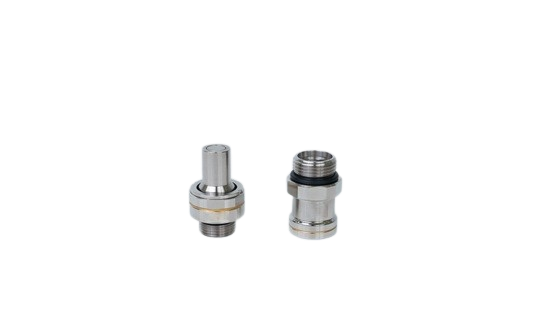
Why Blind-Mate? The Assembly Pain Points UQDB Solves
Limited Space & Zero Visibility
Traditional couplings require direct line-of-sight and two-hand access—impossible in high-density chassis, deep racks, and enclosed modules.
Tight Assembly Cycle Times
Production lines demand fast, repeatable connections. Manual alignment and torquing create bottlenecks, rework, and quality variation.
Frequent Maintenance Access
Systems requiring hot-swap or periodic module replacement need connections that engage and release without tools, training, or disassembly.
UQDB: The Blind-Mate Solution
Built on the proven UQD platform with added guide structures, floating mounts, and a 1 mm radial self-alignment window—install reliably without seeing or reaching the port.
UQDB vs. Standard UQD
UQDB extends the standard UQD coupling with blind-mate guide geometry, a floating compensation mechanism, and an expanded self-alignment tolerance window. All core sealing, dry-break valve, and flow-path performance remain unchanged.
Target Systems
Modular Cooling Loops
Slide-in rack modules with automatic fluid connection
Chassis & Cabinet Internal Quick-Release
Blind connection points inside enclosed assemblies
Slide-In & Drawer-Style Units
Automatic coupling on module insertion along rails
High-Density Liquid Cooling
OCP-ecosystem blind-mate solutions for data centers
1 mm Radial Self-Alignment: How It Works
Guide Cone Structure
A precision-machined tapered lead-in on the receptacle captures the plug half even when offset up to ±1 mm radially. The guide cone progressively steers the coupling into alignment before any sealing surfaces make contact.
The taper geometry protects seal faces from damage during misaligned initial contact.
Floating Compensation Mount
One coupling half incorporates a floating mount that permits limited radial and angular movement. This absorbs positional tolerance stack-up from the module, frame, and mounting interfaces—ensuring reliable mating despite system-level variations.
Floating range is tunable to match your specific tolerance chain.
Blind-Mate Benefits
Eliminates sensitivity to module mounting offset
Reduces rework and field-assembly failures
Shortens installation time by 60–80%
No tools required—push-click engagement
Audible and tactile lock confirmation
Single-handed, single-motion operation
Coupling Sequence, Sealing & Disconnect Control
Engagement Sequence
Step 1: Approach
Module slides toward the receptacle. No precise alignment required by the operator—guide structures will capture the coupling.
Step 2: Guide & Capture
The tapered lead-in cone captures the plug and begins correcting radial offset (up to ±1 mm). The floating mount absorbs remaining misalignment.
Step 3: Self-Alignment & Seal Contact
Coupling halves are now coaxially aligned. Sealing surfaces engage with controlled compression. Both poppet valves begin to open.
Step 4: Full Engagement & Lock
Positive latch clicks into place—audible and tactile confirmation. Flow path is fully open. Connection is leak-tight at system pressure.
Disconnect Control
Upon disconnection, both coupling halves self-seal via spring-loaded dry-break poppets. The design minimizes residual fluid loss and controls drip to trace levels.
Pressure Design
Seal face geometry optimized for sustained system pressure
Valve seat designed for pressure-assisted sealing
Spring forces balanced for smooth engagement under pressure
Structural strength validated against burst pressure requirements
What We Can Customize for Your UQDB
Every dimension below is engineering-configurable. Tell us what your system needs—we deliver the manufacturable solution.
| Customization Dimension | Standard Capability | Customizable Range | Customer Provides | Rapidaccu Delivers |
|---|---|---|---|---|
| Blind-Mate Alignment | ±1 mm radial self-alignment | Alignment window, guide length, float travel, tolerance chain | Module tolerances, mounting offset, insertion stroke | Alignment structure design + tolerance advisory |
| Form Factor & Layout | Inline / Right-angle / Panel-mount | Custom angles, lengths, mounting orientation, keying | Space envelope drawing, interference zones | Layout optimization & clash analysis |
| Interface / Termination | Barb / Threaded / Manifold port | Custom barbs, thread forms, transition adapters | Tube ID / thread standard / assembly method | Termination DFM & seal advisory |
| Valve & Seal Strategy | Dry-break / platform seal architecture | Bi-/unidirectional valve, opening pressure, residual control | Media, pressure, maintenance frequency | Valve parameter recommendation & risk review |
| Body Material | Aluminum / Stainless Steel / Brass / Engineering Plastic | Corrosion-optimized, weight-optimized, strength-optimized | Media chemistry, corrosion risk factors | Material & surface treatment recommendation |
| Seal Material | EPDM / FKM / NBR | Hardness, cross-section, temp/chemical resistance | Temperature range, media formula, service life | Compatibility advisory & validation plan |
| Surface Finish | Anodize / Nickel / Passivation | Color, thickness, corrosion grade, cosmetic finish | Appearance / environmental class | Process route & inspection criteria |
| Performance Targets | Sealed under operating pressure | Leak rate target, cycle life, insertion/extraction force | Performance specs / test standards | Test plan & acceptance criteria |
| Cleaning & Packaging | Standard industrial cleaning | Low-residue / cleanroom-grade / dust caps | Cleanliness level requirements | Cleaning & packaging specification |
| Documentation & Compliance | Inspection reports | Material certs, traceability, customer-format reports | Document checklist / format templates | Complete documentation package |
This is an engineering-configurable product, not a fixed-SKU catalog item. Every parameter is open for customization based on your system requirements. Contact our engineering team with your specifications for a tailored proposal.
From Requirements to Validated Production
Requirements Input
Provide these parameters to accelerate our engineering response:
Development Milestones
Concept Design
Alignment structure, lock mechanism, interface layout, seal strategy
Week 1–2DFM Review
Tolerance chain analysis, machining feasibility, assembly repeatability, cost breakdown
Week 2–3Prototype & Test (1–3 Rounds)
Functional samples, leak/pressure/cycle validation, refinement iterations
Week 3–6Production Ramp-Up
Production-intent tooling, SPC setup, pilot batch, volume manufacturing
Week 6+Key Engineering Considerations for Blind-Mate Couplings
Tolerance Chain Management
Blind-mate success depends on managing the full stack-up from module mounting surfaces, hole positions, connector floating range, to guide-segment fit. Our engineering team models the complete tolerance chain to ensure your alignment window is sufficient.
Insertion Force vs. Locking Reliability
The balance between low insertion effort (ease of assembly) and strong latch retention (reliable under vibration and pressure) is critical. We optimize spring rates, cam angles, and engagement profiles to achieve both objectives simultaneously.
Seal Surface Geometry & Finish
Sealing reliability under sustained pressure depends on seal groove dimensions, surface roughness (Ra ≤ 0.4 μm on sealing faces), concentricity, and controlled compression ratios. Every micron matters for repeatable leak-free performance.
Foolproofing & Anti-Misconnect
Keying slots, asymmetric features, polarization ribs, and optional color/label coding ensure the correct coupling mates with the correct port. Critical for multi-circuit systems where cross-connection would cause system failure.
Selection Strategy for Your Operating Conditions
Body Material Logic
Stainless Steel (303/304/316L)
Max corrosion resistance, high-purity loops, aggressive coolants
Aluminum Alloy (6061/7075)
Lightweight, excellent thermal properties, anodizable
Brass / Copper Alloy
Good machinability, antimicrobial, water-based systems
Engineering Plastics (PEEK/PPS/POM)
Weight-critical, electrical insulation, chemical inertness
Seal Material Logic
EPDM
Water-glycol, broad temp range (-40°C to +150°C), excellent aging
FKM (Viton®)
Aggressive chemicals, fluorinated coolants, high temperature
NBR (Nitrile)
Cost-effective, good abrasion resistance, general-purpose
Selection Criteria
Temperature range, media formula, compression set resistance, service life target
Surface Treatment
Anodizing (Type II / III)
Corrosion & wear protection for aluminum, color options
Electroless Nickel
Uniform coverage, corrosion barrier, multi-substrate
Passivation
Stainless steel corrosion enhancement, clean surface
Electropolish
Ultra-smooth surfaces, reduced particle entrapment
Coolant Compatibility Notice: We recommend validation testing between your specific coolant formulation and the selected body/seal material combination. Rapidaccu can support immersion compatibility testing upon request to confirm long-term suitability.
Tested for Pressure, Seal, Cycle Life & Alignment
Leak Testing
Air-under-water and pressurized-hold leak detection with quantified leak-rate reporting at rated pressure
Pressure Hold & Burst
Proof pressure at 2× working pressure, burst testing at 4× rated, sustained pressure hold validation
Blind-Mate Cycle Testing
10,000+ connect/disconnect cycles with misalignment simulation to validate seal integrity over service life
Insertion Force Measurement
Push-in and pull-out force profiling to verify ergonomic assembly and reliable latch retention
Dimensional & GD&T
CMM measurement for concentricity, position, true position, and critical seal-groove dimensions
Surface & Coating Inspection
Surface roughness profiling, coating thickness measurement, and adhesion testing per specification
Deliverable Test Documentation
Inspection reports, leak-test certificates, FAI packages, pressure-hold records—formatted to your requirements.
How Rapidaccu Achieves Blind-Mate Consistency
Precision machining capability is the foundation of reliable blind-mate coupling performance. Here is how we ensure every part meets your alignment and sealing specifications.
Multi-Axis CNC Machining
3-, 4-, and 5-axis CNC milling plus mill-turn centers machine guide cones, floating mounts, seal grooves, and valve seats in optimized setups—maintaining concentricity and position tolerances that blind-mate alignment demands.
Guide Cone Taper
±0.005 mm
Seal Face Finish
Ra ≤ 0.4 μm
Critical Feature Control
Key blind-mate features—guide taper concentricity, floating bore position, seal groove depth/width, and valve seat geometry—are controlled via in-process measurement and SPC. Every part is traceable to process parameters.
Concentricity TIR
≤ 0.01 mm
Groove Consistency
±0.01 mm
Secondary Processes
Surface treatment (anodize, nickel, passivation), ultrasonic cleaning, dust-cap installation, seal-kit assembly, and functional leak testing—all integrated into our manufacturing flow for shipment-ready components.
Volume Consistency Strategy
Dedicated fixtures for repeatable clamping, in-process control points at critical operations, statistical sampling plans for volume lots, and complete batch traceability from raw material through final inspection.
15 Years of Precision Manufacturing. Rapidaccu delivers blind-mate coupling components with the dimensional consistency that reliable self-alignment requires—from single prototypes through volume production.
Designed for System Engineers & Assembly Lines
Mounting Methods
Panel-mount for bulkhead pass-through, floating mount for offset compensation, or direct module integration for slide-in engagement. Mounting geometry customized to your chassis or enclosure design.
Leveraging the 1 mm Self-Alignment
With ±1 mm radial tolerance absorption, module positioning accuracy requirements are relaxed. This simplifies frame fabrication tolerances, reduces fixture costs, and allows faster slide-in without precision jigging.
Maintenance & Quick Swap
Single-action release for rapid module removal. Dry-break valves contain fluid on both sides during hot-swap. Designed for sub-60-second module change-out without draining the loop.
Integration Best Practices
Engagement Direction: Ensure the module insertion axis aligns with the coupling engagement axis. Angular approach can damage guide surfaces and seal faces.
Contamination Control: Keep dust caps installed until the moment of connection. Avoid debris in guide cones—particles can scratch seal surfaces and affect alignment.
Seal Protection: Never touch sealing surfaces with bare hands or tools. Store coupling halves seal-face-down only in clean, capped condition.
Confirmation: Always verify audible/tactile click before energizing the fluid loop. A partial engagement may appear connected but will leak under pressure.
Where Blind-Mate Coupling Delivers the Most Value
High-Density Rack Modular Connection
Blind-mate couplings auto-connect when server trays or cooling modules slide into position. No manual alignment, no tooling, no line-of-sight needed—just push in and the coupling engages.
Drawer & Slide-Rail Module Cooling
Cooling circuits connect automatically as drawer-style modules slide home on rails. The 1 mm self-alignment absorbs rail play and frame tolerance, ensuring reliable engagement every cycle.
No-Visibility & No-Tool Workstations
For service positions where technicians cannot see or reach the connection point—deep inside enclosures, behind panels, or in confined production cells—UQDB enables confident connection by feel alone.
OCP High-Density Liquid Cooling
Purpose-designed for the OCP liquid-cooling ecosystem. UQDB blind-mate interfaces enable true modular, tool-free, hot-swappable cooling architectures at rack scale with standardized interoperability.
Project-Level Quality Responsibility
Inspection Framework
Incoming Material Verification
Material certs, hardness, stock dimensions
In-Process Control
SPC, first-piece checks, critical dimension hold points
Final Inspection & Functional Test
100% critical dims, leak test, visual, packaging
Traceability & Records
Batch Traceability Codes
Every part linked to material lot, process, and test data
Material Certificates
Mill test reports, chemical composition on request
Inspection Records
Dimensional, leak-test, pressure-hold documentation
Change Control
Engineering change records critical for custom parts
Customer Acceptance
First Article Inspection (FAI)
Ballooned drawings, measured values, AS9102 or custom format
PPAP Support
Production Part Approval Process documentation
Source Inspection Welcome
On-site audit and inspection at our Shenzhen facility
Document Packages
Customized to your incoming quality requirements
UQDB Blind-Mate Coupling FAQ
Is the 1 mm self-alignment radial or axial? What installation offset is allowed?
Does the blind-mate structure increase insertion force?
How is sealing under pressure validated? What test reports can you provide?
Can you customize the interface to mate with my manifold or cold plate?
What are the lead times for samples, small batch, and volume production?
Can you provide 3D models and assembly space-check support?
Ready to Engineer Your Blind-Mate Solution?
Whether you need a feasibility assessment, DFM review, or want to begin prototyping a custom UQDB configuration, our engineering team responds within 24 hours.
Address
Rongli Industrial Park, Dalang, Longhua District, Shenzhen, China
Experience
15 Years of Precision Manufacturing
Response Time
Engineering review within 24 hours
Request a Quote
Upload your drawings, interface specifications, or describe your blind-mate requirements.