
Inconel CNC Machining Services
Machining Inconel 718, 625 & high-temperature nickel alloys with controlled cutting strategy, reliable inspection, and engineering feedback that professional teams actually use.
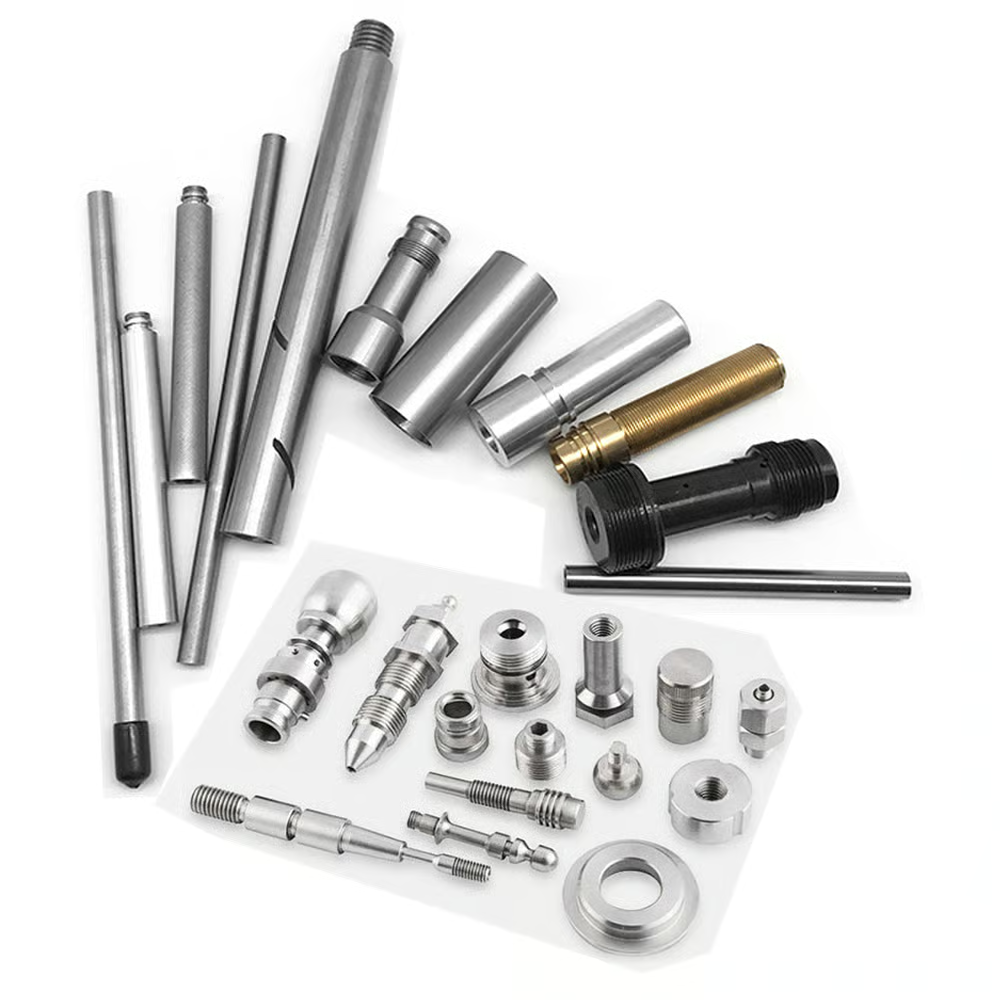
Built for the “hard stuff”: work hardening control, heat management, chip evacuation, and stable repeatability for demanding industries.
Machining Inconel is not “just CNC” — it’s process control
Inconel’s work hardening, low thermal conductivity, high cutting forces, and aggressive tool wear can destroy repeatability if the process is not engineered. Our approach focuses on stable chip formation, controlled heat input, and tooling strategy tuned for nickel superalloys—so you can trust the final dimensions, finish, and documentation.
| Capability | What You Get |
|---|---|
| CNC Platforms | 3-axis / 4-axis / 5-axis machining for complex Inconel geometries |
| Coolant Strategy | Chip evacuation focus, reduced heat concentration, improved tool life |
| DFM Feedback | Machinability-driven suggestions to reduce risk & cost before cutting metal |
| Documentation | Inspection reports, traceability options, and certification support |
Inconel grades we machine (and why it matters)
“Inconel” isn’t one material. Different grades respond differently to cutting forces, heat input, and tool wear. We align machining strategy with your required performance—high-temperature strength, corrosion resistance, or fatigue life.
Inconel 718
Age-hardenable nickel superalloy widely used in aerospace and hot-section structures. Process stability matters because precipitation hardening increases cutting resistance and tool wear.
Inconel 625
Excellent corrosion resistance for marine, chemical, and oil & gas applications. The right toolpath and coolant approach improves finish while reducing built-up edge and chatter risk.
Other Nickel Alloys
For parts requiring high-temperature strength, oxidation resistance, and long service life, we support machining strategies tailored to nickel alloy behavior—especially where heat and tool wear dominate.
Typical Inconel machining problems — and how we prevent them
Inconel is unforgiving: a small mistake can create rapid work hardening, heat concentration, and dimensional drift. We build the machining plan around stable material removal rather than “pushing speed,” so your part meets spec with fewer iterations.
Work hardening & surface integrity
We minimize dwell and re-cutting, maintain consistent engagement, and select toolpaths that reduce localized hardening—helping protect finish and dimensional stability.
Heat, distortion & tool failure
Cutting speed, coolant delivery, and chip evacuation work together. We balance them to avoid thermal distortion and premature tool wear—especially on deep pockets and thin walls.
Chatter on complex geometry
For features that amplify vibration, we adjust tool selection, step-down, and engagement angle to stabilize cutting forces—improving finish and reducing scrap risk.
For Inconel, “small design tweaks” can dramatically change cycle time and tool wear. If you want, we can review your drawing and propose options to reduce cost while protecting function:
Quality assurance for critical Inconel components
Professional buyers expect more than “pass/fail.” We support documentation and inspection routines that make your internal approval easier—especially for aerospace, energy, and high-temperature assemblies.
Where Inconel CNC machining is commonly used
These are typical part families where dimensional stability, surface integrity, and documentation matter the most.
- Turbine components
- Combustion parts
- High-temp brackets & structures
- Valve bodies & seats
- Downhole components
- Corrosion/pressure hardware
- Heat exchanger components
- Gas turbine assemblies
- High-temperature fixtures
- Corrosion-resistant hardware
- Heat/oxidation exposed parts
- Custom flanges & adapters
Inconel CNC Machining FAQs
Quick answers for engineering, procurement, and project teams evaluating Inconel machining feasibility, risk, and documentation.
Why is Inconel difficult to machine?
What Inconel grades do you machine most often?
What tolerance and surface finish can you achieve?
Can you provide material certification and inspection reports?
Do you offer DFM feedback for cost or risk reduction?
What information should I send for an accurate quote?
Ready to machine your Inconel part with less risk?
Share your drawing and requirements. We’ll respond with a practical machining plan, DFM feedback (if needed), and a quote aligned to your documentation requirements.
- Engineering review and manufacturability check
- Quote aligned to tolerance & inspection needs
- Optional certification and reporting support
- Consistent process for batch repeatability
Request a quote for Inconel CNC machining
Send your drawing and requirements. If you need certification or a specific inspection/report format, mention it in your message so we can align output to your internal approval process.
- Material: Inconel 718 / 625 (or specified nickel alloy)
- Quantity and target lead time
- Tolerance, finish, and critical features
- Inspection / certification requirements