
Custom Rollers — DFM to Delivery in One Place
High-precision CNC machining, difficult-to-machine metals (titanium, Inconel), internal thermal channel machining, and South China finishing supply — Rapidaccu delivers complex non-standard rollers as a single accountable manufacturing partner.
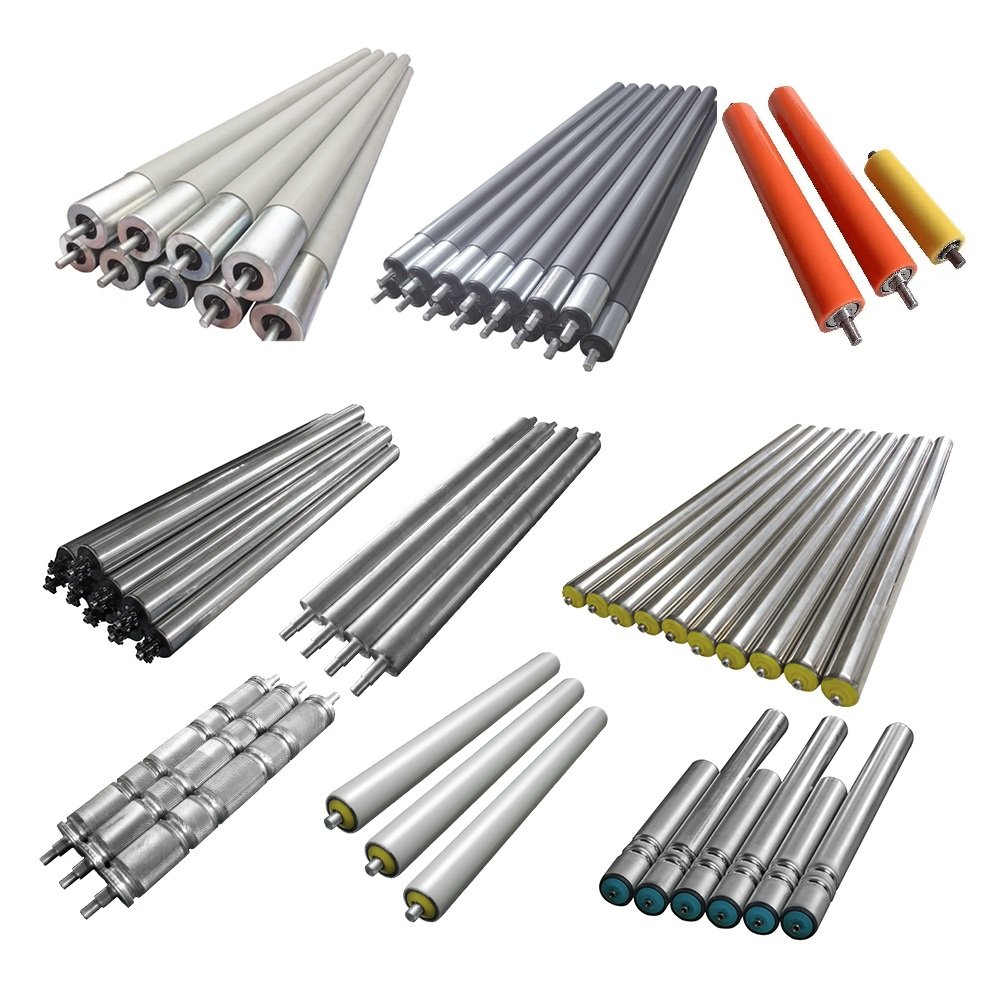
Full-Category Custom Roller Configuration
Every production line has different priorities. Our custom rollers service is built for broad configurability across geometry, materials, internal structures, and final surface condition.
| Customisation Area | Available Capability | Typical Customer Benefit |
|---|---|---|
| Roller Size | Up to Ø2000 mm × 12000 mm | Supports large-format equipment and wide web handling systems |
| Precision Control | Runout ≤0.01 mm; G2.5 dynamic balance | Improves coating uniformity, speed stability, and vibration control |
| Core Features | Threads, keyways, journals, bearing seats, internal channels | Enables exact fit with existing machine architecture |
| Surface Engineering | Mirror polish, hard anodising, hard chrome, rubber 20–100A | Matches traction, wear, corrosion, and cleanability requirements |
| Material Selection | Steel, stainless, aluminium, titanium, Inconel, alloys | Aligns performance with load, environment, and process temperature |
Types of Custom Rollers We Manufacture
We produce custom rollers for conveying, tensioning, guiding, pressing, coating, calendaring, corona treatment, and thermal control — without forcing customers into rigid product categories.
Conveyor Rollers
Wear resistance, shaft-end compatibility, smooth rotation under constant duty; zinc plating, stainless, or rubber lagging options.
Coating Rollers
Ultra-fine surface finish, tight runout, chemical compatibility; hard chrome, mirror polish, or controlled crown available.
Calendaring / Pressure Rollers
High rigidity, concentricity, heavy load performance; induction-hardened surfaces, thermal channels available.
Thermal Management Rollers
Internal flow path accuracy, sealing, heat transfer efficiency; spiral channels and multi-zone temperature control.
Corona / Process Rollers
Electrical and surface behaviour, precision assembly; ceramic-adjacent compatibility, conductive or insulated finishes.
Material Selection Guide for Custom Rollers
Material selection determines machining strategy, balance behaviour, corrosion resistance, thermal conductivity, coating adhesion, and lifecycle cost. Rapidaccu’s expertise in difficult-to-machine metals — titanium and Inconel — opens options for demanding process environments standard suppliers cannot support reliably.
Not sure which material fits your line conditions? Share your operating temperature, load, speed, and chemical exposure — we will recommend practical options.
Carbon / Alloy Steel
High strength, economical, widely available. Needs protection in corrosive environments.
→ Conveyor, drive, support, pressure rollersStainless Steel
Corrosion resistance, cleanability, stable for wet environments. Higher cost than carbon steel.
→ Medical, food-adjacent, converting, logisticsAluminium
Lightweight, good machinability, thermal responsiveness. Lower stiffness than steel.
→ High-speed light-duty rollers, thermal componentsTitanium & Inconel
Excellent corrosion resistance and extreme environment performance. High material and machining cost.
→ Aerospace, chemical process, thermal, harsh-process rollersSurface Finishes & Covering Options
Surface roughness affects release behaviour, coating transfer, traction, and cleanability. Surface hardness affects wear life. The right finish depends on actual operating conditions, not assumptions.
Mirror Polish Ra ≤ 0.01 μm
Minimises surface defects and improves contact smoothness. Requires careful handling to preserve finish.
Best for: Coating, film, precision process rollersHard Chrome Plating
Wear resistance, surface hardness, good dimensional control. Base geometry must be controlled before plating.
Best for: Coating, drive, guide, industrial process rollersHard Anodising
Improved surface hardness and corrosion resistance on aluminium substrates.
Best for: Lightweight rollers, automation equipmentRubber Covering 20–100A
Adjusts grip, compliance, damping, and pressure response. Hardness and compound must match environment.
Best for: Conveyor, nip, laminating, traction rollersBare Precision Metal Finish
Cost-effective, direct material performance. Surface protection may still be needed for corrosion.
Best for: Structural support or non-contact rollersQuality Parameters for Custom Rollers
Quality control for rollers must address rotational behaviour, geometry consistency, and the relationship between machined features and final operating conditions — not just general dimensional inspection.
| Quality Parameter | Typical Requirement | Why It Matters | Verification Method |
|---|---|---|---|
| Radial Runout | ≤ 0.01 mm | Affects vibration, web tracking, coating consistency | Dial indicator / precision metrology setup |
| Dynamic Balance | G2.5 | Supports stable rotation at operating speed | Dynamic balancing machine |
| Surface Roughness | Up to Ra ≤ 0.01 μm | Influences transfer, release, friction, cleanability | Surface roughness tester |
| Diameter / Length Tolerance | Per drawing | Ensures fit, nip pressure, and assembly compatibility | Calipers, micrometers, CMM as applicable |
| Shaft-End Feature Accuracy | Per specification | Critical for installation and torque transmission | Gauging, profile checks, fit inspection |
From DFM Review to Low-Volume Production
Rapidaccu supports the entire path from design feedback through prototype and low-volume production without changing manufacturing logic midstream — one partner, full accountability.
Frequently Asked Questions — Custom Rollers
Common questions from engineering teams and procurement managers sourcing non-standard custom rollers for industrial and process equipment.
What types of custom rollers can Rapidaccu manufacture?
Can you machine titanium and Inconel rollers?
What is the minimum radial runout you can achieve?
Do you offer internal thermal channel machining?
What surface finishes are available for custom rollers?
Do you provide DFM review before quoting?
What dynamic balance standard do you use?
What information do I need to share to get a quote?
Request a Quote for Custom Rollers
Send your technical inputs — complete drawings, partial designs, reverse-engineered samples, or a performance brief. We will review manufacturability and recommend practical options for material, machining route, and finishing.
Contact & Location
Longhua District, Shenzhen, China