
What Is Inconel? Properties, Applications, and Why It’s So Difficult to Machine
A Complete Engineering Guide to Inconel Alloys
Inconel is a family of nickel-chromium-based superalloys designed for extreme heat, pressure, and corrosion resistance.
It is classified as a nickel-based superalloy. While its primary elements are Nickel, Chromium, and Iron, its secret weapon lies in trace amounts of Molybdenum, Niobium, and Titanium. Unlike standard steel which loses structural integrity at high temperatures, Inconel forms a stable, passivating oxide layer that protects the surface from further attack. It is designed to perform where other metals melt or fail.
Chemical Composition of Inconel
The exact composition varies by grade (e.g., 625 vs. 718), but the general makeup that defines the “Inconel” family is dominated by Nickel.
| Element | Typical Range | Function in Alloy |
|---|---|---|
| Nickel | 50–72% | Provides base corrosion resistance and high-temperature stability. |
| Chromium | 14–23% | Offers resistance to oxidation and sulfur compounds. |
| Iron | 6–18% | Solid solution strengthener (and reduces cost). |
| Niobium (Columbium) | 3–5% | Prevents cracking during welding; key for precipitation hardening. |
| Molybdenum | 2–9% | Increases hardness and resistance to pitting corrosion. |
*Note: The high Nickel content is the primary driver of the raw material cost.
The Engineering “Secret”: Microstructure
To truly understand Inconel, you must look under the microscope. Why is it so strong? It comes down to two phases:
1. Gamma Matrix (γ)
This is the continuous Face-Centered Cubic (FCC) nickel-based phase. It provides the ductility and holds the other elements in solid solution.
2. Gamma Prime (γ’) & Gamma Double Prime (γ”)
These are intermetallic precipitates (like Ni₃Nb or Ni₃Ti). They act as “roadblocks” within the metal’s atomic structure, preventing dislocation movement. This Precipitation Hardening is why Inconel 718 retains strength at 700°C.
Key Properties of Inconel
High Temperature Strength
Can maintain structural integrity up to 700–1000°C. It exhibits excellent creep resistance, meaning it won’t slowly deform under prolonged heat stress.
Corrosion Resistance
Resistant to oxidation, carburization, and chloride-ion stress-corrosion cracking. It performs exceptionally well in acidic environments.
Mechanical Strength
High tensile strength and yield strength. After aging (heat treatment), Inconel 718 becomes incredibly hard and tough.
Work Hardening Tendency
The material hardens rapidly as it is worked (machined or formed). This is a benefit for part durability but a nightmare for manufacturing.
“Inconel is not just heat-resistant — it retains mechanical integrity where most stainless steels fail.”
Common Types of Inconel

Inconel 625
Known for its high strength and outstanding fabricability. It resists a wide range of corrosive environments, from sea water to chemical processing acids. It relies on the stiffening effect of molybdenum and niobium in its nickel-chromium matrix.
Best for: Marine, Chemical, Nuclear.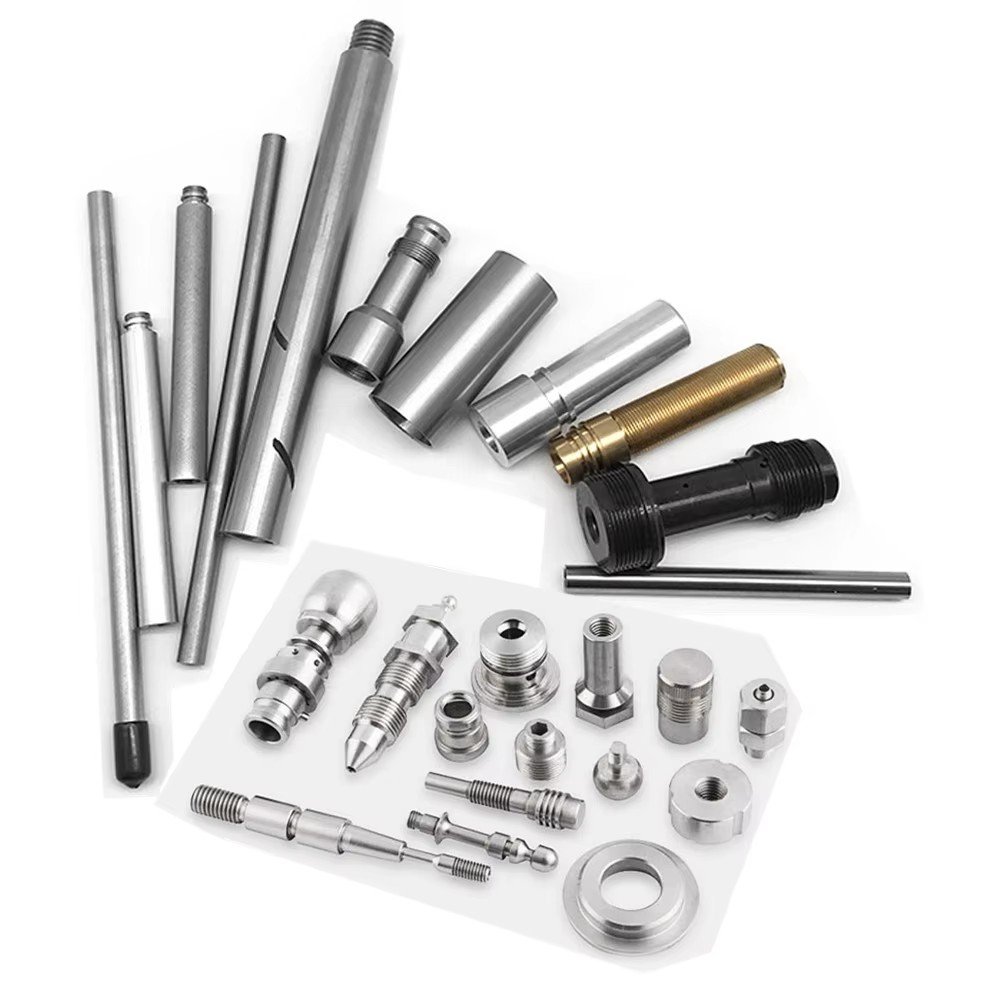
Inconel 718
The workhorse of the aerospace industry. This is a precipitation-hardened alloy that offers exceptionally high yield, tensile, and creep-rupture properties at temperatures up to 1300°F (704°C).
Best for: Gas Turbines, Rocket Engines, Cryogenic tanks.What Is Inconel Used For?
Aerospace
- • Turbine blades & vanes
- • Exhaust systems
- • Rocket engine thrust chambers
Oil & Gas
- • Downhole drilling tools
- • High-pressure valves
- • Sour gas well components
Chemical Processing
- • Heat exchangers
- • Reactor vessels
- • Distillation columns
Why Is Inconel So Expensive?
Inconel is significantly more expensive than stainless steel or aluminum. This cost is driven by several factors:
- Raw Material: Nickel is a volatile and expensive commodity.
- Refining Complexity: Creating the alloy requires vacuum induction melting (VIM) to ensure purity.
- Processing Difficulty: Rolling or forming sheets of superalloy consumes massive amounts of energy and tooling.
The cost of Inconel is driven more by performance requirements than raw material price alone. When failure is not an option, the material cost becomes secondary.
Why Is Inconel Difficult to Machine?
This is our daily reality at Rapidaccu. Inconel is notoriously difficult to cut, often described as “gummy” yet abrasive. Here is why standard CNC strategies fail:
Low Thermal Conductivity
Unlike aluminum, which transfers heat into the chip, Inconel holds heat at the tool edge. This causes cutting temperatures to skyrocket (up to 1200°C), literally melting the tool tip.
Work Hardening
If the cutter dwells or rubs for even a microsecond, the surface hardens instantly. The next pass hits a hardened layer, shattering the tool.
Solution: Advanced Strategy
We use specialized ceramic inserts or coated carbide tools, high-pressure coolant, and rigid setups to manage these forces.
“Inconel generates heat at the cutting zone but does not dissipate it efficiently, leading to rapid tool failure if parameters are not optimized.”
Inconel vs. Stainless Steel (304/316)
| Property | Inconel 718 | Stainless Steel 316 |
|---|---|---|
| Max Service Temp | ~700°C (up to 1000°C for some grades) | ~600°C (strength drops rapidly) |
| Strength at Heat | Excellent | Moderate |
| Cost | $$$$ (High) | $$ (Lower) |
| Machinability | Difficult | Easier |
| Magnetic? | Generally Non-Magnetic | Non-Magnetic (Austenitic) |
Conclusion: When Failure is Not an Option
Inconel represents the pinnacle of metallurgical engineering for extreme environments. While its cost and difficulty to machine present barriers, there is simply no substitute when your component is inside a jet engine or deep under the ocean floor.
Need Precision Inconel Parts?
If your project involves high-temperature or corrosive environments, selecting the right Inconel grade is critical. Our team specializes in precision machining of Inconel 718, 625, and other nickel superalloys.