

Surprising fact: some common alloys used in industry begin to soften hundreds of degrees below their listed melting figures, changing how parts behave under heat.
This introduction defines the exact temperature where a metal changes from solid to liquid under standard pressure and why that transition matters for design, safety, and process control.
Rapidaccu brings over 15 years of CNC machining and manufacturing experience to this topic, linking lab values to shop-floor choices that affect tolerances and finish.
We will compare behavior across types like stainless and pure iron, list key temperatures for common metals, and explain how knowing melting guides welding, casting, and heat treatment.
Expect practical guidance for industries that face high heat, from aerospace to medical, plus tips to reduce part failure when designs operate near elevated limits.
For a deeper dive on specific temperatures and alloy effects, see this reference on the melting point of steel.
Melting point basics and why temperature matters in metals
Knowing when a metal will begin to flow shapes choices for welding, casting, and machining. Rapidaccu applies this knowledge to fixture design, toolpaths, and coolant plans for precision parts.
What this temperature means for pure metals and alloys
For a pure metal, the melting point is a single, sharp value where solid and liquid phases coexist. Alloys show a range between solidus and liquidus because composition and microstructure vary.
Why thermal thresholds govern manufacturability
Processes that require liquid metal, like fusion welding and casting, must exceed those points. Tooling and fixtures must resist ambient heat and brief exposure to molten metal.
- Pure metals: single transition; predictable control.
- Alloys: gradual change; tighter temperature control needed.
- Softening often occurs well before full melt; plan tolerances accordingly.
| Material | Behavior | Manufacturing concern |
|---|---|---|
| Pure metal | Sharp phase change | Simple thermal budget |
| Steel alloys | Range between solidus/liquidus | Precise control, adjusted tooling |
| High-alloy types | Complex transformations | Specialized cooling and fixtures |
Whats is the carbon steel melting point: the definitive range and what affects it
Countless production problems trace back to small shifts in alloy composition that change how metals behave under heat.
For carbon steel, the accepted range sits at 1425-1540°C (2597-2800°F). That range appears because alloys melt over a solidus-to-liquidus interval rather than at a single degree.
Higher carbon lowers the temperature by disrupting the crystal lattice. Low, medium, and high carbon bands show this trend:
- Low carbon: 1410–1530°C
- Medium carbon: 1400–1500°C
- High carbon: 1370–1521°C
Alloying elements shift behavior. Chromium tends to raise thermal resistance and widen the solidus-liquidus gap. Nickel can depress temperatures. Impurities like sulfur and phosphorus lower thresholds and risk hot shortness near elevated ranges.
| Category | Typical range (°C) | Effect | Manufacturing concern |
|---|---|---|---|
| Low carbon | 1410–1530 | Higher ductility | Wider welding window |
| Medium carbon | 1400–1500 | Balanced strength | Careful preheat needed |
| High carbon | 1370–1521 | Lower melting tendency | Higher distortion risk |
Rapidaccu factors composition and temperatures when planning preheat, interpass control, and toolpaths to protect tolerances and avoid cracking.
Steel melting point compared: carbon steel vs stainless steel vs pure iron
Choosing alloys for hot service often depends more on strength retention than on fusion numbers alone.
Compare common families by how they behave as temperature rises and by what additive elements do to stability.
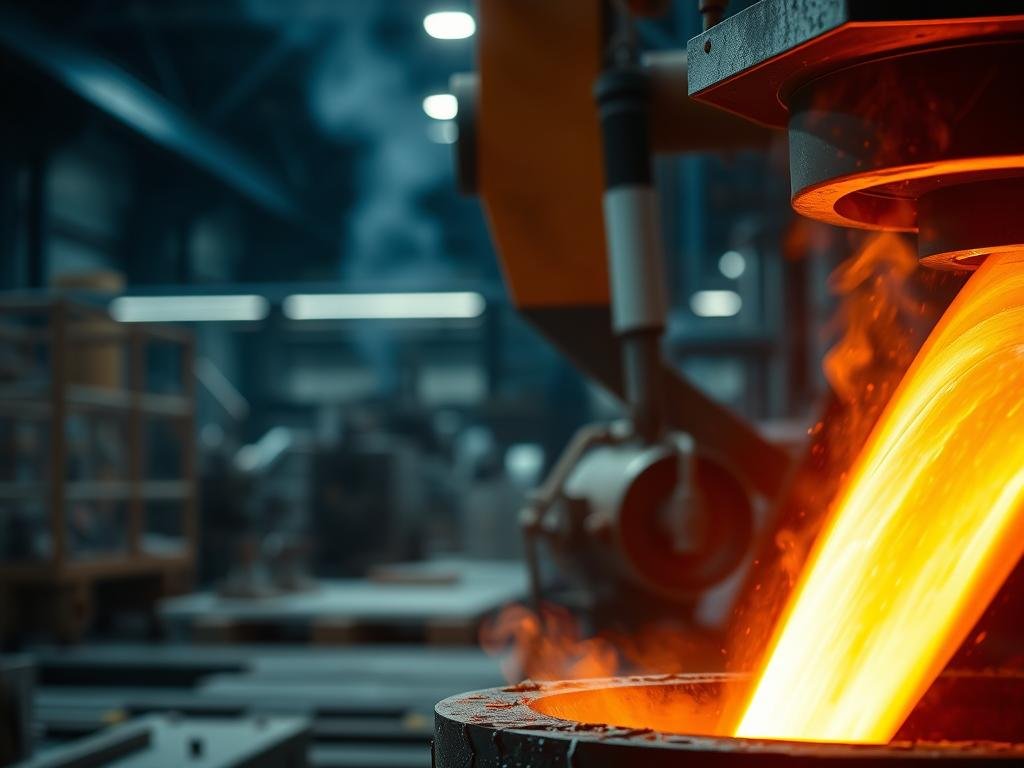
Stainless grades span a broad range
Stainless steel typically melts between 1375 and 1530°C. Common 18/8 grades sit near 1400–1450°C.
Chromium, nickel, and other elements change phase stability and widen ranges across grades.
Pure iron versus alloys
Pure iron melts at 1538°C. Alloying alters bonding and lattice order, so alloys often reach liquid states at different points.
That means an alloy may have a lower or higher melting point than iron depending on added elements and microstructure.
Softening occurs long before fusion
Structural metals begin to soften from about 425–870°C. Around 600°C many lose a large share of strength.
Designers must consider yield and creep behavior at these sub-melt temperatures rather than rely on ultimate fusion values.
- Compare ranges and grade-specific behavior when selecting materials for high temperatures.
- Adjust joining plans: preheat, filler choice, and heat input must match alloy softening profiles.
- Rapidaccu balances performance, cost, and machinability when advising between alloys for hot applications.
| Material | Typical range (°C) | Design concern |
|---|---|---|
| Stainless grades | 1375–1530 | Oxidation resistance vs slightly varied fusion |
| Alloyed steel | 1370–1540 | Softening thresholds, weld control |
| Pure iron | 1538 | Reference elemental behavior |
Different melting points across common metals and alloys
Different alloys span a wide band of temperatures that guide process choice and end-use performance.
Copper melts at 1084°C. Its excellent electrical conductivity makes it ideal for wiring, busbars, and thermal-management hardware. Rapidaccu often recommends copper when conductivity and formability matter.
Casting-friendly low-temperature alloys
Aluminum at 660°C supports high-volume die casting and sheet forming with lower energy use. Brass (~905–932°C) and bronze (~913°C) offer good castability and machinability for fittings, valves, and decorative parts.
Refractory and high-temperature types
Tungsten (~3400°C) and molybdenum (~2620°C) sit at the highest melting ranges; rhenium and tantalum also rank very high. These metals suit furnace components and aerospace parts where extreme heat resistance matters.
| Metal | Typical temp (°C) | Common processes |
|---|---|---|
| Copper | 1084 | Wire drawing, busbars, brazing |
| Aluminum | 660 | Die casting, extrusion, stamping |
| Brass / Bronze | 905–932 / 913 | Sand/investment casting, machining |
| Tungsten / Molybdenum | 3400 / 2620 | Powder metallurgy, high-temp components |
For a broader list of melting points of metal types and process guidance, see this reference on melting points of metal. Rapidaccu advises balancing conductivity, weight, and machinability when selecting materials for performance and production efficiency.
Why steel and other metals have different melting points
At the atomic scale, bond strength and lattice packing dictate when solid metal yields to heat. That simple fact explains why many alloys show different melting points even when composed of similar elements.
Atomic bonding and crystal structure
Melting happens when thermal energy overcomes metallic bonding. Stronger bonds and tighter lattice packing usually create a higher melting point.
Electron delocalization, atomic size, and crystal structure control bond strength. These factors produce wide variation across metals and alloys.
Pressure, size, and form factors
Applied pressure typically raises fusion temperatures by compressing lattices. Small particles, thin films, and powders often melt at lower temperature because surface energy favors disorder.
- Alloying or impurities change lattice stability and shift solidus and liquidus ranges.
- Small composition tweaks in iron-based alloys alter phase fractions and process windows.
- Rapidaccu evaluates structure and thermal behavior early in DFM reviews to align manufacturing with service demands.
| Factor | Effect | Manufacturing impact |
|---|---|---|
| Bond strength | Higher heat needed | Wider forming range |
| Alloying | Raises or lowers thresholds | Adjust filler and heat input |
| Size & pressure | Depressed or elevated temps | Control process scale and cooling |
For a practical list of temperatures across common types, consult this reference on melting points of metals.
How melting points are measured in practice
Accurate thermal measurement bridges lab data and safe production when materials face extreme heat. Rapidaccu relies on vendor certificates and standardized methods to confirm critical values before production.
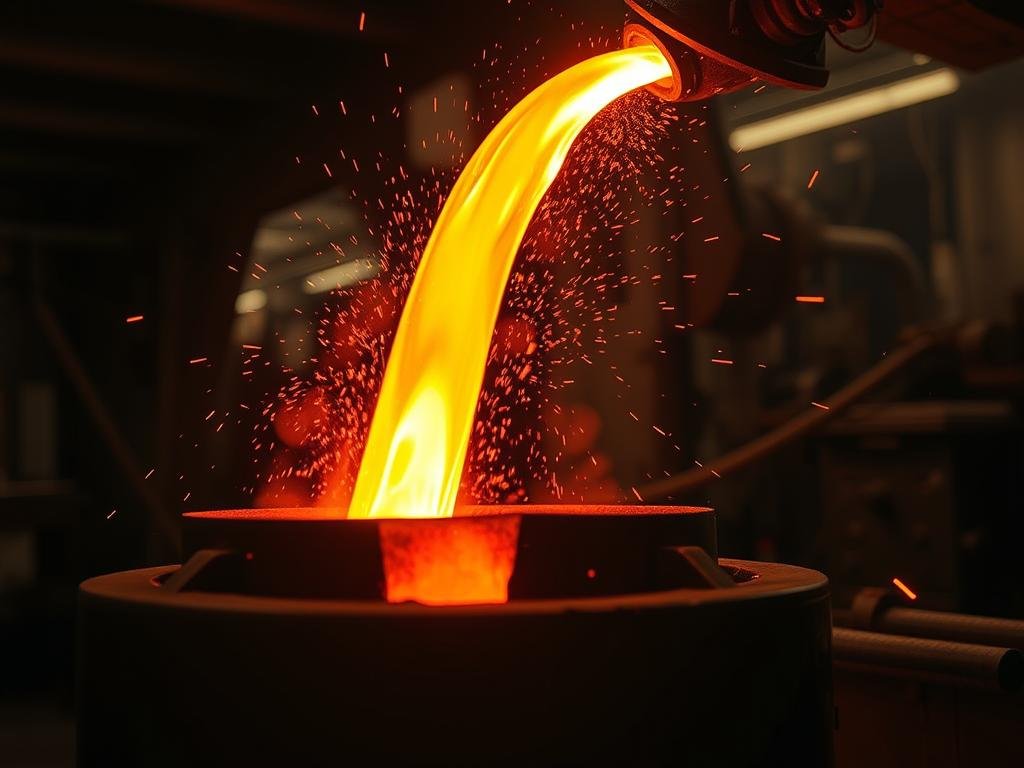
Optical pyrometry for extreme high temperatures
Optical pyrometers read emitted light to estimate temperature when contact sensors cannot survive. Emissivity corrections and calibration against standards make those readings reliable for process control.
DSC and TGA for alloys and transitions
DSC tracks heat flow to reveal solidus and liquidus and pinpoints melting point in lab samples. TGA records mass change, identifying reactions like oxidation that can affect transitions.
Furnace verification and practical ranges
Electric arc furnaces reach about 3000°C for rapid steel melting, while blast furnaces operate near 2000°C for continuous ironmaking. Combining pyrometry, DSC, and TGA aligns lab maps with shop-floor temperatures.
- Calibration, sample prep, and emissivity control ensure measured points match real parts.
- Using multiple methods reduces uncertainty for critical applications.
| Method | Range / Use | Key benefit |
|---|---|---|
| Optical pyrometry | High temp process control | Noncontact readout for hot furnaces |
| DSC | Lab alloys, transition mapping | Precise solidus/liquidus detection |
| TGA | Reactive or coated samples | Mass-change insight during heating |
Accurate melting point metal characterization underpins safe manufacturing windows and consistent certification of incoming material.
From high heat to high precision: implications for CNC machining and manufacturing
Precision parts that see elevated service temperatures need early alignment between material choice and process control.
Selecting materials for high-temperature service and machinability
Always allow a safety margin between service conditions and an alloy’s softening and melting point. Softening can begin between 425–870°C, with major strength loss around 600°C.
Choose between carbon steel and stainless steel by weighing machinability, conductivity, and how thermal cycling affects life.
Surface finish, tolerances, and thermal distortion at elevated temperatures
Thermal input during cutting changes residual stresses. Those stresses can relax near higher temperatures and shift tolerances over time.
Use fixturing, staged roughing and finishing, and in-process inspection to limit distortion and protect surface integrity.
How Rapidaccu leverages 15+ years of CNC expertise from prototypes to mass production
Rapidaccu pairs DFM reviews with toolpath strategies to control heat and preserve finish. We provide prototype runs, PPAP, and SPC-driven quality for consistent output at scale.
- Design wall thickness and stock selection to reduce heat buildup and distortion.
- Match tooling, coolant, and feeds to material conductivity to meet tight surface goals.
- Plan thermal margins so knowing melting and softening behavior informs material choice across industries.
| Factor | Concern | Mitigation |
|---|---|---|
| Softening range | Loss of strength near 600°C | Material margin and thermal analysis |
| Machinability | Tool wear and finish | Tool selection, coolant, adjusted feeds |
| Residual stress | Tolerance drift with heat | Sequenced cutting and in-process inspection |
Knowing melting points to guide applications and industries
Real-world designs need thermal margins so parts keep strength long before any liquid phase appears. That mindset helps teams choose alloys, plan inspections, and set maintenance cycles.
Construction, energy, aerospace, and medical uses where temperature matters
In construction, high fusion and softening resistance protect structure during fires. Engineers pick grades that keep load capacity at elevated temps and pair them with fireproofing and inspection plans.
Power plants require steels for boiler tubes and pressure vessels that resist creep and corrosion under pressure. Selection balances high-temperature strength with long service life.
- Aerospace favors alloys that hold strength in turbine and exhaust zones at sustained high temperatures.
- Medical uses stainless steel grades that survive repeated sterilization without losing corrosion resistance.
- Copper plays a role where conductivity and moderate fusion allow thermal and electrical function in power gear.
| Industry | Primary concern | Material choice |
|---|---|---|
| Construction | Fire softening and structural integrity | Low-alloy steels, monitored iron sections |
| Energy | Creep, pressure, corrosion | Alloyed steel and nickel grades for boilers |
| Aerospace | High-temperature strength and weight | Superalloys for hot sections |
| Medical | Sterilization and corrosion resistance | Stainless steel surgical grades |
Composition choices reflect safety, regulation, and lifecycle needs, not just nominal melting points. Rapidaccu partners with engineers to align material, CNC strategy, and qualification for high-temperature service.
Conclusion
Bottom line: different melting points and alloy behavior must guide material choices, not a lone lab value. Bonding, lattice structure, and composition explain why metals show varied fusion ranges and why softening can arrive far earlier than full melt.
Recall key references: carbon steel usually spans 1425–1540°C, stainless around 1375–1530°C, iron about 1538°C, copper at 1084°C, brass near 905–932°C, and tungsten at roughly 3400°C. These melting point metal values help set process windows.
For parts facing high temperatures, select higher melting point types as needed and account for alloying elements, nickel additions, and impurities. Rapidaccu—15+ years strong—translates this data into DFM, prototypes, and scaled CNC production. Contact us to plan materials, tolerances, and surface finish for heat-critical applications.
FAQ
What does melting point mean for metals and alloys?
Melting point refers to the temperature at which a solid metal becomes liquid under standard pressure. For alloys, it often appears as a range because components melt at different temperatures and form liquid phases progressively. This property helps engineers choose suitable materials for casting, welding, and high-temperature service.
Why do melting temperatures matter in manufacturing and part performance?
Temperature limits determine which processes a metal can undergo, from heat treatment to joining and forming. Exceeding those limits causes phase changes, softening, and dimensional instability that degrade strength, tolerances, and surface finish. Knowing limits helps prevent costly failures and eases production planning.
What is the typical melting range for carbon steel?
Typical melting range for carbon steels sits roughly between 1425°C and 1540°C (2597–2800°F). Exact values shift with composition, microstructure, and impurities. This range guides casting temperatures and heat-treatment windows for low-, medium-, and high-carbon grades.
How does carbon content shift that melting range across different grades?
Increasing carbon lowers the melting interval by changing the eutectic and solidus-liquidus behavior. Low-carbon steels show slightly higher liquidus temperatures; higher carbon and certain microstructures cause earlier melting onset and broader ranges. Designers account for this when selecting welding and furnace temperatures.
How do alloying elements and impurities affect melting behavior?
Elements like chromium, nickel, silicon, sulfur, and phosphorus alter melting points and phase diagrams. Nickel and chromium often raise temperature stability and broaden solid-solution ranges. Sulfur and phosphorus typically reduce melting temperature and can cause brittleness or hot-shortness in processing.
How does carbon steel compare to stainless steel and pure iron?
Stainless steels generally melt between about 1375°C and 1530°C (2507–2786°F), varying by grade and alloying. Pure iron melts at 1538°C (2800°F). Alloying changes bonding and microstructure, so two steels with similar iron content can have different melting ranges and softening behaviors.
Do metals lose strength before they actually melt?
Yes. Most alloys soften and lose mechanical properties well below their liquidus temperature. Elevated-temperature creep, grain growth, and phase transformations reduce load capacity, so safe service limits are often far below melting points.
What is the melting point of copper and why does it matter?
Copper melts at about 1084°C (1983°F). Its relatively low melting temperature plus excellent electrical and thermal conductivity makes it ideal for electrical components, heat exchangers, and brazing applications where controlled flow and conductivity are essential.
How do aluminum, brass, and bronze compare in melting behavior?
Aluminum alloys melt much lower, often between 600°C and 660°C depending on alloying. Brass and bronze (copper‑zinc and copper‑tin alloys) also melt lower than iron-based alloys, which eases casting and mass production but limits high-temperature structural use.
Which metals have the highest melting temperatures?
Refractory metals such as tungsten, rhenium, tantalum, and molybdenum have some of the highest melting points. Tungsten tops the list at about 3422°C (6192°F), making it valuable where extreme heat resistance is required.
Why do different metals have different melting temperatures?
Differences stem from atomic structure, bond strength, crystal lattices, and electron configuration. Stronger metallic bonding and dense lattices raise melting points. Alloying and defects modify these interactions and change thermal behavior.
How do pressure and particle size affect melting behavior?
Increased pressure typically raises melting temperatures. At nanoscale particle sizes, melting points can drop significantly due to surface energy effects and higher fraction of surface atoms, which alters atomic mobility and phase stability.
How are melting points measured for high-temperature metals?
For extreme temperatures, optical pyrometry and high-temperature thermocouples are common. Differential scanning calorimetry (DSC) and thermogravimetric analysis (TGA) help characterize phase transitions in alloys. In industrial practice, furnace trials and process verification confirm behavior under production conditions.
What measurement methods validate furnace and welding processes?
Process verification uses calibrated thermocouples, optical pyrometers, and metallographic inspection of test coupons. Controlled trials in electric arc and blast furnace setups confirm target temperatures, solidification behavior, and resulting microstructure.
How do melting temperatures influence CNC machining and manufacturing?
Material selection for machining depends on thermal stability and machinability. Metals that soften with heat demand lower cutting speeds, coolant strategies, and robust fixturing to control distortion. Knowing thermal limits prevents dimensional drift and preserves tight tolerances.
What factors affect surface finish and tolerances at elevated temperatures?
Thermal expansion, oxidation, and microstructural change degrade surface finish and dimensional accuracy. Proper cooling, tool selection, and thermal compensation strategies minimize distortion and maintain target tolerances during and after high-temperature processing.
How do industries use melting-point knowledge to pick materials?
Construction, energy, aerospace, and medical sectors choose alloys based on temperature limits, corrosion resistance, and mechanical stability. For example, turbine components need refractory behavior; electronics rely on low-melting solders and high-conductivity metals like copper.
What role do alloy databases and standards play in material selection?
Standards from ASTM, SAE, and ISO and alloy databases provide verified melting ranges, phase diagrams, and processing guidance. Engineers use these resources to match part function with safe temperature margins and manufacturing methods.
How can manufacturers account for variability in melting ranges?
They specify composition tolerances, conduct lab testing, and include safety margins in process temperatures. Traceability of material certificates and metallurgical analysis reduces surprises in casting, welding, and heat treatment.