

Nearly half of modern light-weight structural parts rely on alloys that cut weight by up to 30% compared with traditional metals. That scale of use makes a single thermal value vital for engineers.
Here we set a clear baseline: the accepted value at standard atmosphere is 650°C (1202°F). This number anchors material selection, safety margins, and process limits for casting, welding, and CNC work.
Magnesium (symbol Mg) is an alkaline earth element with atomic number 12. It forms a thin oxide in air and burns with a bright white flame, traits that matter near the fusion range.
Rapidaccu brings over 15 years of CNC machining experience. From prototype runs to mass production, their teams use thermal data to manage heat, chips, and surface finish for precision parts.
Definition: Magnesium’s Melting Point at Standard Conditions
Accurate thermal data anchors every machining and casting decision for reactive light metals.
In glossary terms, melting denotes the temperature where solid and liquid phases coexist in equilibrium at a set pressure, usually 1 atm. For this element, the accepted figure reads as 650°C, which equals 1202°F and 923 K.
- Symbol: Mg; atomic number: 12; group: 2 (alkaline earth elements).
- Surface forms MgO in air, so precise control of degree at melt helps avoid poor fluidity or oxidation.
- Rapidaccu applies this single, clear numeric value to set safe feeds, fixtures, and coolant strategies.
| Property | Value | Notes |
|---|---|---|
| Official melt | 650°C / 1202°F / 923 K | Standard atmosphere (1 atm) |
| Chemical ID | Mg, atomic number 12 | Group 2, silvery, reactive |
| Operational use | Reference: point 650 | Used in datasheets, casting specs, and CNC process windows |
Understanding this formal definition prevents confusion with softening, ignition, or creep. It gives engineers and auditors a single datum for design and quality checks.
Periodic Table Context and Core Properties
Group trends on the periodic table guide engineers when predicting thermal response and tool wear for lightweight metals.
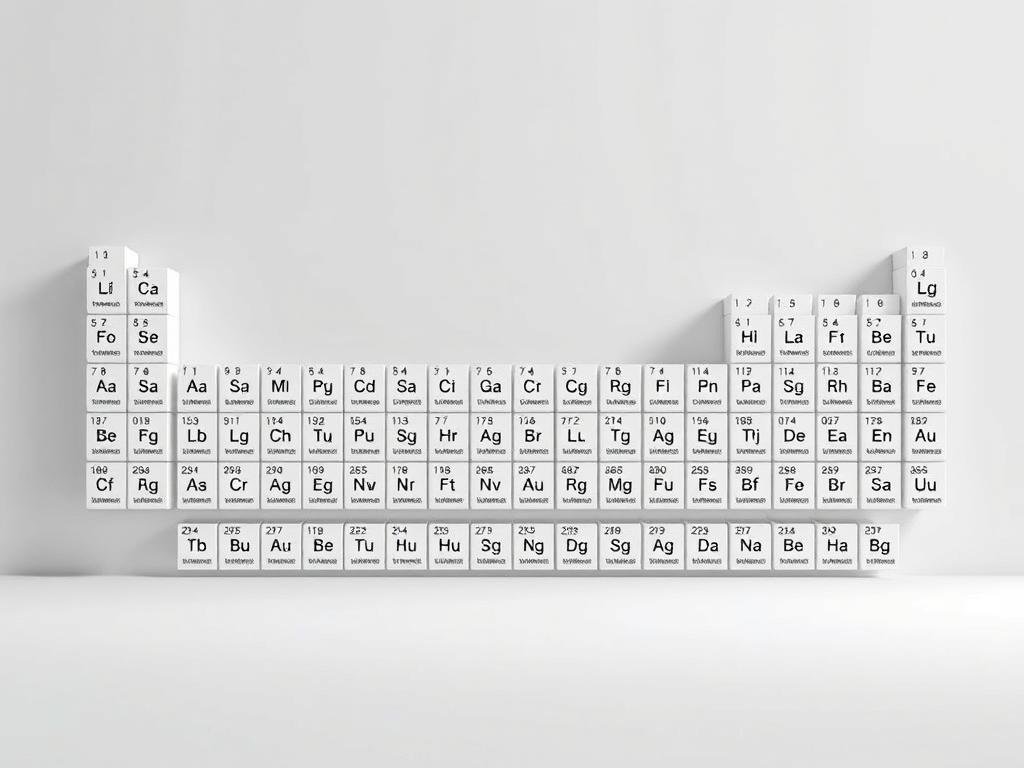
Alkaline earth placement and atomic details
This element sits in group 2 with atomic number 12 and an [Ne]3s2 electron configuration. That placement explains a stable +2 oxidation state and mostly ionic bonding in compounds.
Key thermophysical and compositional parameters
Pauling electronegativity registers near 1.31, which aligns with active surface behavior and bright combustion in oxygen. Boiling point measures roughly 1090–1091°C (1994°F), giving a wide liquid window above the melt before vapor risks rise.
- Low density and hcp crystal structure favor high stiffness-to-weight ratios for parts.
- Crustal abundance ~2.81 wt% and silicate Earth ~22.8 wt% reflect broad geological composition.
- Seawater content near 0.128 wt% links supply to marine extraction routes.
| Property | Value | Relevance |
|---|---|---|
| Group | Alkaline earth (2) | Predicts +2 oxidation and alloy behavior |
| Atomic number | 12 | Determines electron config and bonding |
| Boiling | ~1090–1091°C / 1994°F | Defines liquid processing window |
| Electronegativity | 1.31 (Pauling) | Correlates with reactivity and passivation |
Rapidaccu engineers use these trends across the table to choose tooling, coatings, and feeds for safe, precise CNC work on light metals.
Units, Conversions, and Measurement Conditions
Consistent temperature reporting keeps manufacturing controls aligned from design to production.
Rapidaccu converts a single thermal number into multiple units to avoid ambiguity across drawings and control plans.
Converting between °C, °F, and K for magnesium’s melting point
The accepted value reads 650°C, which converts to 1202°F using F = C × 9/5 + 32. Adding 273.15 yields 923 K for absolute-temperature work.
- Declare measurement conditions: standard atmosphere (1 atm / 101.325 kPa) alongside values.
- Round conversions responsibly (1202°F, 923 K) to keep datasheets aligned.
- Keep a parameter table to cross-check melt, boil (~1090–1091°C / 1994°F), and related numbers.
| Parameter | Value | Notes |
|---|---|---|
| Solid–liquid transition | 650°C / 1202°F / 923 K | Measured at 1 atm |
| Boiling | ~1090–1091°C / 1994°F | Defines liquid processing window |
| Conversion tips | F = C×9/5+32; K = C+273.15 | Round to avoid transcription errors |
Melting Point vs. Boiling Point: How Magnesium Behaves with Heat
A narrow temperature gap between liquid onset and vapor formation shapes casting, safety, and machining choices. That gap runs from 650°C (1202°F) to roughly 1090–1091°C (1994°F), defining a limited liquid window compared with many structural metals.
Thermal range and surface behavior
Near 650°C the metal forms an oxide skin that alters wetting and flow during remelt or cast work. This MgO layer helps at room conditions but cannot be trusted near aggressive heating or open oxygen.
Practical properties and shop controls
Liquid-stage viscosity, faster oxidation kinetics, and potential vapor generation force tight furnace atmosphere and crucible choices. Rapidaccu keeps toolpaths and coolant strategies far below melting point to avoid smearing, built-up edge, and thin-wall distortion.
- Liquid range spans roughly 440°C, requiring narrow process windows.
- Ignition risk demands chip containment and ignition-source elimination.
- Shielding gases and conservative setpoints protect surface integrity and dimensional stability.
| Property | Value | Manufacturing note |
|---|---|---|
| Solid–liquid | 650°C / 1202°F | Control heat input; avoid local hot spots |
| Boiling | ~1090–1091°C / 1994°F | High vapor and burn risk; use proper shielding |
| Surface | MgO passivation | Influences wetting and surface finish |
Composition Matters: Alloys, Purity, and Thermal Parameters
Alloy additions and impurity control determine whether a part resists creep, corrodes, or ignites under heat.
Adding zinc and rare-earth elements reduces high-temperature creep and raises useful service temperatures for many light alloys. Tiny calcium doses lower flammability risks, a key safety gain near the melt region.
Trace contaminants such as iron, nickel, copper, and cobalt create galvanic cells that speed corrosion. Manganese additions counteract iron’s harmful effect and improve longevity in hostile environments.
Chemistry and processing trade-offs
- Alloys tailored with Zn and RE elements enhance creep resistance and stability at elevated temperature.
- Calcium helps reduce combustion hazards during hot work and chip formation.
- Purity controls shift softening thresholds and inform heat-treatment limits used in manufacturing.
| Factor | Effect | Manufacturing note |
|---|---|---|
| Zn / rare-earth | Improved creep resistance | Enables higher service temp for cast and wrought alloys |
| Calcium | Lower flammability | Useful near high-heat processes and chip containment |
| Impurities / Mn | Corrosion control | Specify Fe/Ni/Cu/Co limits; add Mn to mitigate Fe |
Rapidaccu advises clients on alloy selection and documents composition controls to balance properties, safety, and manufacturability across the product lifecycle.
Manufacturing Relevance: Why the Melting Point Matters in CNC
Controlling heat at the cutter-work interface drives quality when working with low-density structural alloys. That local control keeps thin walls from distorting and helps meet tight tolerances during both trials and production.
Implications for machining parameters, heat management, and chip control
Knowing a clear numerical thermal limit lets shops set conservative feeds and speeds to manage heat generation. Tool engagement, stepdown, and coolant choice all influence how much energy converts to local temperature.
Chip evacuation matters. Long hot chips raise surface temperature and can ignite fine filings. High-evacuation toolpaths and short, curled chips reduce residence time near the tool.
Rapidaccu expertise: Precision CNC for magnesium and light-metal alloys
Rapidaccu brings over 15 years of CNC experience. We tune feeds, speeds, and engagements to exploit high machinability while staying below risky temperature regimes.
Fixture design and sequencing disperse heat and protect delicate geometries from distortion during scale-up from prototype to mass runs.
From prototype to production: Tolerances, surface finish, and safety
- Sharp tooling and controlled stepdowns preserve surface finish and dimensional accuracy.
- Composition-specific process windows ensure each alloy receives tailored parameters and documentation.
- Safety protocols target chip containment and approved extinguishing methods for fine dust and filings.
| Focus | Action | Result |
|---|---|---|
| Heat management | Conservative feeds/speeds, coolant | Stable tolerances, reduced distortion |
| Chip control | High-evacuation toolpaths, tooling geometry | Lower ignition risk, cleaner finish |
| Process validation | Metrology, in-process monitoring | Repeatable quality from prototype to volume |
Abundance and Sources: From Seawater to Structural Uses
Sea-derived brines and terrestrial reserves together secure a steady flow of metal for alloy production.
In Earth systems this element occurs widely. Crustal abundance sits near 2.81 wt% and silicate Earth about 22.8 wt%.
Seawater holds roughly 0.128 wt% of dissolved material. Industrial routes extract MgCl2 from brine and use electrolysis or the Pidgeon process to produce usable metal.
Supply diversity—mined ore plus sea brines—supports global manufacturing. Composition and basic chemistry of feedstock guide alloy design and corrosion controls.
Alloys using this low-density metal deliver strong weight savings for aerospace and mobility. Use cases include airplane and missile structures where mass reduction matters, yet flammability and corrosion demand careful handling.
- Stable supply from earth and sea sources aids long-term programs.
- Brine electrolysis yields high-purity feedstock for alloying.
- Material compatibility follows periodic table trends and galvanic rules.
| Source | Typical content | Relevance |
|---|---|---|
| Seawater / brine | ~0.128 wt% | Major, renewable feedstock for electrolysis |
| Crustal ore | ~2.81 wt% | Mining supports alloy volume and local supply chains |
| Silicate reservoirs | ~22.8 wt% | Long-term geological availability for industry |
Rapidaccu aligns sourcing with production timelines. Teams translate availability into manufacturable designs while respecting melting point controls and quality goals for client programs.
Conclusion
Clear thermal limits let engineers convert raw element data into safe, repeatable manufacturing steps. That single reference—melting point 650—anchors design, process windows, and safety checks for metal magnesium and its alloys.
As an alkaline earth entry on the periodic table, this element’s chemistry explains behavior from oxidation to boiling. Teams weigh point 650 against service conditions, joining methods, and risk of vapor or ignition.
Rapidaccu applies these insights to deliver accurate tolerances, consistent surface finish, and robust safety for prototype through mass runs. For projects needing reliable handling of magnesium melting and boiling data, our shop turns material science into production-ready outcomes.
FAQ
What is the magnesium melting point in degrees Celsius and Fahrenheit?
At standard atmospheric pressure, magnesium melts at about 650°C, which equals roughly 1,202°F.
What does "melting point" mean for a metallic element?
Melting point refers to the temperature where a solid becomes a liquid under given pressure. For metals, this marks when atomic bonds loosen enough for the lattice to flow.
Where does this element sit on the periodic table and what is its atomic number?
It belongs to the alkaline earth metals in Group 2 and has atomic number 12. Its chemical symbol is Mg.
How does the boiling point compare to the melting temperature?
The boiling point lies much higher: around 1,090–1,091°C (about 1,994°F). That gap defines the liquid range used in casting and molten-metal processing.
How should I convert the melting point between Celsius, Fahrenheit, and Kelvin?
To convert, use standard formulas: °F = (°C × 9/5) + 32, and K = °C + 273.15. For 650°C, that gives about 1,202°F and 923.15 K.
Can alloying change this temperature?
Yes. Adding aluminum, zinc, rare-earths, or other elements alters melting behavior. Some alloys melt lower or form multi-phase regions, affecting processing windows.
Is this metal flammable near its melting point?
Bulk metal is not highly flammable at 650°C, but fine chips, dust, and thin sections can ignite. Oxidation and bright burning occur at higher temperatures and during machining if sparks form.
What machining considerations arise because of this melting temperature?
Machinists control cutting speed, coolant, and chip evacuation to prevent local heating, smearing, or ignition. Proper tool geometry and clamping reduce heat buildup and improve surface finish.
How does purity affect thermal and mechanical behavior?
Higher purity yields more consistent melting and predictable mechanical properties. Impurities or second phases in alloys change creep resistance, corrosion response, and melting ranges.
Where is this element commonly sourced and used?
It’s abundant in minerals and seawater. Uses span aerospace, automotive, electronics, and lightweight structural components due to its high strength-to-weight ratio.
What safety measures are important when working with molten metal and alloys near 650°C?
Use heat-resistant PPE, proper ventilation, fire suppression rated for metal fires, and controls for chips and dust. Follow MSDS guidance for specific alloys and workplace standards.
How does oxidation affect behavior near the melt?
A surface oxide forms quickly and can alter wetting and flow during casting. In reducing or inert atmospheres, oxidation decreases and molten metal wetting improves.
What role do rare-earth additions play in high-temperature performance?
Rare-earth elements refine microstructure, improve creep resistance, and enhance high-temperature strength, helping alloys perform better near elevated service temperatures.
Why is understanding this melting and boiling range important for production and prototyping?
Knowing thermal limits helps set casting parameters, soldering or brazing cycles, and CNC process windows. That ensures dimensional control, safety, and consistent mechanical results.