
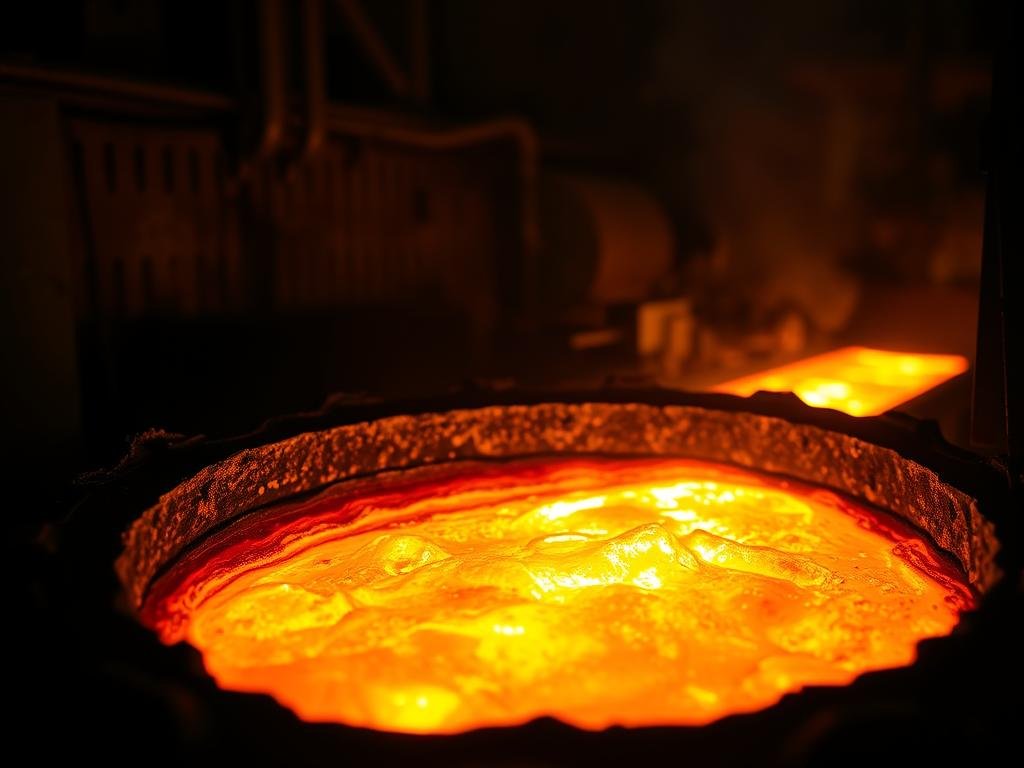
What is the Melting Point of Titanium?
At Rapidaccu, we work with titanium every day, and we understand that this remarkable metal presents unique challenges and opportunities. Titanium isn’t just another metal—it’s a material that demands respect, specialized knowledge, and advanced manufacturing capabilities.
When clients ask us about titanium manufacturing, one of the first technical specifications we discuss is its melting point. This isn’t just an academic number—it’s a critical parameter that influences every aspect of how we machine, form, print, and fabricate this aerospace-grade material.
Titanium’s Precise Melting Point
Pure titanium melts at exactly 3,034°F (1,668°C)—significantly higher than most common metals. To put this in perspective, that’s about 1,050°F hotter than iron, 1,200°F hotter than copper, and nearly double the melting point of aluminum.
This extreme temperature requirement isn’t just a curiosity—it fundamentally shapes how we approach every titanium project at Rapidaccu, from selecting cutting tools for CNC machining to configuring laser parameters for additive manufacturing.
Why Keep Reading?
Understanding titanium’s melting point is just the beginning. In this comprehensive guide, we’ll reveal how this extreme temperature affects:
- Why CNC machining titanium generates so much heat (and how we control it)
- The specialized equipment required for titanium 3D printing
- Hot forming techniques that work below the melting point
- The energy costs and oxidation challenges unique to titanium
- How different titanium grades have slightly different melting temperatures
Whether you’re designing aerospace components, medical implants, or high-performance automotive parts, understanding these thermal properties will help you make better manufacturing decisions.
The Extreme 3,034°F Melting Point of Titanium
At Rapidaccu, we’ve processed thousands of titanium components, and one truth remains constant: titanium’s 3,034°F (1,668°C) melting point places it in an elite category of high-temperature metals. This isn’t just a high number—it’s a defining characteristic that separates titanium from common engineering materials.
High Performance
Only exceeded by refractory metals like tungsten (6,192°F), molybdenum (4,753°F), and tantalum (5,463°F)
Manufacturing Impact
Requires specialized furnaces, inert atmosphere protection, and precise temperature control
Cost Factor
High energy requirements contribute to titanium’s premium pricing in the materials market
Comparative Melting Points
Why Titanium’s High Melting Temperature is a Manufacturing Challenge
At Rapidaccu, we don’t just acknowledge titanium’s high melting point—we’ve engineered our entire titanium workflow around it. This extreme temperature creates both obstacles and opportunities that define how we approach every titanium project.
Manufacturing Challenges
-
Specialized Equipment: Conventional furnaces can’t reach 3,034°F—vacuum arc remelting (VAR) and electron beam melting are required
-
Oxidation Risk: Above 800°F, titanium reacts aggressively with oxygen, forming brittle oxide layers
-
Energy Intensity: Reaching and maintaining such high temperatures requires massive energy input
-
Tool Wear: Heat generation during machining accelerates cutting tool degradation
Strategic Advantages
-
High-Temperature Service: Components maintain strength where aluminum and steel fail (up to 1,000°F)
-
Aerospace Applications: Jet engine components, exhaust systems, and airframe parts that see extreme heat
-
Structural Stability: High melting point correlates with excellent creep resistance under sustained load
-
Market Differentiation: Few manufacturers have the capability to work with such demanding materials
Rapidaccu’s Approach
We’ve invested in vacuum furnaces, argon-atmosphere 3D printing chambers, and flood coolant CNC systems specifically designed for titanium. Our manufacturing processes are engineered to work with titanium’s high melting point rather than fighting against it. This means we machine well below dangerous temperatures, use hot forming in controlled ranges, and employ electron beam technology for additive manufacturing where precise melting is required.
Melting Points Across Titanium Grades and Alloys
At Rapidaccu, we work with multiple titanium grades daily, and we’ve learned that “titanium” isn’t a single material—it’s a family of alloys, each with slightly different melting characteristics. While pure titanium melts at 3,034°F (1,668°C), alloying elements can shift this temperature by as much as 200°F.
| Titanium Grade / Alloy | Composition | Melting Point (°F) | Melting Point (°C) | Primary Uses |
|---|---|---|---|---|
| Pure Titanium | 99.9% Ti | 3,034°F | 1,668°C | Reference standard |
| Grade 1 (CP Ti) | Commercially Pure | 3,034°F | 1,668°C | Chemical processing, marine |
| Grade 2 (CP Ti) | Commercially Pure | 3,034°F | 1,668°C | General engineering, medical |
| Grade 5 (Ti-6Al-4V) | 6% Al, 4% V | 2,970°F | 1,632°C | Aerospace, automotive, medical |
| Grade 7 | CP Ti + 0.15% Pd | 3,030°F | 1,666°C | Chemical equipment, offshore |
| Grade 9 (Ti-3Al-2.5V) | 3% Al, 2.5% V | 3,010°F | 1,654°C | Tubing, hydraulics, golf clubs |
| Grade 12 | 0.3% Mo, 0.8% Ni | 3,025°F | 1,663°C | Chemical processing |
| Grade 23 (Ti-6Al-4V ELI) | 6% Al, 4% V (low interstitial) | 2,965°F | 1,629°C | Medical implants, aerospace |
| Ti-10V-2Fe-3Al | 10% V, 2% Fe, 3% Al | 2,850°F | 1,566°C | Landing gear, fasteners |
| Ti-15V-3Cr-3Al-3Sn | 15% V, 3% Cr, 3% Al, 3% Sn | 2,795°F | 1,535°C | Springs, fasteners |
Key Observations from Our Experience
- Aluminum additions (like in Ti-6Al-4V) slightly lower the melting point by approximately 60-70°F
- Commercially pure grades (1, 2, 7, 12) maintain melting points very close to pure titanium
- Beta alloys (Ti-10V-2Fe-3Al, Ti-15V-3Cr-3Al-3Sn) show more significant reductions—up to 240°F lower
- Grade 5 (Ti-6Al-4V) is our most common material—accounting for 50% of titanium market share
Machining Titanium: Working Far Below Melting Point
At Rapidaccu, our CNC machining operations never approach titanium’s 3,034°F melting point—but that doesn’t mean temperature isn’t our primary concern. The challenge isn’t melting the workpiece; it’s managing the intense localized heat generated at the cutting edge.
The Heat Generation Problem
Titanium’s low thermal conductivity (about 1/6 that of aluminum) means heat doesn’t dissipate through the workpiece. Instead, it concentrates at the tool-workpiece interface, where temperatures can spike to 1,800-2,200°F—hot enough to damage carbide cutting tools in seconds.
Temperature at Cutting Edge:
73% of melting point concentration at tool tip
Rapidaccu’s Cooling Strategies
- High-pressure coolant systems (1,000+ PSI) to flood the cutting zone
- Through-tool coolant delivery directly to the cutting edge
- Reduced cutting speeds (50-70% slower than steel)
- Carbide or ceramic tooling with high hot hardness ratings
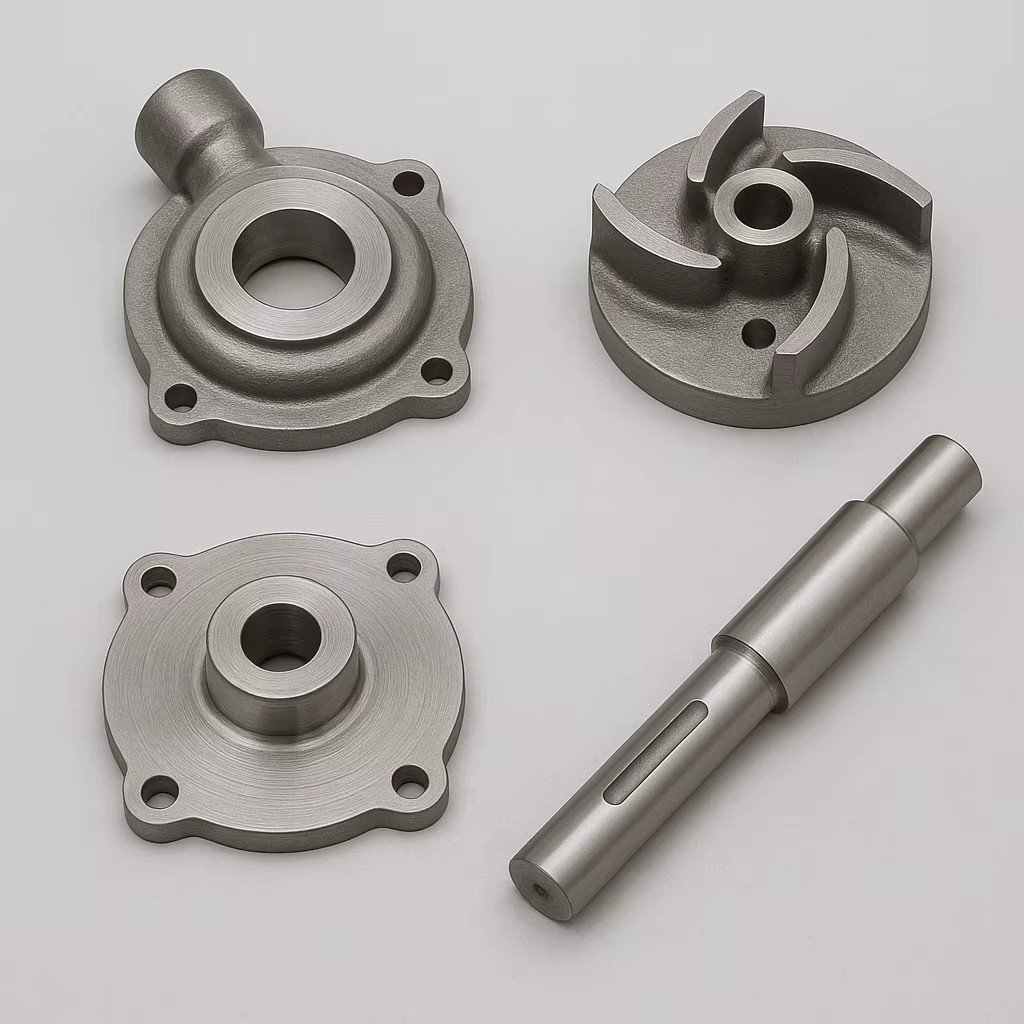
Precision Titanium CNC Machining
Our specialized equipment and processes handle titanium’s thermal challenges while delivering micron-level precision.
Explore Titanium CNC ServicesWhy Melting Point Matters in Machining
While we never melt titanium during machining, understanding its 3,034°F melting point helps us contextualize the 1,800-2,200°F cutting zone temperatures. We’re operating at 60-70% of the melting point—hot enough to cause work hardening, rapid tool wear, and potential oxidation if coolant fails. This knowledge drives our conservative parameter selection and redundant cooling systems.
Reaching Melting Point in Titanium 3D Printing
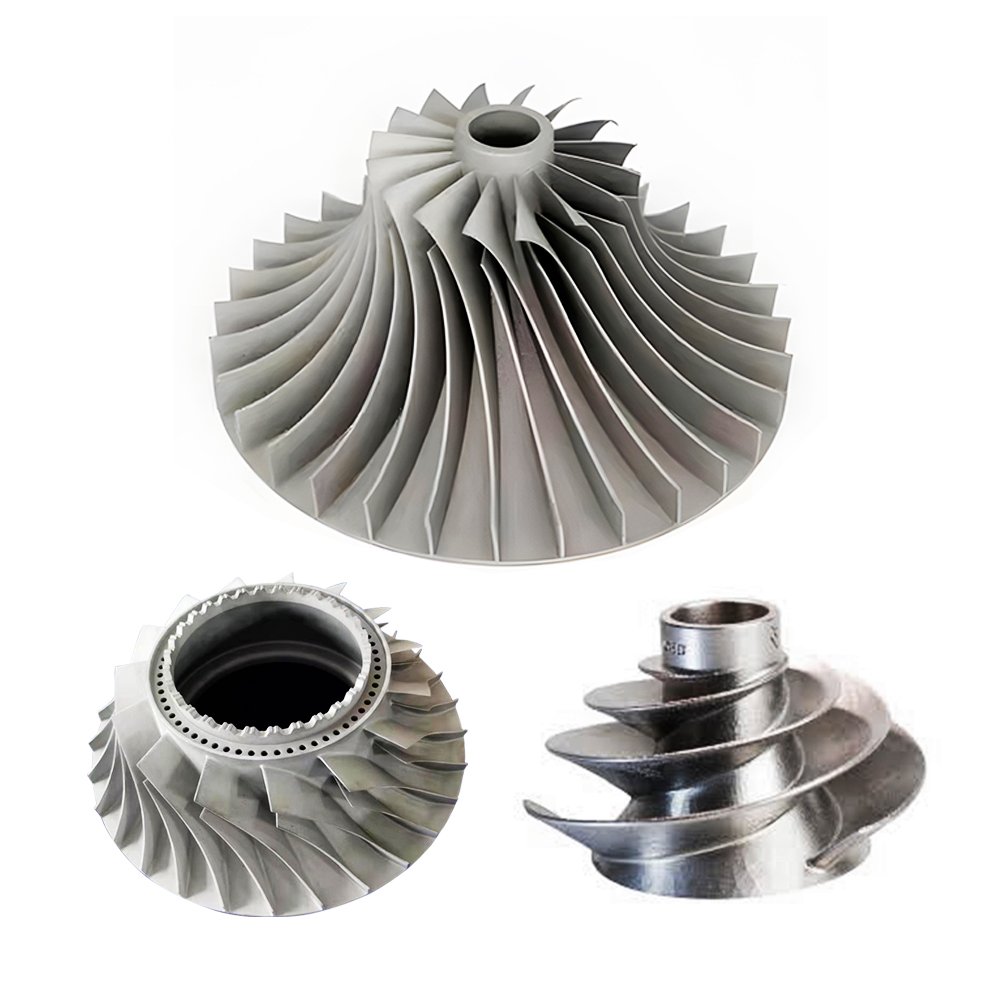
Advanced Titanium 3D Printing
Our LPBF and EBM systems precisely control melting to build complex titanium geometries layer by layer.
Discover Titanium 3D PrintingUnlike CNC machining where we avoid the melting point, additive manufacturing requires us to reach and exceed 3,034°F with surgical precision. At Rapidaccu, we use two primary technologies for titanium 3D printing, each with unique thermal control requirements.
Laser Powder Bed Fusion (LPBF)
- Laser power: 200-400W focused to 50-100 micron spot
- Melt pool temperature: 3,200-3,500°F (above melting point)
- Argon atmosphere: <0.1% oxygen to prevent combustion
- Cooling rate: 10³-10⁶ °C/sec (extremely rapid solidification)
Electron Beam Melting (EBM)
- Beam energy: 60kV electrons, 3,000W power
- Build temperature: Entire bed preheated to 1,290°F
- Vacuum environment: 10⁻⁴ mbar (eliminates oxidation)
- Lower residual stress: High preheat reduces thermal gradients
Why Precise Melting Point Control is Critical
Insufficient Heat
Incomplete melting creates porosity, lack-of-fusion defects, and weak layer bonding
Optimal Heat
Complete melting with controlled superheat produces fully dense parts (>99.5%)
Excessive Heat
Overheating causes keyholing, spatter, and degraded surface finish
At Rapidaccu, we maintain melt pool temperatures between 3,200-3,400°F—approximately 150-350°F above titanium’s melting point—to ensure complete fusion while avoiding excessive vaporization.
Hot Sheet Metal Forming Below Melting Temperature
Titanium sheet metal work at Rapidaccu occupies a precise thermal window: hot enough to improve formability, but far enough below the 3,034°F melting point to maintain material integrity. We’ve found that titanium’s forming characteristics transform dramatically at elevated temperatures.
Optimal Forming Temperature Ranges
High springback, limited bend angles
Reduced springback, better ductility
Complex shapes, minimal springback
Excessive scale formation, surface degradation
Staying Below Melting Point
Our hot forming processes operate at 1,400-1,650°F—approximately 46-55% of titanium’s melting point. This gives us a comfortable safety margin of over 1,380°F below melting while still achieving the ductility improvement we need.
Safety Factor: Operating at half the melting point prevents any risk of localized melting at stress concentration points, tool contact areas, or heat-affected zones.
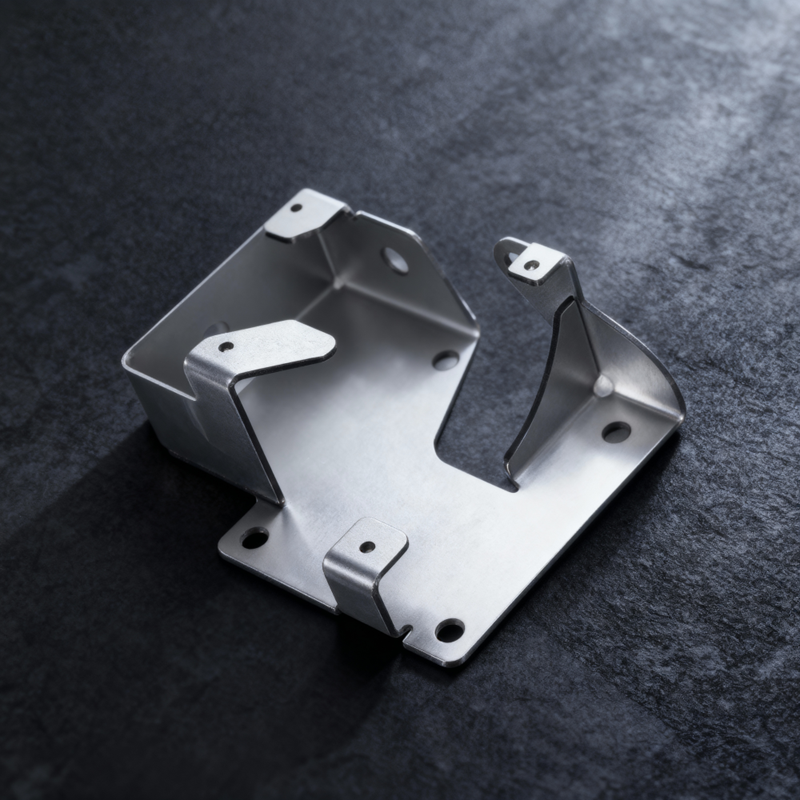
Expert Titanium Sheet Metal Fabrication
Our controlled hot forming processes leverage titanium’s improved ductility at elevated temperatures while staying safely below melting point.
View Sheet Metal ServicesRapidaccu’s Hot Forming Capabilities
-
Superplastic Forming (SPF): 1,600-1,700°F with argon atmosphere for complex aerospace parts
-
Hot Press Forming: 1,450-1,550°F for tight-radius bends and deep draws
-
Hot Sizing: 1,200-1,400°F for dimensional correction after welding
-
Controlled Cooling: Stress relief and microstructure optimization post-forming
Energy Demands of Titanium’s High Melting Point
At Rapidaccu, we’re transparent about the economics of titanium manufacturing: reaching or approaching a 3,034°F melting point requires significant energy investment. This cost factor influences every titanium process decision we make.
Melting Operations
Primary method for producing titanium ingots. Requires sustained 3,200°F temperatures in vacuum.
Energy consumption: 800-1,200 kWh per ton
Equipment cost: $2-5 million per furnace
Used for titanium scrap recycling and specialty alloys.
Energy consumption: 1,500-2,000 kWh per ton
Advantage: Can process reactive scrap safely
Additive Manufacturing
Localized melting reduces overall energy compared to bulk melting, but still intensive.
Energy consumption: 50-80 kWh per kg of part
Build time factor: 20-40 hours for complex parts
Higher power consumption but faster build rates than LPBF.
Energy consumption: 40-60 kWh per kg of part
Advantage: Reduced residual stress
Energy Comparison: Titanium vs. Other Metals
Titanium requires nearly 4× the energy of aluminum to melt, contributing to its premium pricing—but delivering unmatched strength-to-weight ratio.
Preventing Oxidation at Elevated Temperatures
At Rapidaccu, we’ve learned that titanium’s relationship with its melting point is complicated by a paradox: this reactive metal becomes more reactive as temperature rises. Well before reaching 3,034°F, titanium’s appetite for oxygen becomes a critical manufacturing concern.
The Oxidation Temperature Scale
Minimal oxidation rate; surface remains bright and clean with normal handling
Visible oxide formation (gold, blue, purple tinting); requires controlled atmosphere or rapid processing
Rapid oxide scale growth; embrittlement of surface layers; must use inert atmosphere protection
Aggressive oxidation; oxygen dissolution into bulk material; potential fire hazard with titanium fines
Molten titanium combusts spontaneously in air; requires high-vacuum or inert gas at <0.01% O₂
Atmospheric Protection Methods
-
Argon Blanketing:
For hot forming (1,400-1,650°F); flowing argon displaces oxygen
-
Vacuum Chambers:
For 3D printing and melting operations; 10⁻⁴ to 10⁻⁶ mbar pressure
-
Gettered Argon:
Argon purified to <10 ppm O₂ for critical additive manufacturing
-
Rapid Cooling:
Minimizing time at elevated temperature reduces total oxygen uptake
Why This Matters at Rapidaccu
CNC Machining: Coolant prevents oxidation during heat generation; we maintain cutting zone temperatures below 800°F when possible.
3D Printing: Our LPBF systems maintain <0.1% oxygen; EBM systems use high vacuum—both preventing the combustion risk at 3,200-3,500°F melt pool temperatures.
Hot Forming: Argon atmosphere chambers for superplastic forming at 1,600-1,700°F prevent the gold/blue oxidation that would require expensive pickling.
Welding: Trailing shields and backup purging protect the weld zone, which approaches 3,000°F, from atmospheric contamination.
The Science Behind Titanium’s Reactivity
Titanium’s high melting point (3,034°F) would seem to suggest stability, but the opposite is true for oxidation. As temperature increases, titanium atoms gain kinetic energy, allowing oxygen atoms to more easily break titanium-titanium bonds and form titanium-oxygen bonds. The thermodynamic driving force for TiO₂ formation is so strong that even trace oxygen becomes problematic above 1,200°F.
Key Insight:
At 1,800°F (60% of melting point), titanium’s oxidation rate is approximately 100× faster than at room temperature. By the time we reach melting point, oxidation is nearly instantaneous in air—which is why vacuum or ultra-pure inert atmospheres aren’t optional, they’re mandatory.