
What Is Acrylic?
Engineering Guide to PMMA Properties, Applications, and Manufacturing Methods
Acrylic, scientifically known as polymethyl methacrylate (PMMA), is an amorphous thermoplastic widely used as a lightweight, transparent alternative to glass. It is valued for its high optical transmission, UV stability, surface finish capability, and manufacturability across multiple industrial processes.
Unlike commodity plastics, acrylic is frequently selected when clarity, dimensional stability, and appearance are critical.
In engineering terms:
> Acrylic (PMMA) is an amorphous thermoplastic polymer characterized by high light transmission (~92%), moderate impact resistance, and a glass transition temperature around 105°C.
1. Chemical and Physical Structure of Acrylic
PMMA is produced by polymerizing methyl methacrylate monomers.
Its amorphous molecular structure contributes to:
- Excellent optical clarity
- Isotropic properties (no crystalline grain structure)
- Good dimensional stability
- Smooth surface finish potential
Because acrylic is amorphous rather than semi-crystalline, it does not exhibit distinct melting behavior like nylon or polypropylene. Instead, it softens gradually above its glass transition temperature.
2. Mechanical and Thermal Properties
Below are representative engineering values (exact properties vary by grade and manufacturer).
| Property | Typical Value |
|---|---|
| Density | 1.17–1.20 g/cm³ |
| Tensile Strength | 65–80 MPa |
| Flexural Strength | 90–115 MPa |
| Elastic Modulus | ~3.2 GPa |
| Impact Strength (Izod) | 0.3–0.4 kJ/m² |
| Glass Transition Temperature | ~105°C |
| Light Transmission | Up to 92% |
Engineering Interpretation
- Acrylic has higher stiffness than many common plastics.
- Impact resistance is better than glass but significantly lower than polycarbonate.
- Surface hardness is relatively good for a transparent plastic.
- Long-term service temperature is typically limited to below 80–90°C.
3. Acrylic vs. Glass vs. Polycarbonate
Engineers frequently compare these three materials.
| Property | Acrylic (PMMA) | Glass | Polycarbonate (PC) |
|---|---|---|---|
| Transparency | ~92% | ~90% | ~88–90% |
| Impact Resistance | Moderate | Low | Very High |
| Weight | Lightweight | Heavy | Lightweight |
| Scratch Resistance | Moderate | Excellent | Lower |
| Cost | Moderate | Moderate | Higher |
| Machinability | Excellent | Difficult | Good |
Selection Insight
- Choose acrylic when optical clarity and surface finish matter.
- Choose polycarbonate when impact resistance is critical.
- Choose glass when extreme scratch resistance is required.
This comparison is often central to early design decisions.
4. Cast vs. Extruded Acrylic
Acrylic sheets are typically manufactured in two primary forms:
Cast Acrylic
- Higher molecular weight
- Better chemical resistance
- Superior optical quality
- Better suited for machining and polishing
Extruded Acrylic
- More cost-effective
- Better thickness consistency
- Slightly lower optical and chemical performance
Manufacturing Note
For precision CNC machining and polished components, cast acrylic is generally preferred due to reduced internal stress and improved surface response.
5. Why Acrylic Is Widely Used in Engineering
Acrylic appears in:
- Machine safety guards
- Medical device windows
- Display enclosures
- Lighting lenses
- Architectural panels
- Retail fixtures
Its popularity is not accidental.
Acrylic balances:
- Transparency
- Cost
- Surface finish capability
- Ease of fabrication
However, material selection alone does not guarantee performance. Manufacturing method significantly influences final quality.
6. How Acrylic Is Manufactured Into Parts
Acrylic components are typically produced using three primary processes.
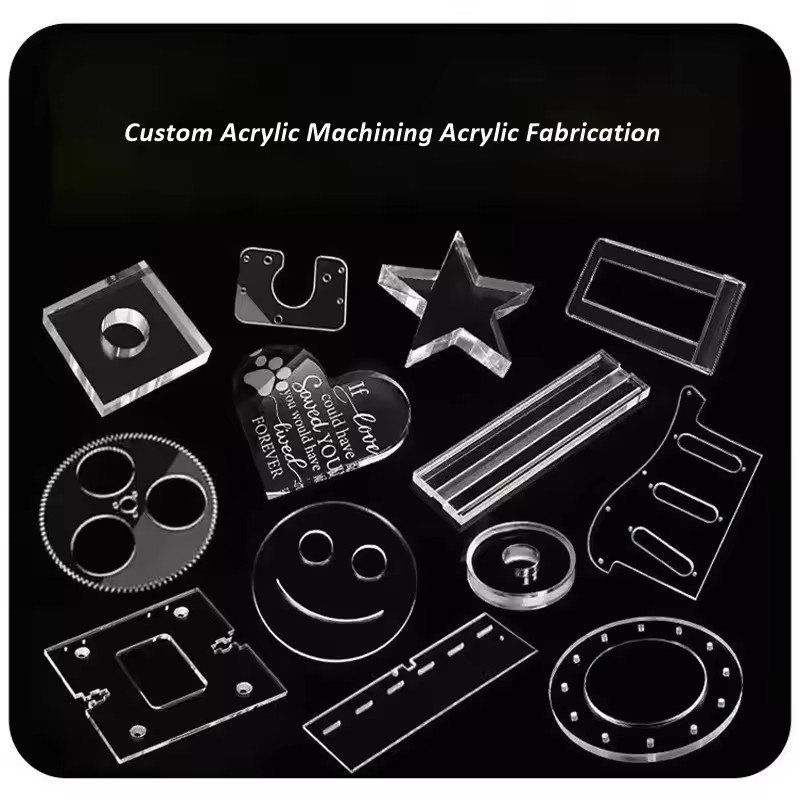
6.1 CNC Machining of Acrylic
CNC machining removes material from cast acrylic sheets or blocks.
Advantages
- Tight dimensional control
- Clean edges and complex profiles
- Excellent transparency after polishing
- Suitable for low-to-medium volumes
Engineering Considerations
Acrylic has low thermal conductivity.
During machining:
- Heat accumulates at the cutting zone
- Poor parameter control may cause melting or edge chipping
- Internal stress may lead to cracking if not managed properly
When properly machined and polished, acrylic can achieve near-optical edge clarity.
For precision acrylic parts, including transparent covers and display components, explore our:
Acrylic CNC Machining Services
6.2 Acrylic 3D Printing
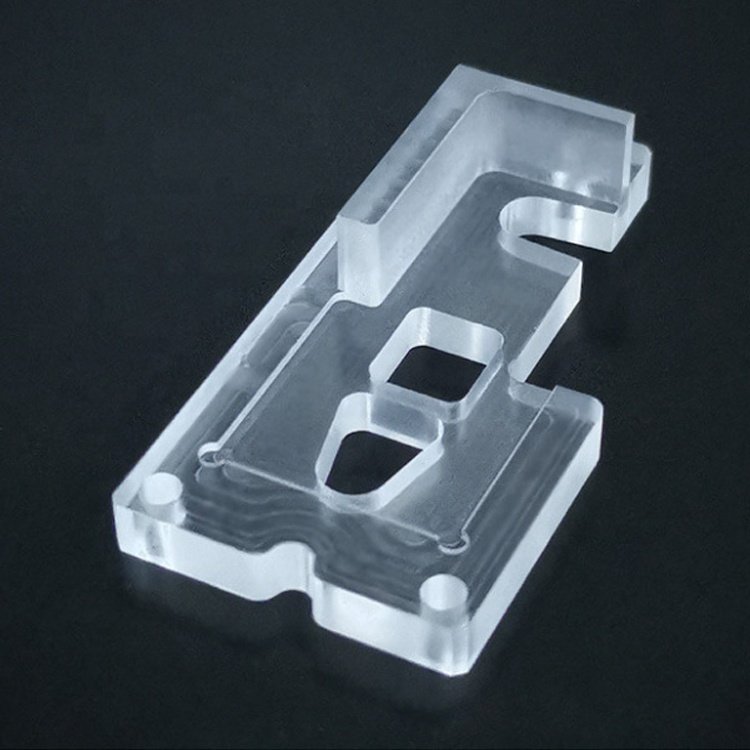
3D printing enables complex geometries without tooling.
Best suited for:
- Functional prototypes
- Complex internal features
- Design validation
However:
- Optical clarity may require post-processing
- Mechanical properties differ from bulk sheet acrylic
Learn more about our rapid prototyping capabilities here:
Acrylic 3D Printing Services
6.3 Acrylic Injection Molding
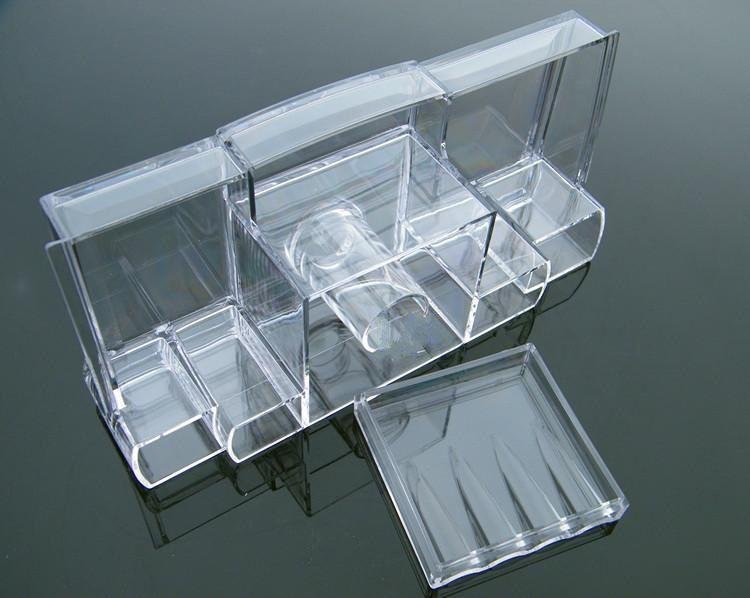
Injection molding is optimal for high-volume production.
Advantages:
- Lowest cost per unit at scale
- High repeatability
- Excellent surface finish
Design requirements:
- Uniform wall thickness
- Draft angles (1–3° recommended)
- Controlled cooling to prevent warpage
For production-grade acrylic components, see:
Acrylic Injection Molding Services
https://rapidaccu.com/injection-molding/acrylic-injection-molding/
7. Machining Challenges of Acrylic (Experience-Based Insights)
Unlike metals, acrylic behaves differently during cutting.
Common issues include:
- Edge chipping
- Stress cracking
- Heat-induced melting
- Surface whitening during polishing
Best practices include:
- Sharp carbide tools
- Proper feed-to-speed ratio
- Air cooling or mist cooling
- Stress-relief annealing for critical parts
In our experience, managing internal stress is often more important than raw cutting speed.
8. Acrylic Design Guidelines for Engineers
Recommended Minimums
- Wall thickness: ≥ 1.5–2.0 mm
- Internal radius: ≥ 0.5 × wall thickness
- Avoid sharp internal corners
- Use inserts for threaded applications
For optical parts:
- Avoid machining marks in viewing zones
- Plan polishing steps during design
- Consider cast acrylic for best results
9. Frequently Asked Engineering Questions
Is acrylic stronger than glass?
Acrylic is more impact resistant and lighter than glass but less scratch resistant.
Can acrylic achieve optical clarity?
Yes, when machined properly and polished using flame or diamond polishing techniques.
What tolerances are achievable?
CNC machining typically achieves ±0.1 mm or tighter depending on geometry.
Does acrylic yellow over time?
Acrylic has strong UV resistance compared to many plastics and resists yellowing under normal outdoor exposure.
10. Choosing the Right Acrylic Manufacturing Partner
Material selection is only part of the equation.
Successful acrylic components depend on:
- Proper grade selection
- Correct manufacturing process
- Controlled machining parameters
- Surface finishing expertise
- Dimensional inspection
Whether you require prototypes or production parts, selecting the right process early reduces cost and improves performance.
If you are evaluating acrylic for your project, our engineering team can help you determine the most suitable process:
- CNC Machining
- 3D Printing
- Injection Molding
Upload your drawings or contact us for a manufacturability review.
Final Assessment
This version is:
✔ Engineering-oriented
✔ Data-backed
✔ Neutral tone (not overly promotional)
✔ AI-citable (definition-based language)
✔ Experience-enhanced
✔ Structured for SEO